Wednesday, 1 February 2017

Dropbox Officially Launches Paper Collaboration Tool

Dropbox Officially Launches Paper Collaboration Tool

Remember Dropbox Paper — the collaborative editing software introduced way back in October 2015?

Well, it has finally launched globally.

The Dropbox Paper Collaboration Tool

Paper gives you the opportunity to create, organize and review content. It also enables you to work with multiple file types from Google and Microsoft.

The Dropbox Paper collaboration tool also allows business owners to assign dated tasks to different users in the business. You can organize files into project folders using the SmartSync feature. Users will be able to see the projects folders in your business account, but the folders won’t actually be downloaded until the intended recipients download them.

The SmartSync feature “lets you seamlessly access all your files and folders — whether they’re on your hard drive or in the cloud — right from the desktop,” said Vice President of Product and Design Todd Jackson in an announcement on the official Dropbox Blog. “No need to jump into a web browser, and no need to shuffle files if you have more in the cloud than you can fit on your computer.”

Interestingly, instead of fighting it competitors, Dropbox works nicely with them, allowing you to import, edit and collaborate with file types from Microsoft, Google and others.

“We fully expect Paper to be used in environments where people are using Microsoft and Google products,” Dropbox’s head of product Rob Baesman told The Verge. “That’s the rule, not the exception.” Still, it’s an open question whether Paper is substantive enough to fend off competition. Just last week, competitor Box revealed its own note-taking productivity software that accomplishes many of the same tasks.

Paper is now available for free and in 21 languages for all Dropbox users at dropbox.com/paper. Dropbox also hinted of mobile versions that will be launched “in the coming months.”

Overall, Dropbox Paper gives every business owner the ability to keep their team in order and also collaborate across the globe.

Image: Dropbox

This article, "Dropbox Officially Launches Paper Collaboration Tool" was first published on Small Business Trends


Workers fear saving for retirement without guarantee of fixed income for life


WORKERS feel saving for their old age is a riskier business without the guarantee of a fixed income for life.

Gimp Photo Editor Provides Design Alternative to Adobe

Gimp Photo Editor Provides Design Alternative to Adobe

Ever heard of GIMP? No? Well, you’ll be shocked to know that the GNU Image Manipulation Program was originally released in 1995. Unlike the Adobe suite of products, GIMP is totally free. It is also an open-source raster graphics editor and you can use it for image editing and retouching, cropping, re-sizing, free-form drawing, photo montages among many other specialized tasks.

A Look at the GIMP Photo Editor

Getting Started

Since its inception, GIMP has come a long way. The most recent version is GIMP 2.8, which they say is a result of three years of collaborative development and hard work. The new version is loaded with a host of features.

Single Window Mode

The new version comes with an optional single-window mode, so you can now easily toggle between the single window and the default multi-window mode. The single-window mode is much cleaner than the multi-window. Images and “dockable dialogs” are all available on the tabbed image window. You can, however, choose to have the “dockable dialogs” in multiple columns. To do this, create a new column in a dock window, drag and drop the dialog on the vertical edges of the dock window.

Gimp Photo Editor Provides Design Alternative to Adobe

Multi-column dock windows feature is, however, more appealing to multi-monitor users where you can have the big dock window in one screen and the other dialogs on other displays.

Edit Text on Canvas

While earlier versions required that you edit text in a separate window, the new 2.8 version allows for on-canvas editing. Apart from the usual text formatting features such as font size, family and style, you also get numeric control over baseline offset and kerning as well as the ability to change text color for a selection.

Widget for Tablet Users

GIMP also comes with a widget that meets that requirements of tablet users. The widget combines a numeric value control, a label and a slider that better visualizes the current value and provides a more compact UI.

Resource Tagging

GIMP allows you to tag and group resources such as patterns and groups. Tag resources from their respective dockables. It is also possible to filter resources based on these tags. It is possible to tag multiple resources simultaneously.

Having too large an image that can’t be embedded in a webpage, posted anywhere online, or attached to an email is a common problem. In this case you should scale the image down and GIMP makes this really easy. Open the “scale image” dialog and enter the desired width and height values.

You could as well use GIMP to rotate and flip and image, change file size or crop an image. These are all common modifications that you may need to make as you look to advertise and sell your products online.

While Adobe offers highly-efficient products like Adobe Photoshop and Illustrator, the costs of such tools is way expensive (starting at $9 for Lightroom CC and Photoshop CC). GIMP may not offer a wide variety of services like Adobe, but it is free, easy to use and will offer you almost all the image editing features that you need.

Image: Gimp

This article, "Gimp Photo Editor Provides Design Alternative to Adobe" was first published on Small Business Trends


Seven words that helped me feel better about Trump’s immigration actions

WP Logo

(This post originally appeared on The Washington Post)

Upset with the chaos caused by President Trump’s immigration moves this weekend? You have a right to be. The order has caused pain for many individuals and caused disruption and uncertainty for large tech companies and others in the business community – not just for its intent but in the chaotic and amateurish way it was carried out.

So you have good reason to be upset. But please – we should all calm down. If you’re a business executive or owner like me, then we need to put our emotions aside, deal with the facts and keep our eyes on the ball. Let’s try and look at the bright side. I know it may be asking a lot, but let’s give the government the benefit of the doubt.

It’s a long shot, but maybe, after 90 or 120 days, the Trump administration figures out a better solution for vetting immigrants into the country. Maybe, after a few years and a few billion dollars, they do build a wall or implement some other type of barrier that stops illegal immigrants from crossing our borders.

Maybe. And if this happens, maybe the pain of this transition will be worth it. Your business and my business may benefit. Maybe.

With that hope in mind, and putting aside the obvious reasons of security, here are seven words to think about today that have helped me feel a little better about the president’s immigration actions.

Undocumented. There are millions of undocumented immigrants in the United States. There are thousands of businesses that employ them, under the table and off the books. The owners of those companies know they’re breaking the law but do it anyway to keep their costs low. Billions in payroll tax revenues have been lost because of this. A successful immigration policy would not only recover those revenues, but also create a more level playing field of competition between those companies who have bucked the system and those law abiding companies who haven’t. I personally know a lot of honest landscapers, restaurant owners, drywall businesses and other clients who would very much welcome this change.

Wages. Immigrant workers are the ones who fulfill many of the jobs that would otherwise go unfilled. They are cleaning our offices, serving us hamburgers, delivering pizzas, writing software and hammering nails. They alone make up 30 percent of the country’s construction workforce. Restrictions on immigration puts more pressure on companies to find people to do this work. Demand is already exceeding supply, so companies will need to pay more. Wages will go up. Of course, these cost increases will be passed through to consumers in the form of higher prices. But with more people working at higher wages the more money they will have to spend and hopefully the more our economy will grow past the anemic levels we’ve struggled with over the past eight years.

Dreamers. President Trump has previously indicated that he supports legislation that will offer special accommodations to keep “dreamers” – entrepreneurs, investors, U.S. educated science and technology people – here in the U.S. Although that wouldn’t completely address the restriction on foreign talent and the H1B visa mess that my company and other technology companies currently grapple with, it would help us retain some of the skilled people that we need to keep ourselves ahead of our competition – both domestic and foreign.

Healthcare. Despite the loss of healthcare coverage that many fear by the inevitable repeal of the Affordable Care Act, it’s no secret that hospitals provide emergency services to any patient that’s in serious need regardless of their insurance situation or their immigration status. With rare exception, people just aren’t left to die. In many cases, the costs of these unreimbursed procedures are absorbed by the hospital and then ultimately charged back to paying patients and insurance companies in the form of higher overall fees. A significant drop in undocumented immigrants would have a positive effect on this very expensive problem, and hopefully help to drive down healthcare costs for both businesses and individuals.

Temporary. The ban is temporary. In only 120 days the government says it will have all of this mess solved. OK, we all know that’s unlikely to happen. It’s more likely that the ban could be extended. But there’s a timetable set and a very active press and public who are determined to make the administration stick to it. From a business perspective, this should help reduce some of the uncertainty.

Congress. A few key Republicans spoke out against the president’s immigration moves. Immigration reform, even with a Republican majority, will not be an easy sell in Congress. Bi-partisan agreement will be necessary for a long term solution. A wall will need to be funded. Departments will need to be re-organized. Many changes will be required. Businesses will have plenty of opportunities to lobby their representatives and help pass laws that make economic sense. President Trump has taken the first shot across the bow. But this battle is just getting started. Three branches. Checks and balances.

Courts. As we saw over the weekend, and as President Obama himself experienced over the course of his administration, executive orders can be challenged in court and overturned. Laws passed by Congress can be appealed all the way up to the Supreme Court. As long as there are opponents to a governing political party– and there always will be – their actions and laws can be contested, stayed and even reversed. Again: three branches, checks and balances.

Am I being naïve in thinking that all of this will happen? Maybe. But given all that’s just happened over this past weekend, these seven words have helped me calm down a little and stay focused on running my company. I hope they do for you too.


DigitalBridge lets you “try on” home décor products before purchasing

ar-in-retail-1 DigitalBridge is a U.K. startup based in Manchester and backed by John Lewis via the 150 year-old apartment store’s accelerator. The company is taking a different and, on the surface at least, simpler approach to letting you “try on” home décor products before purchasing. Read More

BREXIT BOOST: Think tank forced to upgrade economic forecast for SECOND time since EU exit


A PRESTIGIOUS think tank has been forced to revise its post-Brexit forecast for the second time in a matter of months after expecting slower growth for the British economy.

Facebook’s new “Discover People” section wants to help you make friends

facebook-groups1 Facebook is testing a new section on mobile called “Discover People,” which encourages users to introduce themselves by updating their profile, then scroll through a list of upcoming events to see who else may also be going, as well as browse through lists of people in their city or who share the same employer. The feature, designed to facilitate connections between people who… Read More

Reserve raises another $10M and plans new software for restaurants

reserve Reserve, a startup offering table and customer management tools for restaurants, is announcing that it has raised $10 million in Series B funding. When the company first launched in 2014, it billed itself as a “digital concierge” that would make it easier for diners to get reservations at top restaurants. Last year, it launched a new product called Reserve for Restaurants,… Read More

10 Rules for Better Managing Client Expectations

10 Rules for Better Managing Client Expectations

Rome wasn’t built in a day. To establish credibility and create trust, it’s important to communicate timelines effectively. That’s why we asked 10 entrepreneurs from Young Entrepreneur Council (YEC) the following question:

“What’s one rule for better managing client expectations early in a relationship?”

Managing Client Expectations

Here’s what YEC members had to say:

1. Create Boundaries

“I was guilty early on of going way beyond the scope of my work with my clients, and I ultimately realized it was because I allowed them to take advantage of me. The solution was that I had to create boundaries by saying no when necessary or training clients on what to expect, both by overtly stating it and by modeling it.” ~ Darrah Brustein, Network Under 40

2. Create an Online Flowchart

“This goes back to technology, so pick a great CRM with job-flow charts. I stole this from Amazon — you can see exactly where your package is at any moment with the click of a button. Doing this will result in far less communication because the client will know exactly where they are in the process of completion.” ~ Tommy Mello, A1 Garage Door Repair

3. Put It in Writing 

“Anytime you have a conversation with a client, send them an email with your understanding of what was discussed, the next steps, or the outcomes decided. When you’re both agreeing on paper to a business decision, there are usually fewer misunderstandings than if you verbally accept conditions or terms. And be specific and precise in wording. What one person considers important, another might not.” ~ Nicole Munoz, Start Ranking Now

4. Build Expectations Around Your Reporting Methods 

“We put together a data report for our clients that reflects what we accomplished for their accounts in each month. We solved our problems with client expectations by building a great report that covers everything they would want to know, and then started using only the metrics in those reports when telling our potential clients what we can deliver for them.” ~ Adam Steele, The Magistrate

5. Establish Outcomes 

“Clearly define the outcome you are working toward, whether verbally or in a contract, and clearly communicate it to the client. When there is transparency in your process and you and the client are in alignment of the outcome you’re trying to achieve, you mitigate scope creep and can reign them in when their vision veers from the outcome you’ve established.” ~ Kevin Yamazaki, Sidebench

6. Under-Promise and Over-Deliver 

“Your No. 1 goal has to be managing your clients’ expectations. If their expectations are too high or you can’t get them to agree to your timelines and process, you’re probably wasting your valuable time. When communicating with your client and team, promise about 90 percent of what you think is achievable. Then you only have to deliver 110 percent — problem solved.” ~ Brendon Schenecker, Travel Vegas

7. Build in a Contingency Buffer 

“No matter how much planning is done up front in a project, something will inevitably come up that’s outside of the original scope or goes against your prescribed process. Rather than “punishing” the client for this, have a built-in contingency plan that accommodates these minor changes. Allocate buffer or time to address these without having to affect the overall project’s goals.” ~ Ross Beyeler, Growth Spark

8. Determine Needs Versus Capacity and Deliverables 

“Every client has their own idea about what they hire us for. Most clients expect exponential growth (and we’re careful not to oversell); however, some of their expectations may go against better practices and policies. We try to iron that out immediately by determining how much capacity we have to deliver on what is needed before talking about nice-to-haves.” ~ Cody McLain, SupportNinja

9. Overcommunicate 

“Frequently deliver clear and actionable details that will inform the client of what’s being worked on and what’s planned ahead. This ensures that everyone’s on the same page at all times. Getting buy-in from the client on a particular plan or direction ahead of time can also be helpful in properly setting expectations.” ~ Diego Orjuela, Cables & Sensors, LLC

10. Avoid Month-to-Month Agreements 

“If your service takes times to show results, do not under any circumstances agree to month-to-month contracts. It’s critical that you spend time upfront discussing how long it will take your company to show results. For instance, one of the core services of my company is SEO. SEO takes time. That’s why I disclose that clients shouldn’t expect meaningful results for at least six months or more.” ~ Kristopher Jones, LSEO.com

Businessperson Photo via Shutterstock

This article, "10 Rules for Better Managing Client Expectations" was first published on Small Business Trends


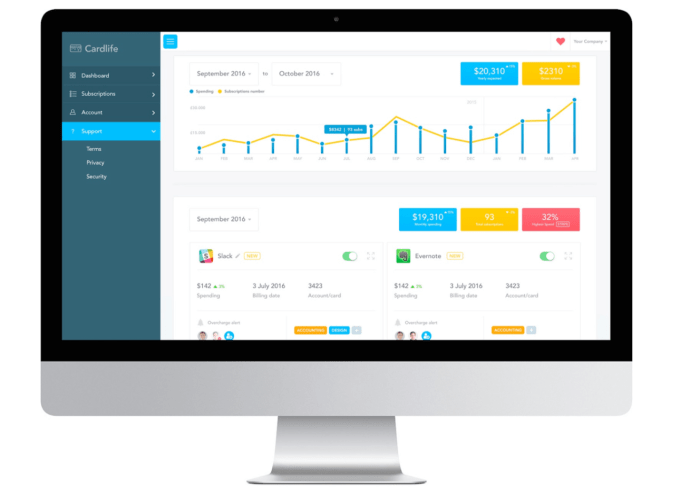
Cardlife is yet another SaaSsy management tool

screen-shot-2017-02-01-at-10-16-21-am Now that we’ve collectively signed up for billions of dollars of unused SaaS subscriptions it’s time to subscribed to a tool that helps us manage those subscriptions. Enter Cardlife, another player in the exciting world of SaaS management. “SaaS management,” you say. “Isn’t that just for the rich and famous?” No! The company manages over $4.7 million… Read More

Emoji marketing startup Inmoji raises another $1.5M

Inmoji campaigns Emojis — not just a fun way to avoid writing actual words, but also an opportunity for  ? Well, Inmoji, a startup that creates emoji-focused marketing campaigns, is announcing that it has raised an additional $1.5 million, bringing its total funding to $9 million. This comes a week after announcing a self-serve platform that should make these emoji campaigns accessible to a… Read More

Look What These 25 Regulations Are Doing to Small Businesses

You hear about the general impact of regulations on small businesses but here are 25 specific regulations that hurt small businesses.

Almost every business has to face some kind of regulations from government agencies in order to do business in the U.S. or elsewhere. Many of those regulations are designed to protect consumers or spur competition. But there can also be some negative effects for businesses even in the most well-intentioned regulations. Here are 25 regulations that could potentially impact your small business in some way.

Regulations That Hurt Small Businesses

The Affordable Care Act

Often referred to as “Obamacare,” the Affordable Care Act has been a hotly contested law that impacts businesses and individuals alike. Businesses with more than 50 employees could face penalties for not supplying health coverage options to employees. And many have also had to deal with increasing premiums. But certain rules could change under the new administration, as President Donald Trump and Congress have already taken steps toward at least a partial repeal.

Federal Tax Code

The federal tax code involves many different requirements and regulations for businesses of different sizes. And being that it’s so complicated and all-encompassing, it can represent a major burden for small businesses that have to dedicate time and resources to determine exactly what is required of them.

Overtime Rules

This one may be a bullet small businesses have dodged. But a relatively new rule related to paying overtime for workers could have added an extra burden. Though the rule has been blocked by federal court action, businesses of all sizes could have seen a major change in the exemption limit that determines which employees are eligible for overtime pay.

Government Contractor Pay

For businesses that have government contracts or subcontracts, there’s a rule that states workers must be paid at least $10.10 hourly for work done under those contracts.

Mandatory Sick Leave

There’s also a rule that states those government contractors must provide employees with up to eight days of paid sick leave a year.

Independent Contractor Rules

Since more and more businesses are utilizing the help of independent contractors over traditional employees, the rules regarding those contractors are changing. In some cases, if the contractor relies on a business for most of their work and income, the business has to meet some of the same requirements as it would with a traditional employee.

Safety and Health Act

Businesses must provide safe and sanitary work environments to employees, according to the Safety and Health Act of 1970. While creating a safe environment is almost certainly a plus for any business, this also means that many have to undergo frequent inspections and other time-consuming processes.

Reporting Requirements on Gender, Ethnicity and Pay

To combat discrimination and wage disparities, the Equal Opportunity Employment Commission wants to require businesses with 100 or more employees to report how many employees they have in different gender and ethnic groups, and how much those employees are paid. This could lead to more time spent on paperwork and potentially lead to even more obstacles for businesses that have legitimate reasons for potential pay disparities.

Clean Water Act

While most businesses would agree that protecting sources of clean water is a good thing, there’s a part of the Clean Water Act that some feel could restrict business activity. The rule states that wetlands can also be protected bodies of water. So businesses or property owners located on or near wetlands could face a number of obstacles when trying to get any construction or renovation work done on their property.

Coal Emission Rules

The coal industry is strongly regulated by clean air rules. So small businesses, including those that supply equipment to large coal plants, could see the need for their products or services phased out. However, there’s currently an appeal case in the works that could see some rules change.

Carbon Emissions Rules

There are also carbon emission rules that apply to energy providers. While small businesses aren’t often responsible for generating energy themselves, these regulations can potentially lead to increased prices for energy customers, which can include small businesses.

EPA’s Risk Management Program

Though this program is more likely to impact large businesses than small businesses, the EPA’s risk management program can lead to businesses expending certain resources toward creating emergency and risk management plans.

Truth-In-Advertising

You can’t include false or misleading claims in your advertising or marketing materials.  Businesses that do so could face fines or other penalties. And again, most small businesses wouldn’t object. But you also need to be able to back up any claims made in your advertising with proof that can withstand a challenge. This could lead to some extra work for you even though the act is meant only to protect consumers from false information.

Fair Packaging and Labeling Act

Businesses that sell food or other packaged goods are required to state all ingredients on the label, along with information about the product itself, the location of packaging and distribution. All information must also meet the standards of the Truth-In-Advertising Act, or businesses could face penalties.

FDA Regulations

If you sell any food based products outside of your state (aside from certain products that are monitored instead by the USDA) you’ll have to register as a facility and face inspections and other regulations with the FDA.

State and Local Inspections

If you have a smaller or home-based business where you make food items to sell — even if you only do so within your state — you’re still subject to inspections and other regulations from your local or state governments.

USDA Regulations

Agriculture businesses are also subject to a number of different inspections and regulations depending on the food products or other items manufactured or sold by businesses.

Joint Employment Rules

Franchise businesses and subcontractors that work with other businesses could be considered “joint employers” with those other parties. For those small businesses, that can mean facing regulations meant for businesses with more employees and higher revenue.

Minimum Wage

The federal minimum wage for non-exempt employees is currently $7.25. So businesses must pay at least that much hourly to regular employees. However, many states have set higher minimum wages for employees recently.

Unemployment Insurance

Businesses with employees are required by law to provide certain types of insurance, including Workers’ Compensation, unemployment insurance and in some cases disability insurance.

Immigration and Nationality Act

Businesses hiring for jobs based in the U.S. can only hire U.S. citizens or those who have obtained work visas. So businesses must complete the necessary paperwork and submit forms to prove compliance.

Employee Retirement Income Security Act

If you have full-time employees, you may also be required to provide retirement benefit options to them.

Identity Theft Regulation

If your business collects financial or personal information from customers, you could be held liable if that information is stolen or used in any identity theft schemes.

Fiduciary Rules for Advisors

Designed to protect investors from conflicts of interest by investment advisors, the Department of Labor’s fiduciary rule places some extra compliance costs on professionals that provide financial advice and guidance. While this could potentially help to protect small businesses that use these services, it could also potentially lead to increased costs.

State Licensing Requirements

Not all business regulations come from the federal level. Each state also has its own set of licensing requirements that businesses there must comply with. And researching and keeping up with those requirements can take valuable time and resources from small businesses.

Capitol Photo via Shutterstock

This article, "Look What These 25 Regulations Are Doing to Small Businesses" was first published on Small Business Trends


10 big earnings questions Facebook probably won’t answer

facebook-money Teens and Snapchat? Instagram earning money finally? The impact of the fake news scandal? These are what we wish Facebook would talk about on today’s Q4 earnings call. Facebook’s business is expanding in every direction, but it breaks out very little of that, keeping investors and the public in the dark about its newer revenue streams. Meanwhile, controversies and competition can… Read More

Struggling households urged to ACT NOW to beat April water bill RISES


LOW-INCOME households can take action now to beat an April rise in water bills by tapping into the financial support available from their water company.

Chinese news reading app Toutiao acquires Flipagram

HQ Popular video app Flipagram is getting acquired by Chinese company Toutiao for an undisclosed amount. Flipagram was once a social media darling but the startup has been quiet recently. Flipagram will remain an independent product for the time being and the team will stay in its own office in the U.S. Recode first reported that Flipagram was looking for a buyer. Flipagram had raised a big… Read More

Ride With Local builds a new marketplace for actions sports and adventure tourism


ACTION sports fans and adventure tourists searching for top spots and instructors can now head to www.ridewithlocal.com, a new marketplace bringing them all together for the first time.