Saturday, 2 March 2019

10 Tips for Updating Your Small Biz Strategies with New Innovations

Updated tech is extremely important for small business efficiency. Even if your general strategies remain the same, new innovations and trends can impact how you deploy them. To help you update everything from customer service to social media marketing, here are some insights from members of the online small business community.

Build a Machine Learning Chatbot for Your Business

Chatbots can be extremely helpful for small businesses looking to automate parts of their customer service processes. Machine learning has led to many helpful innovations to make these chatbots even more useful. Read about the options and how your business can benefit in this Azoft post by Ivan Ozhiganov.

Embrace Digital Marketing Trends

There are hoards of new technology making an impact on marketing today. If you want your business to stay ahead of the competition, you need to embrace new trends and stay on top of innovation. In this CoSchedule Blog post, Ann Smarty dives into some of today’s trends and goes over how you can embrace them in your business.

Improve Your Internal Linking Strategy

Internal links can have a major impact on the SEO of your blog or website, but many small businesses overlook this part of their strategy. To learn how to improve, here are some tips from Janice Wald of Mostly Blogging. You can also see commentary from members of the BizSugar community here.

Deliver Loyalty Campaigns with Amazon Moments

Amazon is constantly innovating with new tech, and some of those innovations may be useful to small businesses as well. Amazon Moments is one new offering that small online retailers can use to facilitate loyalty campaigns. Learn more about the offering and how it can benefit your business in this Marketing Land post by Amy Gesenhues.

Learn How to Think About SEO

SEO as a concept has been around for years, but the exact strategies and minutiae are constantly changing. However, the way you think about your company’s search engine strategy is actually one of the most important components. Neil Patel elaborates in this blog post.

Make an Omnichannel Business

One of the major trends for businesses of all sizes today is the impact of the omnichannel business. Creating a strategy that allows you to interact with customers in a variety of different ways can be incredibly beneficial. Ben Mulholland goes into more detail about the concept and how to employ this strategy in this post on the Process Street blog.

Measure the ROI of Your Social Media Marketing

Your business has likely already started using social media marketing to some degree. But have you actually determined how much your time and monetary investments have helped your business. This is an important next step, which Ivan Widjaya of SMB CEO details in this post.

Use These eCommerce Shipping Software Solutions

If you run an ecommerce business, there are plenty of different solutions available to help you manage your shipping. It’s important to choose one that meets your specific needs and offers updated technology. Here are some of the options from Eyal Katz on the Namogoo blog. You can also see reaction from the BizSugar community here.

Look Out for Trends in Google Video Ads

Video marketing has been a popular strategy for businesses in recent years. But now, video advertising with Google may be something for more small companies to look into. If you’re interested in learning more about the trends in this area, read this Search Engine Watch post by Mike Ncube.

Keep These Email Marketing Best Practices in Mind

Email marketing is another strategy that certainly isn’t new for small businesses. But it’s still important to update your specific practices regularly. To make the most of your email marketing campaigns in 2019, check out this GetResponse post by Michal Leszczynski.

If you’d like to suggest your favorite small business content to be considered for an upcoming community roundup, please send your news tips to: sbtips@gmail.com.

Image: Depositphotos.com

This article, "10 Tips for Updating Your Small Biz Strategies with New Innovations" was first published on Small Business Trends


Why Promotional Merchandise Needs to be Key Part of Your Advertising Strategy

Promotional merchandise are powerful and inexpensive to increase your brand awareness and grow sales. They should be part of your advertising strategy.

[[ This is a content summary only. Visit my website for full links, other content, and more! ]]


Best Dropshipping Products to Sell Online

Best Dropshipping Products to Sell Online

Selling things online can be a fantastic way to make an income, work from the luxury of your own home, be your own boss and improve your work/life balance, providing you’ve got the right product.

If you’re looking for an effective way to make a decent profit by selling items online, then look no further than using the dropshipping approach to ecommerce.

What is Dropshipping

Dropshipping is the name given to an ecommerce model which enables retailers to purchase products individually from wholesalers, who ship them directly to their customers. Rather than having to fork out hundreds of dollars of large amounts of inventory, retailers simply partner with a drop shipping supplier and list their products for sale.

Entrepreneurs can therefore sell items online without having to carry any inventory.

Naturally, some dropshipping products work better than others, and if you want to optimize the success of a dropshipping business, you’ll need to sell the right products.

Best Dropshipping Products

To give you a head start, take a look at the following ten best dropshipping products to sell online.

Athleisure

From sports bras to sweatpants, headbands to tank tops, athleisure is a genre of clothing consumers can’t seem to get enough of. As well as being high in demand, this popular type of leisure/sports wear provides dropshipping businesses with the opportunity to either start their own standalone athleisure store or sell these items alongside a broader fashion or sports ecommerce store.

Anti-Aging Cream

Nobody can cling on to eternally youthful looks but there is a wealth of products out there that promise to prolong the aging process. By selling anti-aging creams online directly from the wholesalers, you can capitalize on a market that is expected to surpass $330 billion in 2021.

Photos

Photos remain a top product to sell online, with a staggering 70 million photos, illustrations and vectors being sold on Shutterstock. Exploit the high demand for quality, unique and compelling photography and images by starting your own dropshipping photography business.

Phone Accessories

From cases to chargers, earphones to power banks, mobile phone accessories are almost as essential as mobile phones are in day-to-day life. The rapid increase in sales of mobile phone accessories and being able to purchase them from wholesalers and sell them on at an inflated price, means such products are one of the best items to dropship online.

Smoothie Blenders

As we become increasingly health conscious, products like smoothie blenders that promote healthy eating and living are in high demand. Buying these popular items directly from the wholesalers, presents an opportunity to make money selling them online.

Shapewear

By 2022, the shapewear market is expected to reach an incredible $5.6 billion In sales. Given the prolific demand for undergarments designed to temporarily alter the wearer’s shape, shapewear is a lucrative dropshipping product to sell online.

Travel Accessories

Traveler-focused gadgets and accessories are also in high demand with the likes of travel pillows, rucksacks, digital hanging luggage scales and passport covers being best-selling products on Amazon. Take advantage of growing ‘digital-nomad’ lifestyles and the rising demand for innovative and convenient travel accessories by selling dropshipping travel items online.

Posture Correction Belts

With more and more people working remotely from their own desks and a greater emphasis on creating a healthy lifestyle at work, posture correction belts have become a sought-after product and consequently are a good dropshipping product to sell. These popular items are inexpensive to buy from wholesalers meaning you make tidy profit selling them from your own ecommerce store.

Smartwatches

Approximately 1.2 billion watches are sold around the world each year, with high-tech, minimalist smartwatches being at the forefront in global watch sales. These small, light and highly sought-after products make a great choice of item to sell as a dropshipping merchant.

Teeth Whitening Kits

We all have teeth and most of us want white teeth, hence the demand for teeth whitening kits that significantly improve the appearance of our smiles. Research shows the global demand for teeth whitening products is expected to reach $7.4 billion by 2024, making it a great product to sell online.

Image: DepositPhotos.com

This article, "Best Dropshipping Products to Sell Online" was first published on Small Business Trends


Startups Weekly: Lyft’s S-1, cash for fertility startups and litigious VCs

Startups reporters everywhere rejoiced Friday morning when the first unicorn S-1 of 2019 emerged from under lock and key for us all to unpack, analyze and enjoy. The TechCrunch office, at least Megan Rose Dickey’s and my corner, was buzzing with excitement, and Crunchbase News editor-in-chief, (my Equity co-host), apparently had to make himself a cup of Earl Grey tea to calm down post-S-1 deep dive.

I’ve already said a lot about the filing on Equity’s latest episode, available here, and in my story on the document, so I will keep this short. Here are the nuts and bolts:

Lyft’s revenue grew from $1.06 billion to nearly $2.2 billion from 2017 to 2018. Lyft’s costs rose dramatically during 2018, compared to the year prior. In fact, Lyft’s total cost profile rose from $1.77 billion in 2017 to a staggering $3.13 billion in 2018. And as far as losses, the business posted a net loss of $911 million in 2018 and $688 million in losses the previous year.

Onwards.

VCs want to help you get pregnant 

This week, I published a sweeping report on startups focused on improving various pain points in a women’s fertility journey. I spent months reporting on the space, learning from the founders of FertilityIQ, Kindbody, Nurx, Natural Cycles and more. Check it out here and be warned, you need an Extra Crunch subscription to read the entire piece. You can purchase an Extra Crunch subscription here.

iHeartMedia And WeWork's "Work Radio" Launch Party

WeWork sheds weak talent

Despite its mountain of venture capital funding, WeWork confirmed layoffs that affected 3 percent of its global workforce on Friday. The company told TechCrunch the cuts were part of an annual performance review process and that they still plan to wildly increase the size of their workforce in 2019. And while we’re on the subject of layoffs, Rackspace, the hosted private cloud vendor, let go of around 200 workers, or 3 percent of its worldwide workforce of 6,600 employees.

Deal of the week

SoftBank’s Vision Fund is pouring $1.5 billion into online car trading group Chehaoduo, which literally means “many cars” in Chinese. The startup, based in Beijing, operates peer-to-peer online marketplace Guazi for used vehicles, and Maodou, which retails new sedans through direct sales and financial leasing. TechCrunch’s Rita Liao reports “the sizable funding round arrived at a time when China’s softening economy is sapping consumer confidence, but the company’s two-pronged strategy makes sure it covers a broad range of consumer demands.”

Binary Capital’s implosion

You thought it was over; Binary Capital has shut down after all. But here’s the latest: Binary co-founder Justin Caldbeck has sued his former co-founder Jonathan Teo, alleging breach of contract, breach of fiduciary duty, fraud and more. Caldbeck, accused of sexual harassment and unwanted sexual advances in 2017, took an indefinite leave of absence from Binary, leaving to Teo all the responsibilities of the $175 million fund. Shortly after, Teo offered to step down in a last-ditch effort to keep the firm afloat. Ultimately, neither of them could save the fallen firm.

Startup cash

Sequoia-backed Medallia raises $70M at a $2.4B valuation
SoFi founder Mike Cagney’s new company Figure just raised another $65M
ThirdLove, the direct-to-consumer lingerie startup, gets a $55M boost
Zum, a ridesharing service for kids, raises $40M
ClassDojo, an app to help teachers and parents communicate better, raises $35M
Presto raises $30M to bring its AI platform and tabletop ordering hardware to restaurant chains
Two Chairs nabs $7M for its client-therapist matching app and brick-and-mortar clinics
Dipsea raises $5.5M for short-form, sexy audio stories

Senior tech

I think tech for seniors will be amongst the hottest sectors for venture capital investment in the next few years, and HAX Labs looks to be on top of the trend. The accelerator program, located in San Francisco and Shenzhen, announced the launch of an initiative targeted at helping startups advance the state of tech for people over the age of 65. The program will invest $250,000 in the startups, as well as provide mentorship, office space, education and the other standard accelerator offerings.

Can a term sheet be too long?

Short answer: No. According to TechCrunch’s Danny Crichton, a shorter term sheet isn’t always better, despite popular beliefs. “Here’s the thing, term sheets have an incredibly important purpose, which is to set forth in clear language the terms of a deal. Unfortunately in modern venture capital, there are a lot of terms that have to be negotiated in any equity round, from financial terms to option pools, to board structure, to voting rights on major business decisions like selling the company, and much more. Simpler term sheets either relegate many of these items to ‘standard venture capital terms apply’ or some other vague language, or just wholly don’t mention them at all.” Keep reading here.

Uber and Lyft’s discount war

OK, just a little more on the ride-hailing giants before we close out. If you’ve been wondering why Uber and Lyft have been sending you push notifications complete with sweet discounts, here’s the deal: To gain market share in the final weeks ahead of their respective IPOs, Uber and Lyft have been deploying discounts to riders to encourage them to take additional rides. The strategy appears to be working; Lyft reportedly increased its market share from 30 to 34 percent amid the discount campaign.

Listen to me talk

If you enjoy this newsletter, be sure to check out TechCrunch’s venture-focused podcast, Equity. In this week’s episode, available here, Crunchbase editor-in-chief Alex Wilhelm, TechCrunch’s Silicon Valley editor Connie Loizos and I chatted with NEA’s Jonathan Golden about female-founded startup cash, Lyft and Uber’s discounts and more.

Want more TechCrunch newsletters? Sign up here.


This Week in Small Business News: Alexa May be the Voice App of the Future

Are you using a voice assistant in your daily small business operations yet?

These are devices that use the “Hey Google” Assistant app or Amazon Alexa or Siri.

Amazon Alexa devices were among the hottest selling items last holiday season so it stands to reason that your answer is yes more often than no. Voice assistants seem too be everywhere but are you using them?

And which one are you using?

If you’re stuck between two or three voice assistants, or don’t know which to pick, consider this. A new survey released this week by Uberall finds that Alexa may be the way to go.

In the survey of people who market to small businesses, most believed Alexa would be the most effective in the future. Google Assistant is a somewhat close second in the survey.

Have you considered using voice assistants like Alexa and Google to promote your business in any way? Even if you don’t market to small businesses, is there some way these voice apps can connect you with your customers in a more engaging and profitable way? Let us know.

For the rest of the week in small business news, check out this roundup:

Management

Collaboration Software Meemim Shuts Down But Users Can Keep Accounts Until 2020

In an emailed notice, Meemim said their platform will be retired at the end of February 2019. This will give existing clients a grace period of about a month to find an alternative knowledge management solution as well as migrate their data. Meemim said customers will have to move the data between the systems manually because of the cost involved in providing data extracts.

Sales

46% of Salespeople Missed Their Quota in 2018 – Here’s Why

There’s some new research out that says for the second year in a row, many salespeople aren’t hitting their numbers. CSO Insights, the research division of Miller Heiman Group, recently released their Annual Sales Performance Study, “Selling in the Age of Ceaseless Change,” and it showed that only 53% made quotas in 2018.

Startup

33% of Small Business Owners Lack the Motivation They Had When Business Was New

Do you still have the same passion for your business as when you first started? A new study from Vistaprint has revealed 33% of small business owners in the US say they don’t have the same motivation as in those early days of their entrepreneurial journey. In the study, more than a third or 36% said they experience this lack of motivation several times a year.

Taxes

Owe Money on Your Small Business Taxes? Here’s What You Can Do About It

Finding out that you owe taxes can be a bit unnerving, especially if you owe more than what you expected. Don’t worry — it is not the end of the world if you’ve gone through the numbers and you’re left with a tax bill. Here are a few steps to take: Get Ahead of It You can’t run from the IRS. They will eventually find you, and they’ll eventually come looking for their money.

Technology Trends

Don’t Be Fooled by the Latest Email Scam

The Council of Better Business Bureaus (CBBB) is warning of a current really clever email scam. How did the CBBB know about this email scam? The Better Business Bureau (BBB) nearly fell for it. Latest Email Scams This latest scam pretends to be an alert from the project management software your company might be using.

Beware! 60% of Businesses Lose Their Data Through Printer Security Breaches

Every connected peripheral which becomes part of an organization’s network is a potential vector for an attack. With printers, an integral part of most businesses, the security vulnerabilities they pose has been addressed in a new report from Quocirca.

Image: Depositphotos.com

This article, "This Week in Small Business News: Alexa May be the Voice App of the Future" was first published on Small Business Trends


WeWork confirms it has laid off 300 employees

Co-working juggernaut WeWork (now known as the We Company) has laid-off 3 percent of its global workforce or roughly 300 employees, the company told TechCrunch. The heavily-funded business, most recently valued at a whopping $47 billion, employs 10,000 people around the world.

Headquartered in New York, the lay-offs were performance-related, part of the company’s perfunctory process of shedding dead weight. Among the departments impacted by the cuts were WeWork’s engineering team, product and user experience design.

“Over the past nine years, WeWork has grown into one of the largest global physical networks thanks to the hard work and dedication of our team,” the company said in a statement provided to TechCrunch. “WeWork recently conducted a standard annual performance review process. Our global workforce is now more than 10,000 strong, and we remain committed to continuing to grow and scale in 2019, including hiring an additional 6,000 employees.”

WeWork has raised more than $8 billion in venture capital funding since it emerged to disrupt office-sharing. The business is backed significantly by the SoftBank Vision Fund, which invested $2 billion in WeWork as recently as January.


Friday, 1 March 2019

Tiger Global and Ant Financial lead $500M investment in China’s shared housing startup Danke

The 50 Best Cities to Open a Restaurant

The 50 Best Cities to Open a Restaurant in 2019

If you are looking for a new location to open a restaurant or branch out, a report released by Bid-on-Equipment has the data so you can make an informed decision.

The company analyzed 236 cities across the U.S including the 150 most populous cities to come up with the top 50 locations for opening a restaurant.

There are many different types of restaurants and the budget runs the gamut. So the location you choose also has to take that into consideration. Bid-on-Equipment analyzed several different factors to come up with the top 50 cities.

The report looked at four factors and assigned points to each with a total of 100 points. Annual restaurant sales per capita (50 points), restaurants per capita (25 points), number of restaurant industry workers per capita (10 points), and median income in each city (15 points). Based on the data from these benchmarks, the best cities for opening a restaurant in the US were identified.

The report collected the data for restaurant sales, restaurants per capita and workforce from the U.S. Census Bureau. The American Community Survey provided the median income data.

Best Cities to Open a Restaurant

If you were told Arlington, VA; Ann Arbor, MI; and Washington, D.C. the top three cities for starting a restaurant, you would probably need more evidence before you believed it. But according to the report, these cites did indeed take the top three spots.

With per capita sales of $4,556 and 377 restaurants, 7,711 workers, and an income of $108,706 Arlington, VA delivered some great numbers.  Ann Arbor, MI also had some decent numbers, but the median income was almost half of Arlington at $57,697.

Washington, D.C., on the other hand, had better median income at $117,614, but the number of restaurants per capita was down to 292 compared to Arlington, which also happens to be in the same state.

San Francisco, CA was number four with a median income of $104,879 followed by Atlanta, GA with only $77,382 rounding up the top five.

The remaining top 10 cities are Cambridge, MA at number 6, followed by Boston, MA; Plano, TX; Seattle, WA; and Bellevue, WA.

The surprising data on this report is the omission of cities in the top 10 and the list overall which are traditionally known for having the best restaurant in the US and in some cases the world.

The report points out small restaurants which thrive and operate in small cities make up the large percentage of the industry. And they don’t have to be in New York or Los Angeles to make it work.

The Restaurant Industry

According to the National Restaurant Association, there were more than 1 million restaurant locations in the US in  2018. This segment employed 15.1 million people for the year and it represents 10% of the overall workforce in the country.

With estimated revenue of $825 billion in 2018, this is an industry which gives first-time entrepreneurs great opportunities. The restaurant association says 8 in 10 restaurant owners started their career in the industry at an entry-level position.

Location

Running a restaurant is a tough and highly competitive business. Many different factors go into making it a success, including the location. Some cities are known for being a foodie’s paradise, while others have their work cut out for them to make that claim.

Depending on the kind of restaurant you want to open, the location will play a very important role. But at the end of the day, it is the food you serve which will speak volumes.

After all, we’ve all been to a hole in the wall eatery in a questionable location, with a line outside the door waiting to get some of that good food. If you can afford a good location and still have great food to keep your business profitable, that is great. But it is not absolutely necessary to make it happen.

Here is the list of the top 50 cities.

The 50 Best Cities to Open a Restaurant in 2019

Image: Depositphotos.com

This article, "The 50 Best Cities to Open a Restaurant" was first published on Small Business Trends


This Small Business May Be Old School – But It Teaches a Valuable Lesson

I’m sure I’ve mentioned before that my wife is a teacher. And every year more or less around this time she starts up her class store.

It’s a good way to motivate the kids and teach them about money and saving. There’s a few good items — some LEGO minifigs, stickers, colored pens — but honestly most of the stuff is pretty cheap. It’s more about the experience than the actual items. And that prompted this cartoon.

This article, "This Small Business May Be Old School – But It Teaches a Valuable Lesson" was first published on Small Business Trends


The Nordic Web Ventures raises a second fund and picks up Atomico’s Niklas Zennström as a backer

The Nordic Web Ventures, the ‘pre-seed’ investment firm founded by Neil Murray in late 2017, has raised a second fund to continue backing very early-stage startups within the Nordic ecosystem.

The remit of the new “Fund II” is largely unchanged from the first fund, promising to write the first cheque of between $50,000 and $75,000 for the most promising founders in the region.

In total, the size of The Nordic Web Ventures’ second fund is $1.5 million, which should see it have enough capital to make another 20 or more investments across the next 18-24 months, making the firm one of the most active investors in the region. Existing portfolio startups from Fund I include Engaging Care, TPH, Uizard, Meeshkan, SafetyWing, Confrere.

In addition to an all-star investor line up of Fund I LPs who are returning for a second bite — such as Index’s Martin Mignot, Point Nine’s Christoph Janz, and Philipp Moehring and Andy Chung of AngelList — Fund II sees a number of new LPs join. Most notably, perhaps, Skype and Atomico founder Niklas Zennström has invested, in addition to Atomico partner Sophia Bendz, who was previously an exec at Spotify and is already a very active angel investor in the Nordics and beyond.

Revealing that The Nordic Web Ventures plans to raise a much larger fund in the future, Murray tells me the plan for Fund II is to “fundamentally change” the early-stage landscape in one of Europe’s most interesting regions. He says the fund is also a great example of how Europe’s investment landscape is changing, with individuals from major European venture capital firms invested, as well as receiving backing “from some of the Nordic’s most successful entrepreneurs”.

Cue a statement from Atomico’s Sophia Bendz: “Neil and I share the same passion for entrepreneurship and both care a lot about the early stage ecosystem… The Nordic Web Ventures can, through their LP networks and expertise, provide dealflow, hands-on support and advice for Nordic pre-seed and seed companies, something that is super helpful for the founders and that’s what it’s all about in the end, being valuable to the entrepreneurs in a meaningful and relevant way”.

To that end, I’m also told that having raised Fund II, The Nordic Web publication and The Nordic Web Ventures will merge into a single entity, with The
Nordic Web’s core focus moving forward “to support and strengthen the Nordic ecosystem through investment, analysis and community”.


5 Qualities of Unicorn Marketers Small Business Owners Should Mimic

5 Things All Unicorn Marketers Have in Common
Unicorn marketers are rare — so rare that I’ve only come across a few in the wild.

Some of these unicorn marketers were consultants.

Some were part of an in-house marketing team.

A few of them were marketing executives.

Characteristics of Unicorn Marketers

All of them had five things in common.

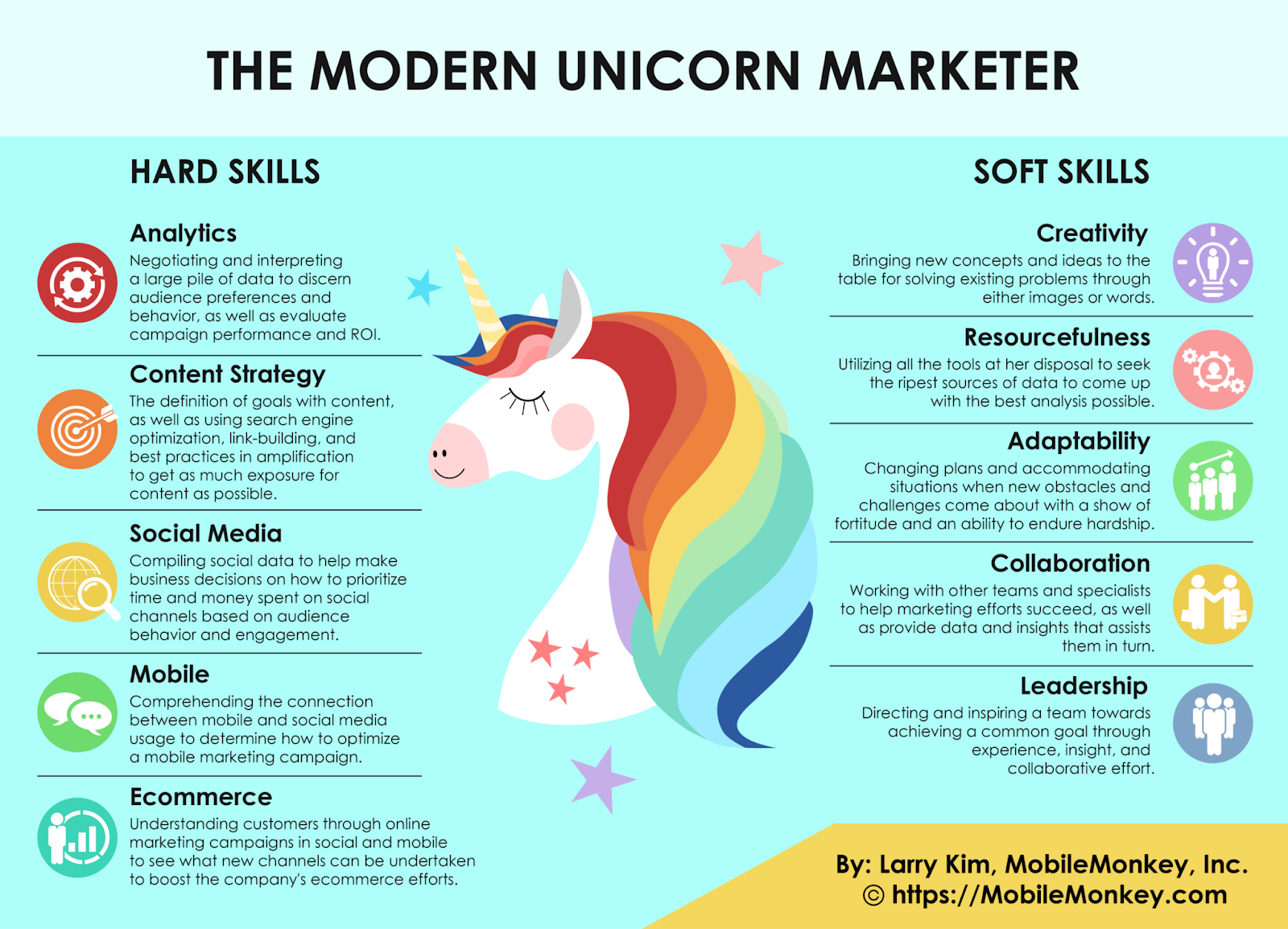
I’ve explained before that modern unicorn marketers have a blend of hard skills and soft skills.

5 Things All Unicorn Marketers Have in Common

But what do they do with that colorful cocktail of unicorn marketing skills?

These five things.

1. Unicorn Marketers Expect Explosive Results.

When I talk about unicorns people think I’m talking about magic.

Let me be clear about something. Marketing is not magic.

But unicorn marketers do expect to get insane results (borderline magic) from their marketing efforts.

Some might call it delusional, but these marketers truly believe that they will win the marketing lottery.

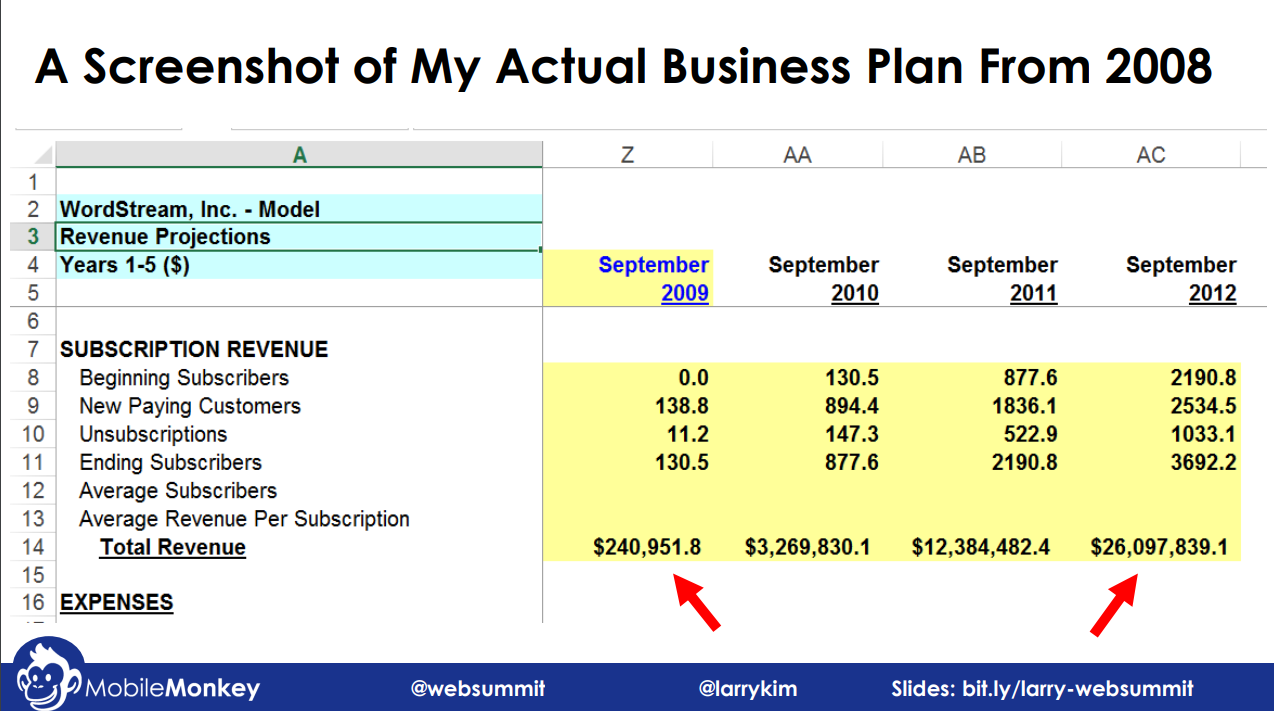
In 2008, I was hogging Panera Bread bandwidth and inhaling way too many diet Cokes, while coming up with a business plan.

It looked like this:

5 Things All Unicorn Marketers Have in Common

While the 2008 economy was imploding, I was devising plans to skyrocket my not-yet-created business from $240k to $26 million in revenue in three years.

“HA HA HA!”

I was talented at drinking diet cokes and mooching Wifi, not at pioneering startups, let alone startups with a multi-million dollar annual revenue.

But explosive results often come when you believe that they will.

The whole theory behind unicorn marketing is pretty simple.

It holds that 98% of marketing efforts fall flat.

Only 2% of efforts get results — and that 2% of results drives most of a company’s clickthroughs, views, shares, conversion rates, and revenue.

This 98% and 2% data isn’t arbitrary, by the way.

It’s the result of relentless content testing that I did at my previous company.

That 2% — that’s unicorn stuff.

And that’s what unicorn marketers believe is going to happen.

But it’s not magic.

It stems from something else.

2. Unicorn Marketers will Try Anything and Everything.

Donkey marketers — creatures that are content to hoe their row — get siloed about their marketing.

They think, “Okay, I’m an SEO. So I’ll do SEO stuff. I’ll optimize the metadata and alt-tag the images, that’s what I’ll do.”

But a unicorn marketer — creatures that prance in fields and poop rainbows — they don’t see boundaries, don’t hoe rows, and don’t believe in silos.

They try anything and everything they can conceive of.

The donkey thinks, “But, wait, you can’t do that. That’s not really a thing, and I don’t think …”

The unicorn replies, “I’m going to try it anyway.”

The more things they try, the greater chance they have of discovering that 2% sweet spot where unicorn results bloom.

I’ve seen unicorns do things that seemed absolutely stupid. But as you can probably guess, those were the things that got genius results.

Heck, I’m personally taking a major gamble on Facebook messenger marketing right now, a marketing channel that didn’t even exist a couple of years ago.

Some unicorns have done things that could hardly be described as marketing. But results don’t care about labels.

And the not-sure-it’s-even-marketing moves turned into millions of dollars in revenue for their companies.

And, that’s what really matters — results.

3. Unicorn Marketers Obsess Over Results.

Unicorn marketers can be hard-headed. They’re not into following rules or abiding by some playbook.

All they truly care about?

Results.

Donkey marketers dot every i and cross every t, hoping that by following someone’s rules, they will achieve marketing success.

They measure success in terms of quantitative output — 3 blogs per week.

But unicorns?

They run roughshod over these arbitrary rules.

They think outside the box, color outside the lines, toss the manual (pick your metaphor) they do random stuff.

I don’t care how smart you are.

I care about whether or not your relentless efforts produced big results.

In this game, the only thing that matters are outcomes.

Eventually, something works. And that’s the unicorn moment.

It’s the results that they’ve been angling for all this time.

If following the rules isn’t giving you results, write some new rules.

Anyone who parrots some marketing method is anti-unicorn.

It’s not that unicorns spit on rulebooks and disparage boundaries.

Instead, unicorns believe that a method is only justified when it returns results.

And when it does, they know exactly what to do about it.

4. Unicorn Marketers Repeat their Unicorn Moves Until They Stop Working.

If you’re expecting results, trying everything, and addicted to results, then you will find your unicorn growth hack — something that will blow up with eye-popping results.

When you find that one thing, do it again.

And again.

And yet again.

Until it stops working.

This is the way of the unicorn. Unicorns make unicorn babies.

If a donkey marketer does something remarkable, there will be a round of high-fives and back-slaps, and then it’s onto the next thing on the content calendar.

Unicorn marketers, on the other hand, know they’ve unlocked a unicorn hack. And when they do, they double down on it.

Repurpose the content.

Keep promoting the asset.

Maintain the ad configuration.

Launch a webinar.

Turn it into an infographic.

Make a video about it.

Produce deep content on that single subject.

Replicate the heck out of your unicorn hack as long as it keeps delivering results.

5. Unicorn Marketers are just Donkey Marketers Pretending to be Unicorns.

Here’s the dirty secret that most unicorn marketers won’t tell you.

They’re actually donkeys. And they’re pretending to be unicorns.

If you strap a unicorn horn onto a donkey, it sort of looks like a unicorn, right?

A lot of unicorn marketers are strapping on their proverbial unicorn horns because it makes them look like a unicorn.

Once they look the part, they act the part.

What does this mean in real life?

It sounds cliche: Fake it till you make it.

I did this in the early days of my first startup with a few simple and inexpensive hacks.

Sure, my company didn’t have the legacy of an IBM or the reputation of a Microsoft, but I knew how to read social media algorithms and generate real traffic to my company’s content so we looked big.

I pretended that my company was a unicorn by promoting our content to audiences in the millions.

The massive awareness I achieved was the catalyst. It transmogrified a donkey into an actual unicorn.

Real people, real clickthroughs, real conversions, and real revenue started pouring in, and I knew that the donkey act had produced a unicorn reality.

Sometimes, acting like you are a unicorn is the best way to become one.

Conclusion

Unicorn marketers are made, not born.

The characteristics I described here can be learned, built, and formed through diligence, hard work, and time.

Granted, this article is not about the tactical methods that unicorns use. It’s about the mindset of a unicorn — what they expect, how they try, why they obsess, and what they do to achieve unicorn status.

I write it, think it, read it, or say it every day — be a unicorn in a sea of donkeys.

My hope is that I’ll find more and more marketing unicorns in the wild.

Image: Depositphotos.com

This article, "5 Qualities of Unicorn Marketers Small Business Owners Should Mimic" was first published on Small Business Trends


Cherry lets startup employees choose their own office perks

Forget the office ping pong table, Cherry, a startup in Y Combinator’s latest batch, wants to let employees take company perks into their own hands.

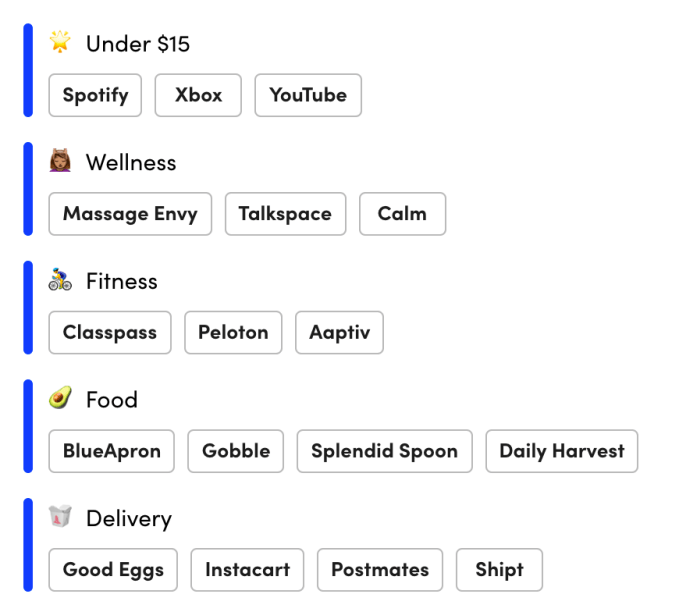
Cherry co-founders (and sisters) Gillian and Emily O’Brien say their Slackbot marketplace will let employees completely personalize the lifestyle benefits they get from their company, allowing them to set up a Spotify Premium account or buy a subscription to Classpass instead of just taking what perks their company dishes out at face value.

Companies will pay huge amounts of money to deliver sweeping employee memberships or build a company gym even if there are only a few people interested in using them. Cherry could potentially eliminate a lot of wasted efforts while still managing to  potential recruits. The available subscriptions run the gamut from things like Classpass, Netflix, Spotify, Peloton, Postmates and other services that allow employees to feel like they’re getting.

A sampling of Cherry’s 40+ available services.

“There’s money that [companies] are wasting that they could save by just giving everyone this budget and letting them choose for themselves,” CEO Gillian O’Brien told TechCrunch. “We also feel [our service] really stands out on an offer — it could be a big differentiator in terms of hiring or just having that on a company’s careers page.”
Users set up their own subscription accounts; Cherry handles paying for employee perks via gift codes and lets them make changes to their cyber-benefits whenever they’d like.

Cherry is charging startups $149 per month to manage the first 10 employees with $15 per person. You can designate as little as $15 per month per employee, but given that it costs that much per employee to even use the service, it’s more likely that customers will be throwing down a bit more.

For now, all of this takes place in Slack via a Cherry chatbot, you can pick from available options by tapping buttons; it’s all pretty lightweight and simple.

The service seems like something that would be especially attractive to remote teams, giving employees who aren’t able to stop in for a free lunch or get a monthly massage the ability to treat themselves on company dime. This also enables smaller startups to just throw money at an attractive employee perks solution without having to add more responsibilities to someone’s job.

Cherry’s platform is live now, you can sign-up and check things out on their website.