Monday, 4 March 2019

Attention: Stop Facebook Messenger from Banning your Page

What to Do When You Are Blocked from Sending Facebook Messages

Guys, this is pretty embarrassing.

Last month I got banned by Facebook Messenger because too many people were blocking my Messenger bot.

This is what I saw in my Facebook Business Page last month —

The error message was:

Limits have been placed on Larry Kim 
This page is restricted from the use of message tags, subscription and broadcast messaging, and sponsored messages. Your page will still be able to respond to messages according to standard messaging permissions.

Yikes, right?

In this post, you’ll get the answer to three critical questions about Facebook Messenger marketing.

  1. Is your Facebook page at risk of being banned?
  2. Why are people blocking you on Facebook Messenger?
  3. What do you do if Facebook Messenger bans you?

Is your Facebook Page at Risk of Being Banned by Facebook Messenger?

Facebook Messenger bans pages that have really bad engagement metrics.

It’s the same way that MailChimp or any other email marketing program works. If your marketing emails are marked as spam, you lose the privilege to use the platform.

In Facebook Messenger marketing, it boils down to one main thing: high block rates.

If you play fast and loose with Facebook Messenger chatbots, things can get dicey. And if your block rates go up, Facebook will treat you like a donkey. Boom. Banned.

Do not be a Facebook Messenger Donkey

How to Check your Facebook Messenger Block Rates

So how do you figure out if your page is getting bad engagement metrics?

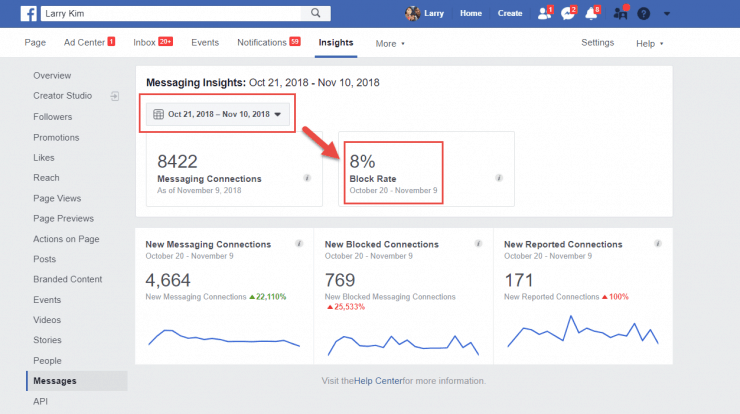
Look in your Business Manager or Facebook Page Insights. From your Facebook Business Page, click Insights, then Messages:

Facebook Messenger Insights

This number shows how many connections you had made in the month, how many were blocked, and the overall percentage — your block rate.

What’s an Average Block Rate and What’s a High Block Rate on Facebook Messenger?

  • 1-2% – Normal. A few people blocking you on Facebook Messenger, but nothing to get concerned about.
  • 3-5% – Above average. If your number starts creeping up to 3% or more, it’s time to take a look at what you’re doing and why more people are blocking you.
  • 6-8% – High. Something is clearly off, and you’re approaching the danger zone.

This is what happened to my page just before I got blocked. Check out my block rate during 20 days in October and November as I was ramping up a major ad campaign.

I had 8,422 Facebook Messenger connections. A whopping 8% of them blocked me.
Facebook Messenger Insights Block Rate

This is terrible.

Why? Because people have to make a conscious effort to block me.

Here’s how someone blocks you on Messenger.

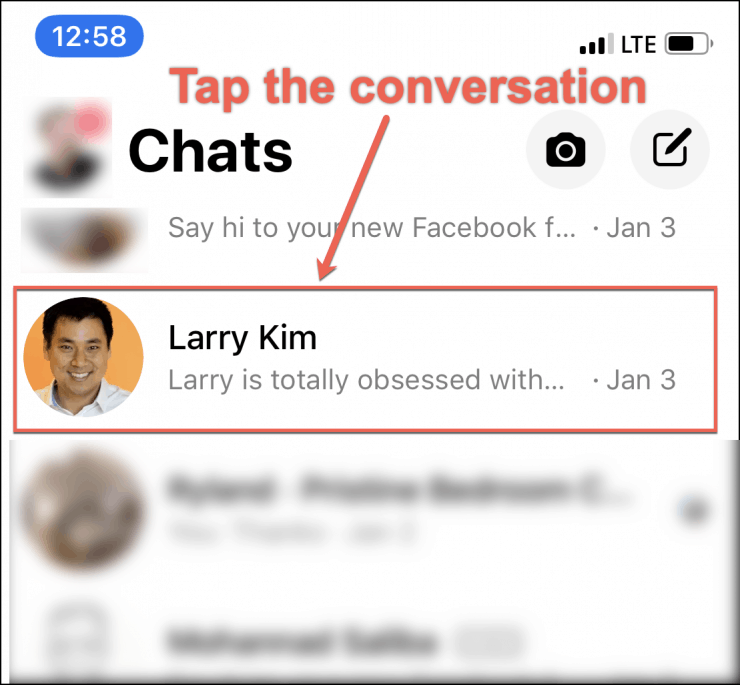
First, they tap the conversation to open it.
How to Block on Facebook Messenger 3

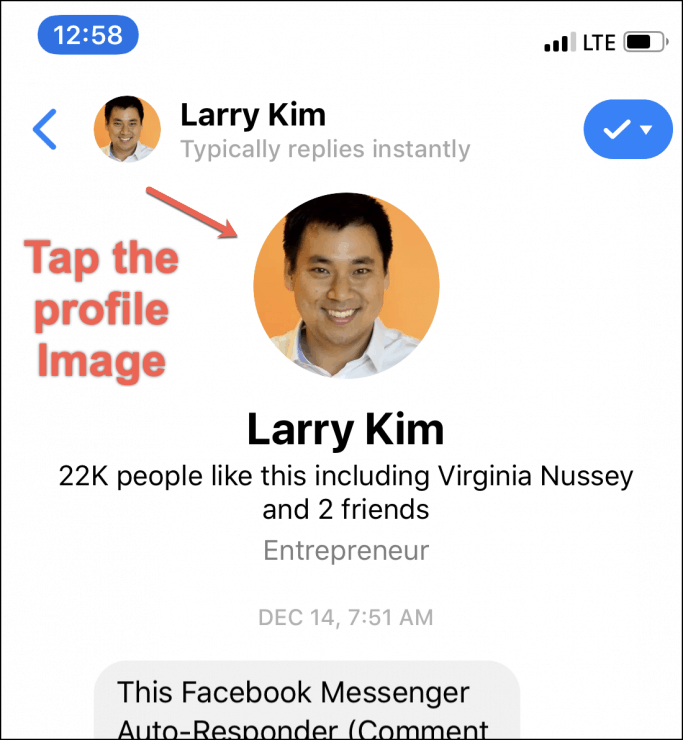
Next, they tap the name of the person whom they want to block.
How to Block on Facebook Messenger 2

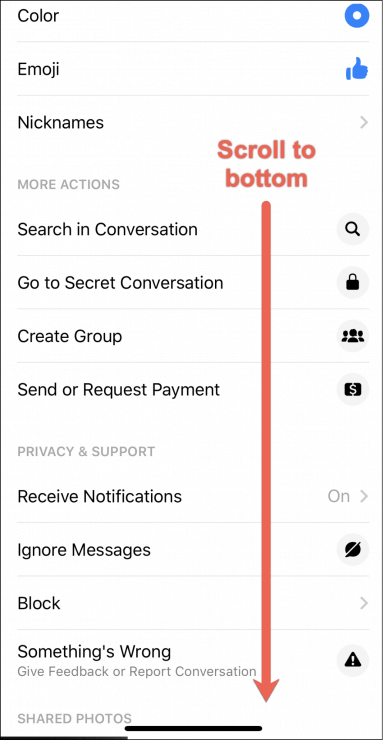
Then, they scroll down to the bottom to access the block option.
How to Block on Facebook Messenger 4

Finally, they switch the block option on.
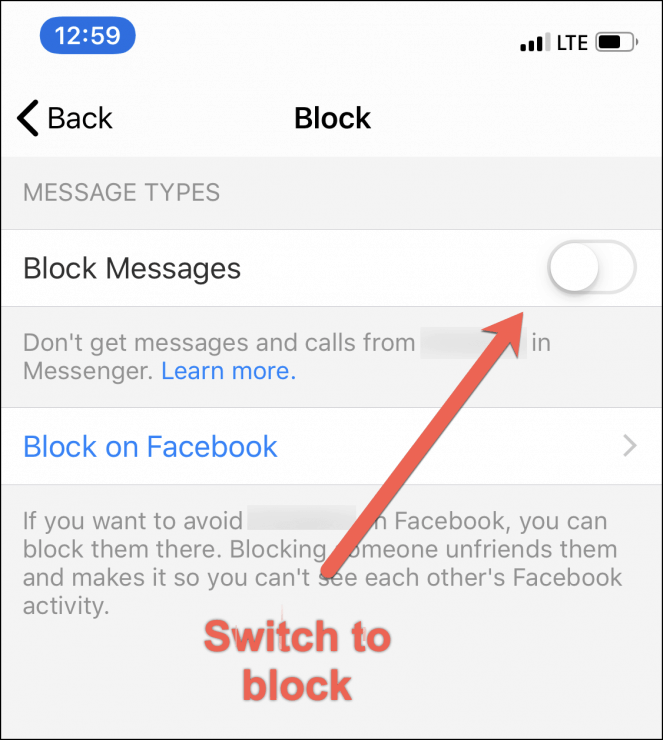
How to Block on Facebook Messenger 2

That’s three taps and one scroll, which takes quite a bit of effort and concentration.

To put it simply, these people are mad at my chatbot. Why didn’t they just type “stop” as I suggested?

When I created my chatbot sequence in MobileMonkey, I tried to make it really clear:

One of the first things I wrote was this:

not a fan? type “stop”, no hard feelings

Instead of typing “stop,” these people took a more hardline approach and flat-out blocked me, which hurts.

So, if you have high block rates, the question you need to ask is why.

Why are People Blocking you on Facebook Messenger?

When I got banned, it came as a rude shock. Here I was pulling a unicorn move, but then I got slammed with the ban.

I should have been watching my Messenger block rates. But I didn’t know any better.

That’s why I wrote this post, so the same thing doesn’t happen to you.

Now, to be clear, people might block your page for any kind of random donkey stuff — being off-target, off-color, or just annoying. Sometimes, people even block unicorns.

Be a Facebook Unicorn

What I’ve observed, however, is that Messenger block rates start to blow up when people create chatbots.

When Facebook banned me, my first response was to go to the data (thank you Facebook Page Insights!) to answer the question why.

Two major reasons emerged, and they are applicable to anyone who’s running a Messenger campaign.

During the time of my high block rate, I was running a Click-to-Messenger ad campaign.

A click-to-Messenger campaign is a sponsored post that invites people to start a Messenger conversation with me.

Once they start a conversation with me, I’m allowed to send them messages. They voluntarily opt in.

This is really valuable because I automatically convert 100% of the people who reply to my bot from clicking on the ad.

I was able to target these people with messages advertising my growth summit.
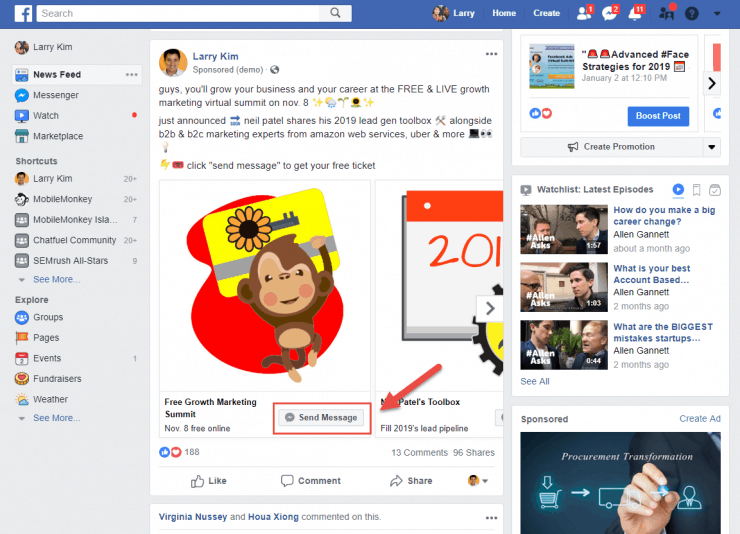
Facebook Messenger Ad

Here’s the kind of scale I was achieving at that time:
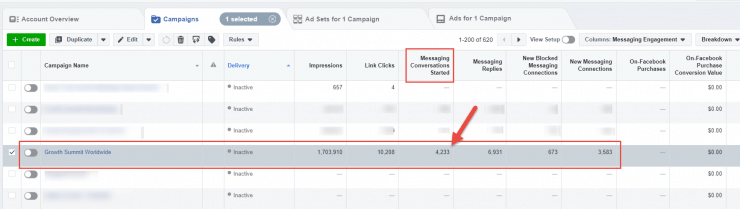
Facebook Ad Manager Screenshot

During the course of a few days, I had 1.7 million impressions, over 10k link clicks, and a total of 4,233 messaging conversations started.

I felt like a freaking unicorn.

Check out Larry Kim as an actual unicorn.

But then a lot of people started blocking me.

Why? To answer, I looked at the data. First, people blocked me because of poor ad targeting.

Look. 8% of my connections blocked me over the course of two months.

What Is My Block Rate on Facebook Messenger

When I took a closer look, the problem was in my targeting efforts, not necessarily the messages I was sending.

What to Do When You Are Blocked from Sending Facebook Messages

I set my targeting for “worldwide”, and the Facebook ad algorithm ended up just serving the ads to all sorts of countries I didn’t intend on targeting.

Unfortunately, my message was in English, which wasn’t the primary language of *any* of the countries that the Facebook Ad algorithm served my ad to.

The sequence of action on the sponsored post went like this:

  • Prospect clicks on my interesting Facebook ad.
  • Prospect immediately receives three messages in sequence.

Here is what would happen if you had clicked “send message” on this ad.

Over the next day, you would receive a sequence of three messages (all of which included unsubscribe information)

That’s probably over the top, especially for international contacts with a medium to limited ability in English.

The first problem, then, was a mismatch between my ad targeting and the Messenger sequence that followed.

How could I fix this? If targeting an international audience, I should have delivered ads in the person’s own language.

This would have helped to mitigate a significant amount of the blocks.

The second reason for my skyrocketing block rates is what I call weak affinity — and this is where it gets interesting.

How Brand Affinity Impacts Facebook Messenger Marketing Frequency

My data showed me that Messenger block rates varied based on the level of affinity that users had with my brand.

What’s affinity in this context? Basically, affinity is people knowing and liking your brand — a combination of awareness and interest in the product, service, or identity of your brand.

A high-affinity group would be subjects in a remarketing campaign, people who are already on my email list, etc.

A low-affinity group, by contrast, are those who are just hearing about my company, seeing my ads or encountering my brand or the first time.

Low-affinity users blocked me when my Messenger bot sent a lot of messages to them. High-affinity users didn’t block me on Messenger when I sent a lot of messages.
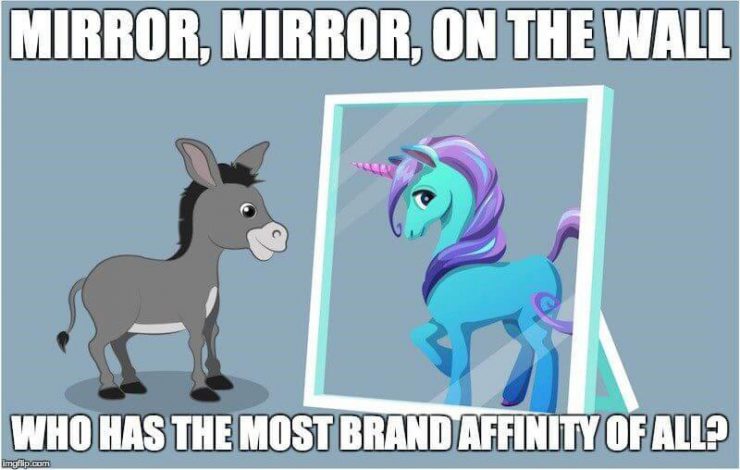
Brand Affinity Unicorn

I set my Facebook ad targeting on people who had an interest in social media marketing. Right off the bat, that’s low affinity — top of the funnel users.

These people see an engaging ad and click it. Instantly, they receive several personal messages via the Click to Messenger Ads.

It was too much, too soon for a low-affinity group.

Based on the data, I realized that I should moderate the aggressiveness of the Facebook Messenger chat blasting campaign based on the strength of the affinity by which I acquired the contact.

strength of brand affinity messaging table

First, I could have tightened my ad targeting efforts. Doing so would have increased the likelihood that the ad recipients were more tuned into and aware of Facebook marketing in general.

More specifically, such recipients might even understand the logical sequence of what would happen if they click on a “Send Message” ad. They would realize, “If I click that button, I’m opting to receive messages from this brand.”

Second, I could moderate the frequency of the follow up to be commensurate with the strength of the affinity upon which the user initiated contact.

If I were running a bottom-of-the-funnel campaign such as a remarketing effort, the prospects would then at least have an awareness of my brand, imagery, voice, and product. They have seen my ad in the past, so a second, third, or fourth touch would not feel as abrupt.

Instead, I was running a top-of-funnel ad campaign for people anywhere in the world who merely indicated an interest in social media marketing. The messaging sequence may have felt pushy or intrusive.

Keep the funnel in mind. Notice how the top of the funnel below has the term “attention.” That’s all you have at that phase.

But at the bottom of the funnel, you have “favorability.” That’s when you can turn up the heat and increase messenger frequency.

Marketing Funnel Brand Affinity

Image source

These people who blocked me weren’t in the favorability stage. They were curious bystanders and I only had their attention.

Based on my data, I knew that my rapid-fire Facebook messenger sequence turned people off, so they blocked me.

My key takeaway, then, was to adjust the frequency of messages in order to match the interest level of the contact.

Get this, because it’s absolute money for Facebook messenger marketing. This is the magic formula when you set up your Facebook messenger bot:

  • For new contacts in a top-of-funnel campaign, 1-2 messages in the first 24 hours would be appropriate.
  • For a bottom-of-the-funnel effort, we have campaigns running with +3 messages in the first 24 hours and we’re not seeing a high block rate because those users have a stronger affinity.

Other Embarrassing Learnings : Stop Waking People Up at 3AM

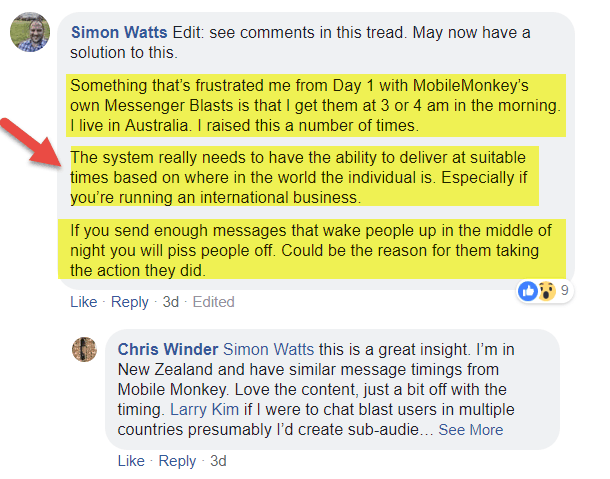
Shortly after posting this article, a bunch of New Zealanders and Australians pointed out to me that another way to reduce your block rate is to schedule your messages relative to the user’s time zone.
What to Do When You Are Blocked from Sending Facebook Messages

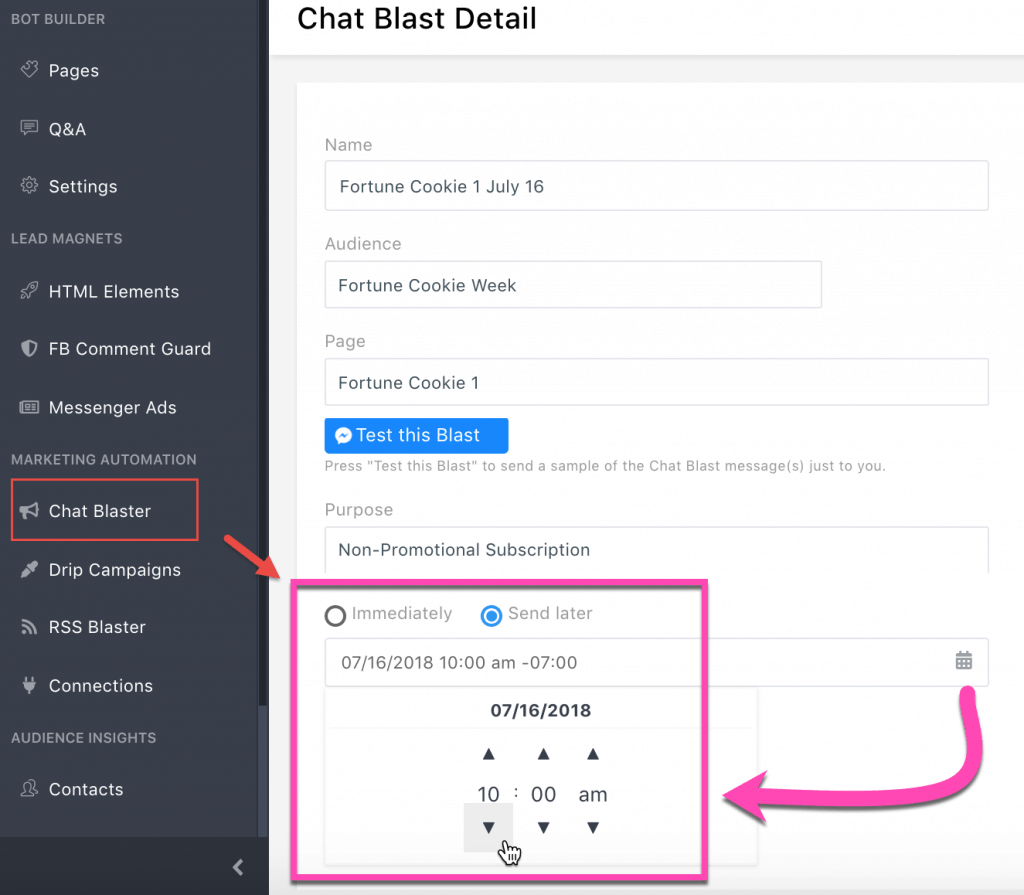
MobileMonkey supports scheduling of message sends (in the user’s local time zone), as you can see here in the screenshot below:
What to Do When You Are Blocked from Sending Facebook Messages

Internally, our marketing team was using that feature periodically, but not super-vigilantly. We will do so moving forward! Always schedule your messages to be sent at a normal time, relative to the user’s time zone!

What do you do if Facebook Messenger Bans You?

The word that Facebook uses is limits, not ban. But the effect is the same.

As I showed you above, this is the message I received on my Facebook business page (along with an ominous-looking red yield sign)

Limits have been placed on Larry Kim
This page is restricted from the use of message tags, subscription and broadcast messaging, and sponsored messages. Your page will still be able to respond to messages according to standard messaging permissions.

Limits Have Been Placed Facebook Messenger

For a guy whose very life and business is Facebook Messenger, this was a big blow.

Here’s what I could no longer do:

  • Message tags: Tags are what allow me to custom-create Facebook Messenger bot experiences for my subscribers. With the right tags, I could send my audience all kinds of helpful information (completely non-promotional) with greater frequency than would normally be allowed.
  • Subscription and broadcast messaging – Subscription messaging is the bread and butter of Facebook Messenger marketing. It allows me to send blasts, frequent non-promotional messages, and other content that keeps my audience engaged. Facebook Subscription Messaging abilities can be obtained by request only.
  • Sponsored messages: In other words, ads. I couldn’t create Facebook Messenger ads anymore.

I can still use Messenger to send and receive individual messages, but I was banned from using it in all the high-octane ways that I was used to.

What did I do about it?

Grovel, basically.

I clicked the “Appeal” button, confessed my sins to Facebook (inadvertent thought they were), and promised never to do it again.

Since you’re reading this article, I’m going to assume that you’re going to be a unicorn in a sea of donkeys. Check your block rates. Be nice. Play by the rules.

But if you have been banned, here’s my advice:

  1. Click the “Appeal” button.
  2. Explain the facts about what you did, and how you acknowledge that this was a violation of Facebook’s Messenger policies.
  3. State that you will make every effort to understand all Facebook policies, old and new, and abide by them.
  4. Tell them you’re a unicorn. (Or not.)
  5. Wait.

For me, it is now a matter of waiting.

What to Do When You Are Blocked from Sending Facebook Messages

Update: The Facebook Messenger Marketing Saga Continues…

My contact at Facebook told me I should be up and running again after just a little while.

However it has been several months and my page is still dead.

Humans at Facebook review and approve the appeals in order. Since Messenger marketing has just undergone some major changes, the algorithm probably banned a lot of pages, creating a huge backlog for the reviewing team.

In retrospect, I’m glad I was banned. It was a harsh donkey move, yes, but it gave me some valuable takeaways to share!

If I’ve ever been helpful to you in the past, I’d appreciate it if you could drop a comment here in support of re-activating of Messenger permissions on my personal Facebook page. Perhaps someone from Facebook will read this post and has mercy on me!

Image: Depositphotos.com

This article, "Attention: Stop Facebook Messenger from Banning your Page" was first published on Small Business Trends


Voi Technology, the European e-scooter rentals startup, raises an additional $30M

Well, that didn’t take long. Just three months after raising $50 million in Series A funding, e-scooter rentals startup Voi Technology has added another $30 million to its balance sheet. The new round sees existing investors Vostok New Ventures, Balderton Capital, LocalGlobe and Raine Ventures participate again, alongside new investors Project A and Creandum.

The inclusion of Project A won’t be entirely new news to close readers of TechCrunch. Based on my own sources, I reported that the Berlin-based early-stage VC was in the running in late October, and it was a surprise not to see the firm on the list of backers when VOI announced its Series A a month later. This new round sees those loose ends tidied up nicely.

A number of angel investors also participated. They include Cristina Stenbeck (Kinnevik), Justin Mateen (co-founder of Tinder), Keith Richman (board member, Grubhub), Jeff Wilke (Amazon), Sujay Jaswa (founder of WndrCo), Sujay Tyle (CEO Frontier Car Group), Diego Piacentini (Former Head of International Business, Amazon) Christian Leone (founder of Luxor Capital) and Spencer Rascoff (ex-CEO of Zillow).

Voi says the new capital will be used to ramp up expansion across Europe and invest in R&D. The company is also now claiming to be the leading “home-grown” e-scooter rentals company in Europe — as opposed to U.S.-founded Lime and Bird. In seven months, Voi says it has garnered a customer base of over 400,000 riders, who have taken a total of more than 750,000 rides.

Other competitors operating in various parts of Europe include Flash — the stealthy mobility startup from Delivery Hero and Team Europe founder Lukasz Gadowski that recently raised €55 million in Series A funding — as well as Berlin’s Wind Mobility ($22 million) and Tier (€25 million).

Taxify has also announced its entrance into e-scooter rentals, and Silicon Valley’s Bird and Lime not only operate in Europe but have received substantial investment from three of Europe’s top venture capital firms. Index and Accel have backed Bird, and Atomico has backed Lime.

Staying on message, Voi says that key to its success to date is working collaboratively with city authorities across the continent, including developing a Code of Conduct in Stockholm “to help the city’s multiple scooter-sharing operators work more safely and efficiently together”. However, that didn’t stop Voi having its license temporarily revoked in Madrid, alongside Lime and Wind after a change in the law required a change in the way e-scooter firms operate. It returned to the Spanish city in February.

Meanwhile, the company says its strongest markets so far are in the Nordics. Namely, Stockholm, Gothenburg, Malmö, Lund, Uppsala and Copenhagen, most of which it says will reach profitability in Q1. The e-scooter rental service is also live in Paris, Lyon, Madrid, Malaga, Zaragoza, Murcia, Lisbon and Faro. Today also sees a launch in Oslo, with Helsinki and other cities launching later this month. Italy, Germany, Norway and France are named as near-future expansions.


A Beginners Guide to Day Trading

Day trading can be very profitable, but quite risky at the same time. Before you commit your hard-earned money read this guide to understand the nuances first.

[[ This is a content summary only. Visit my website for full links, other content, and more! ]]


Sunday, 3 March 2019

What is a Click and Mortar Model and How Can It Work for your Business?

What is a Click and Mortar Business?

Simply put, a click and mortar business is an integrated model that combines both online and off-line operations. Retailers have a website here that customers can shop on but these same folks still have the option of buying products in a brick-and-mortar store. The strategy involved is often called omnichannel.

One of the big bonuses is the fact that there’s an enhanced shopping experience with more flexibility, service and convenience.

How Click and Mortar Businesses Work

Here’s one scenario showing how a click and mortar model can work for your small business.

Say you’re selling widgets. One of the first things you’ll want to do is set up an online store. With a good website that’s also optimized for mobile, customers can order the products you’ve got for sale and have them shipped to their addresses or another designated location. That’s been the model for the rise in ecommerce.

How They Help Brick and Mortar Locations

A click and mortar business takes the whole model one step further. Some retailers and other shop owners have tweaked the original ecommerce model by providing WiFi in their stores that lets customers view different offers while they shop in a physical store. This kind of omnichannel approach also benefits the retailer or the small business owner.

Small business owners can collect customer data and tweak marketing campaigns and product offers based on the information they collect.  One of the first things that you need to realize is a bricks and clicks business goes both ways as far as the benefits are concerned.

How They Improve Customer Experience

For example, some more traditional brick and mortar businesses are integrating online stores into their business model. On the other side of that coin, there are online only retailers that are setting up brick-and-mortar stores because they want to expand how their customers experience their products.

Amazon and BaubleBar are two examples of businesses following this trend

How They Enhance Online Only Stores

There are some big advantages to adding physical storefronts for small businesses that only previously had a web presence. They can increase the traffic they get on their websites while at the same time reducing the money they spend on digital marketing. In many different cases, the brick and mortar storefronts actually act as testing grounds for customers who want to try on or size shoes and clothes before making the final purchase online.

Big Reasons to Integrate Online and Physical Retail

One of the big reasons for integrating online and physical retail is to make the customer experience better. For example, people selling clothes or other big ticket items with online businesses want to provide possible customers with opportunities to test, touch and see the products before they order them. In this type of bricks and clicks business, the online website is used as an enticement to get people into the store where they can physically interact with the product.

Advantages of the Click and Mortar Model

Lower Labor Costs

There are some big advantages to this trend for small businesses. First and foremost are lower labor costs. Small business owners who operate brick and mortar locations need to hire people to serve their customers. Changing over to a click and mortar business means that you’ll be able to automate some of those customer service functions. You will need less staff to manage a bricks and clicks business compared to a brick and mortar only shop.

Better Customer Service

A bricks and clicks business has the added bonus of being able to get loyal customers quicker. Not only can folks try items out and return anything that’s damaged, having a brick-and-mortar and online system helps consumers who are a little skeptical about buying things on the Internet.

More Market Access

Operating a click and mortar business will give any small business owner a larger market reach. Brick-and-mortar stores are restricted to the physical location where they are located. Adding an online element opens up your goods and services to a much wider customer base.

Not only that, potential customers can access all of your product information and make decisions from the comfort of their own home with a bricks and clicks business.

Additional Services

Selling products online and in a brick-and-mortar store can help your small business to offer additional services since you can access information about buying behavior through emails and social media. Integrating delivery models and even adding things like loyalty programs can make a difference.

Enhanced Analytics

This click and mortar model has been around for some time. That said, there’s a few techniques that you should adopt if you’re thinking about traveling this business route.

For example, keeping an eye on the analytics that your website supplies can help you sell products in your off-line store. If something is doing well on your website, it’s probably a good idea to bulk up on the inventory in your physical location as well.

Integration of Mobile and Physical Shopping

Here’s another tip that can help you bridge the gap with a click and mortar business. By allowing customers access to their online accounts through their smart phones, you can help them to make buying decisions while they’re in your physical store. They should be able to access and view rewards and previous purchases as well as other items like wish lists.

Image: Depositphotos.com

This article, "What is a Click and Mortar Model and How Can It Work for your Business?" was first published on Small Business Trends


Searcy, Arkansas Chosen to Be Featured on Small Business Revolution Season 4

Searcy, Arkansas Announced as the Winner of Small Business Revolution Season 4

Deluxe Corporation’s half million dollar revitalization prize package, known as The Small Business Revolution — Main Street will be awarded to the town of Searcy, Arkansas. The announcement was made on February 26, 2019.

Two weeks prior in New York City, Small Business Trends chatted again with Amanda Brinkman, Chief Brand and Communications Officer at Deluxe, and Ty Pennington, reality TV carpenter and co-host of the show, to discuss the real-world success of the towns who won the show’s previous seasons, as well as what happens to finalist towns that don’t win — how do those towns cope with the disappointment of “almost getting” a $500,000 investment? Brinkman also touches on what big brands can do to bond with small businesses beyond merely selling to them. Our video with Brinkman and Pennington and the transcript are below.

* * * * *

Small Business Trends: Can you remind us how finalist towns are selected for the show?

Amanda Brinkman: Each season we ask people to nominate their favorite small town and we narrow it down to the top 20, then we narrow it down to the top 10. We go and visit those 10 communities boots on the ground. Then we narrow those down to a final set which will be put up for public vote. This year we had six finalists.

When you visit SmallBusinessRevolution.org you can watch past seasons and see how great Ty Pennington was in season 3.

Small Business Trends: Ty, this is your second time as the series’ co-host. What are some factors in it that viewers might find compelling?

Ty Pennington: We’re all trying to be successful. Sometimes it’s not the fact that we don’t work hard enough, it’s that we haven’t met the right people or not had the right opportunities to find those keys that we need to open the doors to success. This is a show that’s like a rescue ambulance that pulls into your town and has the means and the goods that sometimes these business didn’t realize existed. It’s not Deluxe throwing money at a town, it really is people with heart that are part of Amanda’s team who go in and roll up their sleeves. You really get to know them and see the pride.

It’s awesome to see the celebration at the end and to realize the success we had but it’s also really nice to know we’re shining a light on how original and unique and sometimes how very different these towns are across America. It’s a great show that gives people hope, and that’s why the towns go nuts like on the videos because they realize there’s so much good coming to that town.

Small Business Trends: Amanda, what makes Deluxe different? How about a summary of Deluxe, for business owners who are unfamiliar with the brand.

Amanda Brinkman: Deluxe has been honored to serve small businesses for over 100 years. Our legacy is in the check-printing space and we help small businesses operate their business. But now we help them with everything they need to market their business, whether it’s to build their website or design a logo, packaging, email marketing, anything they need to grow their business through marketing.

So a few years ago we decided that instead of doing an ad campaign talking about those services, let’s put our money where our mouth is and do something great for the small business community. What’s a better way to reach the small businesses of this country than just advertising at them? Let’s go out and help them. Let’s create a movement to get more people to support them.

So we’re very proud of this work and what it’s doing for small businesses across the country. And I wish more big brands and big companies would think about what they could be doing to truly make a difference in their customers’ lives beyond selling them things.

Small Business Trends: Amanda, you’ve witnessed a lot of success stories over the years. What are some of your favorites?

Amanda Brinkman: It’s hard to pick a favorite out of the 18 incredible businesses we’ve worked with but it’s been fun to see how some of the businesses have taken the inspiration and resources we give them and pass them along to others alongside them.

Wabash, Indiana from season 1 is a great example of where they’ve had multiple businesses come to town and open their business there because they saw the show, and they fell in love with Wabash through the show.

Ty Pennington: I can see that. I almost moved to Alton [Illinois]! Literally, I was like, “I may.”

Amanda Brinkman: Bristol Borough [Pennsylvania] from season 2 had a nearly 50 percent business vacancy but now they’re down to just two empty storefronts.

Ty Pennington: Wow…

Amanda Brinkman: So it’s more than a show, it’s really about this contagious energy that sweeps throughout the entire community.

Small Business Trends: Let’s talk about the towns who are finalists but don’t get the prize. What do they say?

Amanda Brinkman: I think the real secret to this entire process is to first understand that all 10 of the communities we visited came together in a truly remarkable way, that for many of them it was the first time in history that the entire community came together with that kind of enthusiasm and cohesiveness. And that’s the real prize.

It helps that there’s a contest that you’re aiming towards in order to have that energy and momentum but really the communities did it themselves. They banded together, they figured out how to communicate, energize and mobilize the community.

And the ones who understand “How do we use this momentum? How do we harness this energy that we feel through this contest well into the future?” — those are the towns that will truly get the ultimate prize out of this entire thing. And that’s why we do the 10-city tour so that as many communities as possible can feel that energy and momentum for themselves first hand, and then figure out how to use it.

At the end of the day, it’s a contest and only one town receives the half-million dollar investment but again the real secret is: You don’t need the show to come to your town for you to truly have a revolution within your community.

Images: SmallBusinessRevolution.org

This article, "Searcy, Arkansas Chosen to Be Featured on Small Business Revolution Season 4" was first published on Small Business Trends


9 Resources Where Small Businesses Can Get Free Help With Taxes from a Real Live Person

9 Ways to Get Free Tax Help from a Real Live Person

Tax season can be stressful for small business owners. There’s all the receipts you need to get together and that’s usually just a slice of the other invoices, documents and data that needs to be corralled and made sense of. Sometimes you just need to talk with someone who knows where a piece or two fits into the bigger puzzle.

If you’re in that position, here’s 9 ways to get free help with taxes from a real live person.

Where to Get Free Tax Help

H&R Block

What it is: There’s a variety of well-respected tax preparation companies that offer phone numbers that you can call to ask questions. For example, H&R Block has a comprehensive tax center on their website.

How it works: Follow the link provided to the Tax Tools and Tax Tips section and then click on the tab for the Help Center. If you scroll down a bit farther once you hit that page you’ll see a live support phone number.

Where To Find: If you’re looking for a brick-and-mortar location where you can go in and ask a question, there’s a link right here.

Human Services Agencies

What it is: Human services agencies in different municipalities and locations will offer free tax help from real people for those who earn under a certain amount as a family. Not only can they give you free advice but also help steer you towards different tax credits.   

How it works: Finding the right human service agency where you live is a good start. Begin your search right here. They will be able to direct you to any family or personal tax credits that make a difference to your return.

Where to find: There’s only one drawback here and that’s these are mostly government agencies that will work 9 to 5 hours. If you take a quick look at this one for San Francisco, you’ll see there’s even a general inquiry number that can point you in the right direction. 

United Way Tax Service

What it is: This is another online tax service but this one is from the United Way. Although the one that you can follow through this link is for the California area, there are others for your particular location. This system will point you in the direction of free tax tax service where you can ask questions.

How it works: Basically, all you need is your postal code to get started. You can even select languages and a radius from that starting point to find the help nearest to you.

Where to find: If you’re looking for this kind of free tax help from a real person, you can start out at the United Way’s main website. Check out the Find Your United Way tab in the far top corner.

Tax Advice Portals

What it is: These are online portals where you can ask a tax question and have it answered usually within 24 hours from a variety of participating accountants.

How it works: It’s as simple as it sounds. You just fill out an online form and write out your question in general and you’ll get an answer back. Make no mistake, these portals are about selling the accountants’ services but you will get some free information and maybe some fee quotes to play off each other at the same time.

Where to find:  Here’s an example of one of these portals. However, it caters to a UK audience so you’ll want to conduct your own online search.

Quora

What it is: This is an online site where people share knowledge, ask questions and get answers on a variety of different subjects for free. It’s not necessarily the right spot to get quality professional answers because it’s open to everyone and not just accountants. However, this is a great place to ask questions about where you can find free tax advice and get good leads.

How it works: Getting started is simple. You can search through the different spaces for questions that have already been answered or submit your own with an easy tab.

Where to find: You can start using Quora simply by following this link

NATP

What it is: The National Association of Tax Professionals is a comprehensive membership site for accountants and other kinds of tax preparers. It’s a good place to find out who the professionals are in your area since many accountants offer an initial consultation.

How it works: There are several ways that you can use this website to your advantage including a live chat and a 1-800 number. If you’re out in front of your tax deadline far enough, you can place a classified ad looking for help.

Where to find: The NATP website can be found right here.

Just Answer Tax

What it is: This is another online portal where you can ask a tax question and get answers from professionals in the industry.

How it works: Questions can be asked through a chat box and you’re able to see how many professionals are online to answer your questions right away. The website says that you can get help 24 hours a day seven days a week. Although it’s not a free service, there is a Q&A section where some popular tax questions are answered in that format for free.

Where to find: You can use some of the enrolled agents and certified public accountants on this website here.

IRS Free File Alliance

What it is: This is a service that is open to all Americans who made less than $66,000 a year. Basically, it’s a group of companies that offer free online filing under the IRS banner.

How it works: You need to go through the free file website to access the company’s platform. You’ll get a good deal but only if you click on the affiliate link. These types of sites will also allow you to find some contact info to ask questions.

Where to find: You can find useful information about the IRS Free File Alliance and some good contact information on the Internet.

Twitter

What it is: You can find just about everything you need on social media these days including free tax help. Twitter is a great place to ask specific questions using the right hashtag.

How it works: You can start a search using your own account or even do a Google search using geographically tagged keywords that will get you Twitter results in your locale.

Where to find: If you start by doing a quick search at the top of your own Twitter account and using keywords like free tax help, you’ll come across places like this where you can either ask a question or scroll down to find answers.

Image: Depositphotos.com

This article, "9 Resources Where Small Businesses Can Get Free Help With Taxes from a Real Live Person" was first published on Small Business Trends


Pass Marijuana Drug Testing at Work – How Long Does It Take for Weed to Get Out of Your System

Majority of employers require their employees to take drug test before hiring them. How can you ensure you are able to pass the drug test.

[[ This is a content summary only. Visit my website for full links, other content, and more! ]]


Saturday, 2 March 2019

Take Your Social Media Marketing to the Next Level with this San Diego Event

If you want to take your social media marketing to the next level, Social Media Marketing World in San Diego is the place to be.

From March 20 to 22, the three-day event will have some of the leading experts in social media marketing addressing everything there is to know about these marketing channels.

Brought to you by Social Media Examiner, the event attracts more than 100 of the world’s top professionals specializing in social media marketing. This includes experts in the most popular platforms who offer live video, social strategy, content marketing, analytics, video creation, and much more.

This year there will be 17 tracks and workshops teaching attendees the latest trends in social marketing so you can improve your marketing ROI when you launch your next campaign.

The learning opportunity is so great, even large enterprises send their marketers to this event. In 2018, thousands of small marketers took part along with their counterparts from Best Buy, Bose, CBS, Caterpillar, Cisco, Colgate Palmolive and many others.

You can choose to attend Social Media Marketing World in sunny San Diego in person, or get a virtual ticket.

Click the red button and register now.

Register Now


Featured Events, Contests and Awards

Social Media Marketing WorldSocial Media Marketing World
March 20, 2019, San Dieg, Calif.

Discover the best social media marketing techniques from the world’s top experts. Experience three phenomenal days with the best social marketers, discover the latest tactics, and master social media in 2019. Join 7,000 fellow marketers and influencers at the mega-conference designed to empower you with business-building ideas — brought to you by Social Media Examiner.


Elevate Your Digital InfluenceElevate Your Digital Influence
April 13, 2019, Issaquah, Wash.

Are you ready to grow your business? Join us and learn how to put together a PR plan and leverage what you are doing on social to grow your level of influence. Are you ready to be a leader in your marketplace? #ElevateYourDigitalInfluence


Listening to the Voice of the Customer WorkshopListening to the Voice of the Customer Workshop
April 23, 2019, Boston, Mass.

Join Applied Marketing Science (AMS) for the next open-enrollment session of “Listening to the Voice of the Customer,” our acclaimed training workshop, on April 23-24, 2019 at the Sheraton Boston Hotel located in the heart of downtown Boston. Led by veteran product development and market research experts, Gerry Katz (AMS Vice Chairman), and John Burns (AMS Principal), this course will introduce Voice of the Customer market research and teach you to use it to accelerate innovation in business-to-business markets.
Discount Code
SMALLBIZ ($100 Discount)


Beachpreneurs Beach Camp 5Beachpreneurs Beach Camp 5
April 26, 2019, Daytona Beach, Fla.

For starters, we’re for Women Entrepreneurs only. During Beach Camp, you’ll have plenty of opportunity to learn, apply and mastermind with warm successful women.
You’ll also have time to sleep in and you’ll get long breaks to relax and walk the beach or go for a swim. We didn’t create a conference at the beach just to lock you away in a conference room from dawn til dusk. Beach Camp is a lifestyle focused event so you’ll be spending as much time enjoying your life as you will be focusing on your business. Join us today!


Listening to the Voice of the Customer Listening to the Voice of the Customer
October 16, 2019, Chicago, Ill.

Led by veteran product development and market research experts, this course will introduce Voice of the Customer (VOC) market research and teach you to use it to accelerate innovation in business-to-business markets. The workshop uses a lively, interactive format with numerous hands-on activities and practice exercises to build skills and will also expose you to the latest applications of these techniques in areas such as machine learning and journey mapping.
Discount Code
SMALLBIZ ($100 Off)


More Events

More Contests

This weekly listing of small business events, contests and awards is provided as a community service by Small Business Trends.

You can see a full list of events, contest and award listings or post your own events by visiting the Small Business Events Calendar.

Image: Depositphotos.com

This article, "Take Your Social Media Marketing to the Next Level with this San Diego Event" was first published on Small Business Trends