Tuesday, 2 April 2019

What is Interoperability and How Can It Impact Your Business?

Employee Health and Interoperability

You may have given little thought to your business’s healthcare interoperability. Exceptions might include small business operating as an active part of the healthcare system such as a technology startup. But achieving true healthcare interoperability profoundly impacts all businesses with one or thousands of employees.

Let’s start with a simple definition of interoperability. According to HIMSS, interoperability describes how well systems and devices exchange and interpret shared data. So all your business’s systems need be able to exchange and present data in a way every user can understand.

The Healthcare Interoperability/ Business Connection

Interoperability requires more than communication between different electronic health records systems and hospitals. You need to make every person’s current and past health data accessible. Meanwhile records must kept secure, understandable understood, and constantly updated single source of truth.

Record must remain shareable with other organizations. And businesses must share and have interactive access to data in real time to improve health outcomes. True interoperability also brings major benefits to business. These benefits appear in the form of cost and productivity improvements.

Financial and operational good health of a small business depends on the physical and mental health of its people. So small businesses pay for poor healthcare one way or another. And this happens regardless of whether they provide health insurance to their employees.

Here’s How Interoperability Costs Your Business

The cost to business plays out in many ways. And these include:

  • Physical, emotional, and financial stress regarding health, which makes employees less productive
  • Lost time from work because of health diagnosis, treatment, recuperation issues
  • Lost time from work for health care administrative issues with payers, providers and ancillary health organizations when personal health information is incorrect or incomplete

Seventy percent of workers stress about their health, jobs and finances. And over 20 percent spend at least five hours each week at work caught up in stress. This data comes from a Colonial Life study. And the result amounts to billions in losses from these millions of full-time employees’ average hourly wage. The study used data  from the U.S. Bureau of Labor Statistics.

Changing the dynamic has major implications for small business in terms of workforce productivity, focus, and the bottom line. True interoperability becomes the key to unlocking many other doors for employee health and productivity. Without getting too far into the weeds, we’ll look at how it can work.

How Interoperability Changes Healthcare and Business

While the goal of interoperability is to improve patient health outcomes, a major byproduct for businesses is it minimizes the direct productivity and financial losses associated with employee health. It does this by enabling bi-directional communication between all connected systems and entities affecting a person’s health. It also makes the person an active part of their own health data through secure access.

The approach also means allowing users to find, understand and act on clinical, administrative and financial health information when they need it. This interoperability will enable patients to:

  • Conduct healthcare interactions like appointment setting bill paying, test result review and digital physician consult through web-based platforms at their convenience
  • Monitor and update healthcare record changes
  • Fulfill e-prescribing and price transparency comparison decisions in real time with physician monitoring based on budget and health condition
  • Integrate wearable healthcare device and telemedicine data into real-time care across providers and payers

How to Improve Interoperability

The combination of APIs and FHIR protocols will drive interoperability in healthcare. APIs are modern web application programmer interface (API) technology while FHIR stands for Fast Healthcare Interoperability Resources. Web APIs enable secure communication between health information systems like EHRs via the internet. FHIR (pronounced “fire”), is the proposed common standard of choice for APIs developed by the  Health Level Seven International (HL7) health-care standards organization.

FHIR APIs makes for easy health data communication across disparate systems regardless of the operating system or software in use. As this standard reaches universal acceptance and adherence, it will enable:

  • Health systems and third-party developers to create technology and apps that work across existing health records and systems
  • Fast and simple provider reconciliation of health data from other trusted health care organizations
  • Referral management between connected specialists so relevant patient data can be transmitted, tracked and confirmed across the referral cycle
  • Broad population healthcare changes through the secure and authorized data exchange via electronic Health Information Exchanges (HIE)

Employee Health and Interoperability

True interoperability will make it possible for there to be a consistent standard of language in healthcare data communication across the entire healthcare continuum. This simplifies and removes the errors of communication across settings between care providers, payers and the wider healthcare marketplace. The result is a dramatic change in healthcare outcomes in a proactive rather than a reactive way that saves money and lives while increasing productivity

Achieving true interoperability is just one of the biggest trends in healthcare unfolding today and on the horizon. As we move towards true interoperability, it has emerged as a key component of healthcare transformation that will impact people, populations, and businesses in countless ways.

Image: Depositphotos.com

This article, "What is Interoperability and How Can It Impact Your Business?" was first published on Small Business Trends


Elvie raises $42M to become the go-to destination for women’s health

Elvie, the developer of femtech hardware including a silent wearable breast pump and a smart pelvic floor exerciser, is one of the boldest startups around.

Led by co-founder and chief executive officer Tania Boler, the London-based business has successfully infiltrated the bro-y community of venture capitalists, which has historically shied away from the “unrelatable” and “niche” sector that is women’s health. Of course, that sector isn’t niche at all, the global women’s health market is expected to be worth $51.3 billion by 2025, but investors have only recently begun to accept that reality.

Elvie is today announcing its third private financing, a $42 million Series B led by IPGL to support the release of four additional women’s health products. Octopus Ventures and Impact Ventures U.K. have also participated in the round.

Six-year-old Elvie is led by Boler and co-founder Alexander Asseily, a hardware vet and co-founder of the consumer electronics business Jawbone, which despite its many struggles, managed to get VCs to cough up hundreds of millions of dollars before it folded. Boler’s expertise in the space — she has a Ph.D. in sexual health — and Asseily’s hardware prowess have undoubtedly lured investors, as has Elvie’s breast pump, launched in September, which boasts a waitlist of thousands of women.

Under Boler’s fearless leadership, Elvie has raised nearly $50 million and started a much-needed conversation around women’s issues, like pelvic floor health and public breastfeeding.

[gallery size="full" type="slideshow" ids="1805635,1805639,1805637,1805638"]

Elvie’s latest attempt to change the narrative around public breastfeeding involved five giant inflatable breasts being placed across London’s skyline. On Mother’s Day in the U.K., March 31, Elvie’s #FreeTheFeed campaign attempted to fight the stigma around breastfeeding and pumping in public in what the startup said was “an invitation to stand with all those women that have felt shamed or confined when breastfeeding or pumping.”

“We know the giant boobs will raise a few eyebrows, but we want to make sure no one overlooks the way that this stigma has been used to repress women,” Boler said in a statement.

“When you create a new category, you have to educate the market and you have to change the conversation,” Boler added in an interview with TechCrunch earlier this week.

Elvie’s long-term plan is to develop products supportive of women at every stage in her life, whether that be pre-natal, menopausal or otherwise, and to become a one-stop shop for women’s health. Its debut product, the app-connected Kegel trainer, helps women strengthen their pelvic floor with five-minute workouts and real-time biofeedback. Its second product, the silent wearable breast pump, is similarly app-connected and monitors milk volume in real-time, tracks pumping history for each breast and can be operated remotely. Both have been category-defining triumphs.

The company will use its latest investment to continue R&D on upcoming products and to build brand awareness and distribution for the Elvie pump and the Elvie Kegel trainer across the U.S., Canada, Europe and Asia.

Elvie’s round follows a number of new investments in the femtech space. Today, another women’s health startup, Cora, closed a $7.5 million investment. Another, NextGen Jane, raised $9 million in a round announced yesterday to use blood wrung from tampons to possibly discover early markers of endometriosis.

“I think it’s really an exciting moment for femtech,” Boler said. “The tech sector is waking up to the importance of the female consumer.”


Sqreen raises $14 million for its application security management service

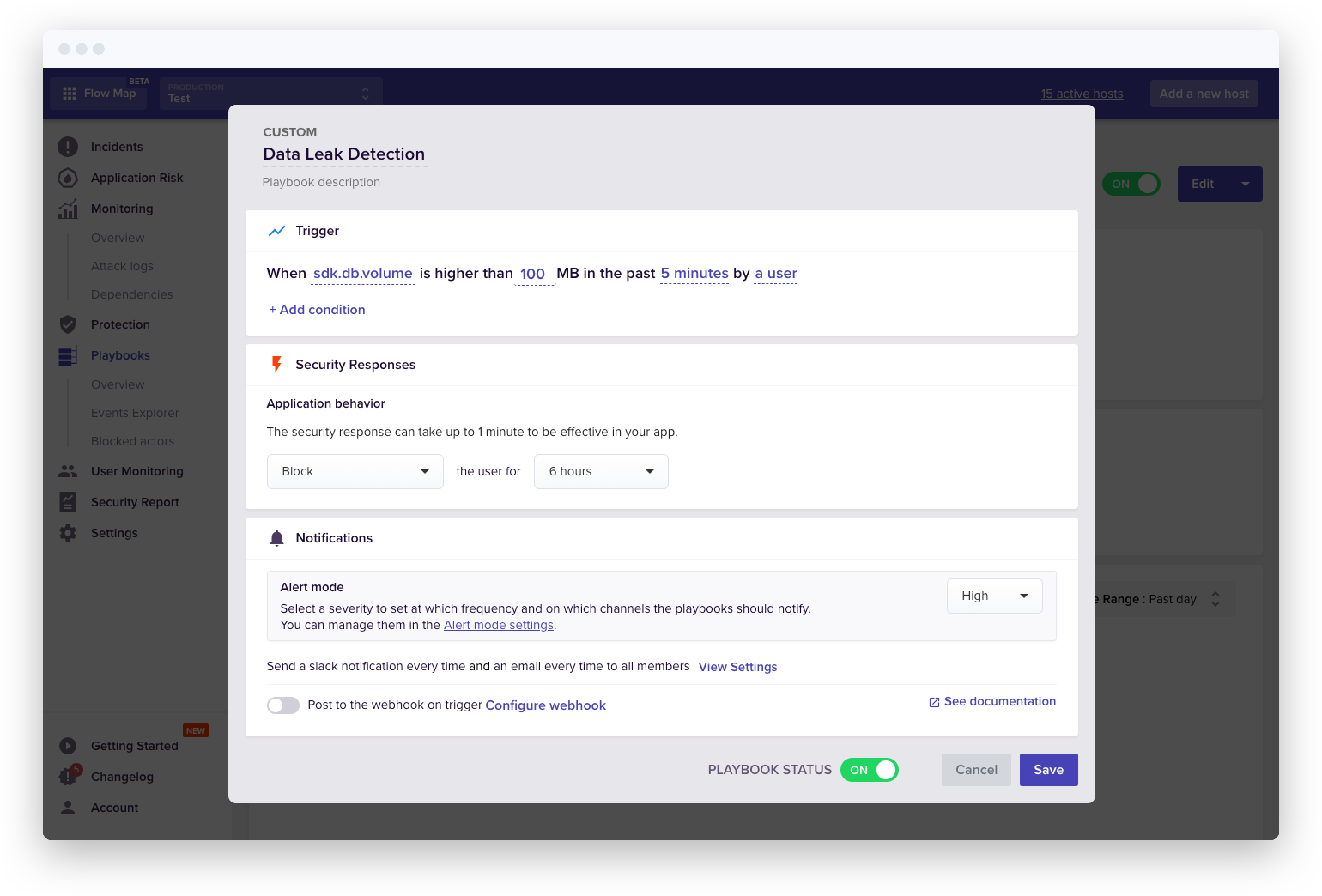
Sqreen has raised a Series A round of $14 million. Greylock Partners is leading the round, existing investors Y Combinator, Alven and Point Nine are also participating.

The startup wants to improve security when it comes to web applications and cloud infrastructure. Sqreen doesn’t require you to alter your code or put up a firewall. It works a bit like performance management companies, such as New Relic, AppDynamics or DataDog.

“Many strategic tasks are now handled with an engineer-driven approach — performance, deployment, log monitoring, error management… but not security,” co-founder and CEO Pierre Betouin told me.

If you don’t have enough time or money to build a team of security experts, Sqreen can already help you identify and fix many issues in your application. First, you install a library package on your server and add a few lines of code to require the Sqreen module in your application.

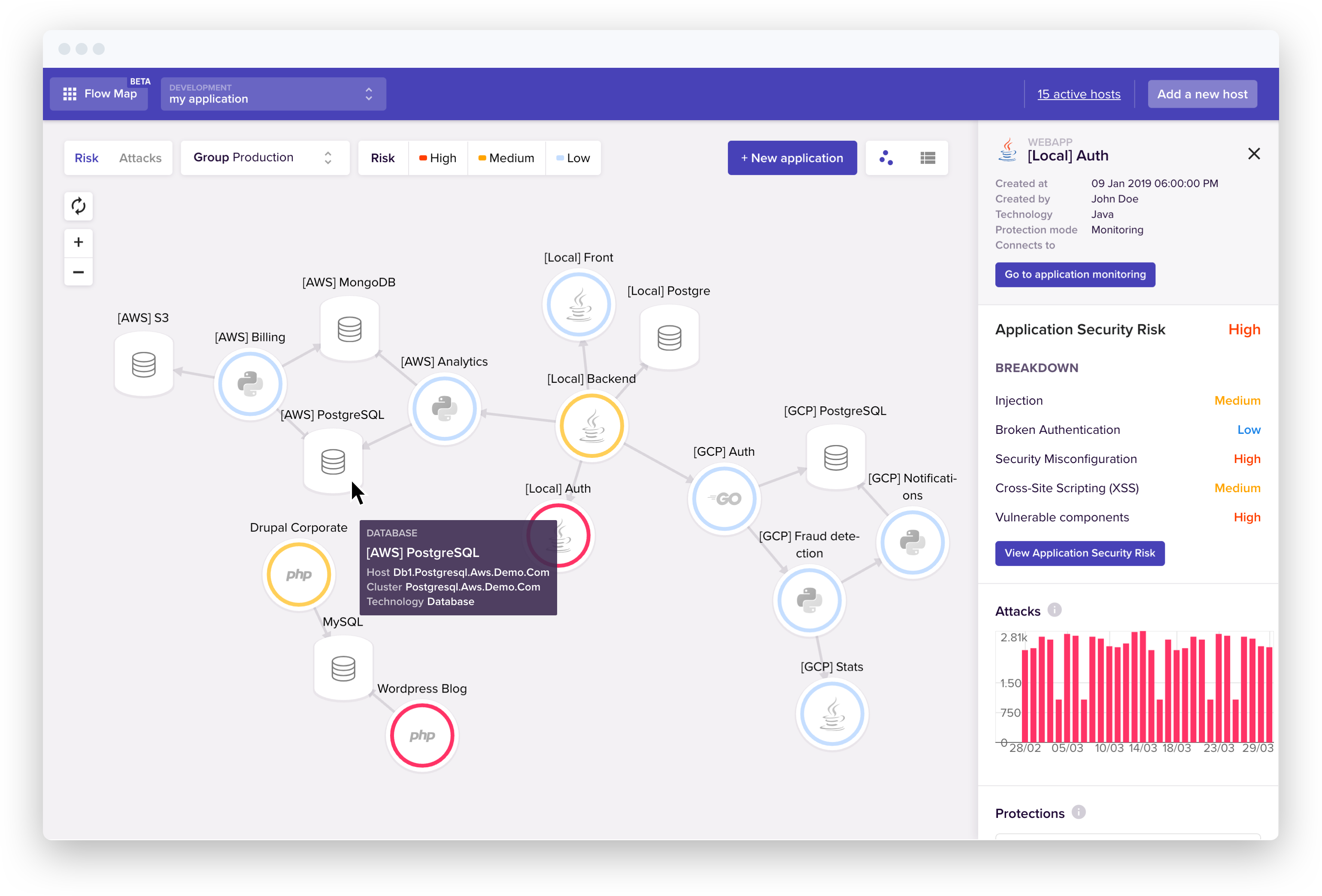
This way, Sqreen’s microagents are always running and monitoring your app. You can identify security holes in the Sqreen dashboard. You can also optionally activate real-time protection modules.

And Sqreen has expanded its service and now handles more than weaknesses than before. In addition to its self-protection module against SQL and XSS injections, Sqreen now provides an in-app Web Application Firewall, protections against account takeovers, bad bots, etc.

That’s why Sqreen is calling its platform Application Security Management as you can activate and deactivate modules depending on your needs. Sqreen gives you an overview of your cloud infrastructure so that you stay on top of security.

Sqreen currently works with web applications in Node.JS, Ruby, PHP, Python, Java and Go. There’s a small CPU overhead once you deploy Sqreen. Clients now include Le Monde, Algolia, Y Combinator and Y Combinator.


Online catering marketplace ezCater gets another $150M at a $1.25B valuation

In 2007, Stefania Mallett and Briscoe Rodgers conceived of ezCater, an online marketplace for business catering, and began building the company in Mallet’s Boston home, mostly at her kitchen table.

Recently, sitting at that same table, Mallett negotiated with Brad Twohig of Lightspeed Venture Partners the final terms of a $150 million Series D-1 at a $1.25 billion valuation. Lightspeed, alongside GIC, co-led the round, with participation from Light Street Capital, Wellington Management, ICONIQ Capital and Quadrille Capital.

“Raising money or getting to unicorn status, it’s all nice validation but that’s not the purpose, the purpose of being in business is to grow a very successful company with happy customers and happy employees,” Mallett, ezCater’s chief executive officer, told TechCrunch. “We are going to have cupcakes with unicorns on them. That will take us about a half hour, then we will get back to work.”

EzCater co-founder and CEO Stefania Mallett

Mallett compares ezCater to Expedia. The travel company doesn’t own and operate hotels, nor do they create them. EzCater, similarly, works with 60,500 restaurants and caterers around the U.S. to fulfill orders, but at no point do they work directly with food nor make any deliveries themselves.

Since its inception, the ezCater marketplace has grown considerably, expanding 100 percent annually for the last eight years, Mallett tells us. Though, like most unicorns, ezCater isn’t profitable yet.

Both Mallett and Rodgers are software industry veterans, establishing engineering careers prior to tackling business catering. The pair bootstrapped the company until 2011, when they secured a small Series A investment of $2.7 million. That same year, U.S. foodtech startups raised $176 million, per PitchBook. EzCater would go on to raise more than $300 million in equity funding, including its latest round, and VC interest in foodtech would explode. Already this year, U.S. foodtech startups have brought in $626 million after pulling in a whopping $5 billion in 2018.

EzCater has benefited from this boom. The company raised a $100 million Series D just 10 months ago.

“We really didn’t need the money, we have quite a lot of money in the bank from the last round,” Mallett said. “There was so much talk of a funding winter and a recession coming so we said maybe we should try to raise money and then people jumped on it so we thought OK, why not? If there is a funding winter, we’re set; if not, well, we are still set.”

The investment comes hot off the heels of ezCater’s acquisition of Monkey Group, a cloud platform for take-out, delivery and catering. Mallett declined to disclose terms of the deal but said the partnership makes ezCater the indisputable market leader in catering management software. The company will use its recently expanded war chest to accelerate its international expansion and, potentially, continue its M&A streak. As for the future, an initial public offering is amongst the possibilities.

“We certainly are considering it,” Mallett said. “As we’ve grown, we’ve become more sophisticated and mature; that puts us in a good position to continue operating as a successful standalone company or be acquired by a public company or go public if we see an opportunity to do that. We are not wedded to any of these outcomes.”


German fintech company builder Finleap acquires SME banking provider Penta

Just since months after raising $7 million in Series A funding, German SME banking provider Penta has been acquired by Finleap. Terms of the deal remain undisclosed, although I understand that the acquisition sees Finleap and Penta’s co-founders becoming the challenger bank’s sole owners, with all other shareholders exiting.

Launched in late 2014 by Hitfox Group and Ramin Niroumand, Finleap has developed 16 ventures from scratch, as well as acquiring a number of fintechs. Companies in its portfolio include banking platform solarisBank, of which Penta is a customer, and digital insurer Element, to name just two.

Penta says that becoming part of the Finleap “ecosystem” will help the SME banking provider increase the speed at which it expands internationally. This will include launching in Italy in partnership with Beesy, a Finleap portfolio company focusing on digital business banking for freelancers.

“Penta has a great product and a great team, serving especially the digital industry, which matches perfectly [with] Finleap’s focus on vertical banking,” FinLeap co-founder Niroumand tells me. “Additionally, with Pair Finance for digital debt collection and Perseus for cybersecurity, there are already two other players in the Finleap ecosystem offering services to a similar customer group like Penta, so they form a real value chain for the digital industry”.

To date, Penta counts over 5,500 digital businesses as customers, such as AirHelp, bepro11 and Global Digital Women. The banking fintech set out to fix SME banking, enabling customers to open a business bank account in just a few minutes online. Other features include a real-time overview of a business’ finances, debit cards with individual limits for employees, and accounting integration. Over the next year, Penta plans to add direct debits, SME loans, international transfers and more.

“The decision to go with Finleap was a strategic one,” says Penta co-founder Luka Ivicevic. “By becoming part of the finleap ecosystem, we’re able to accelerate our growth inside and outside of Germany at an unprecedented pace”.

Meanwhile, Niroumand says Penta will remain an independent business and that Finleap will not be part of the operational management of Penta. However, Penta will be able to benefit from Finleap’s resources and expertise. Penta will be able to get strong support from Finleap’s team of top talents,” he says.

“For example to accelerate their hiring efforts and to solve back-office tasks, so that the Penta team can focus completely on the development of the product and new features, like loans and direct debits. In terms of funding, Penta can also tap into Finleap’s network of corporate financial partners”.

Adds Ivicevic: “This is not an exit, but the next step of our growth, Finleap is the right partner for it”.


7 Tips Small Business Employees Can Use When Working Outdoors

Working outdoor poses challenges and risks to employees that require special attention and care. These tips can help you provide necessary support to them.

[[ This is a content summary only. Visit my website for full links, other content, and more! ]]


Global Prosperity Index: Asia Pacific Levels Up in the Business Environment Rank

Asia Pacific region has made steady progress in the last decade in global prosperity index as measured by Legatum Institute.

[[ This is a content summary only. Visit my website for full links, other content, and more! ]]


A startup trying to detect endometriosis through ‘smart tampons’ just landed $9 million in Series A funding

There’s no shortage of so-called femtech startups raising money right now, and it’s little wonder why.

Aside from the growing market opportunity — the global fertility services market is expected to reach $31 billion by 2023, says the consultancy Allied Market Research, nearly double where it stood in 2016 — more women are clamoring for information about their reproductive health, and 15-minute doctor visits aren’t doing the trick.

The newest recipient of venture dollars: NextGen Jane, a 4.5-year-old, Oakland, Calif.-based company that’s hoping to use blood wrung from tampons to find early markers of endometriosis and, later, if all goes well, cervical cancer and other disorders.

The company disclosed just today that it has secured $9 million in Series A funding led by Material Impact, a new fund focused on materials technology that we reported on last November. Other participants in the round include Access Industries, Viking Global Investors, Liminal Ventures and numerous notable angels, including PhDs from Harvard Medical School and Stanford University.

Its approach is far more palatable than the option women have long suffered, which is to have a small camera inserted into their pelvic cavity in search of endometrial cells. (Note: Women typically wind up in this position only after enduring bewildering pain that drives them to see their doctors.) The idea with NextGen Jane instead is for a custom-made tampon to be worn for roughly two hours, placed inside a test tube as part of a home kit and sent to a lab for further analysis.

Of course, it needs to work first, and the technology hasn’t been approved by the FDA. In fact, it hasn’t been proven at all.

The funding could, potentially, make the difference. In an interview with Technology Review last month, NextGen CEO and co-founder Ridhi Tariyal said that a clinical trial is designed and ready to go, but that NextGen Jane needed capital to run a trial on roughly 800 women in order to establish the diagnostic efficacy of menstrual blood. With funding, she’d said, it would take the company about two years to collect a meaningful amount of data.

NextGen Jane had previously raised $2.3 million in funding.

TechCrunch has been reporting extensively on the recent and dramatic uptick in femtech investing. You can find a much deeper dive regarding who has raised what lately and why right here.


Monday, 1 April 2019

How to Create Successful High Impact Promotional Campaigns

Small business owners with limited resources can create successful high impact promotional campaigns using these tips.

[[ This is a content summary only. Visit my website for full links, other content, and more! ]]


ManoMano raises $125 million for its home improvement e-commerce platform

French startup ManoMano is raising a new funding round of $125 million (€110 million). The company operates an e-commerce website and marketplace focused on home improvement and gardening.

ManoMano is part of the great unbundling of general e-commerce platforms. By focusing on a vertical in particular, the company can provide a large product offering, competitive prices and better customer service.

The platform has generated $450 million (€400 million) in gross merchandise value last year. France is still its main market, but the company plans to become the dominant home improvement platform in Europe.

According to an interview in JDN, ManoMano plans to take a page out of Amazon’s playbook and expand its Mano Fulfillment service. As the name suggests, ManoMano plans to manage products from third-party retailers and take care of logistics.

More recently, ManoMano launched a B2B service with a few advantages for professional workers.

Eurazeo Growth, Aglaé Ventures and Bpifrance are participating in today’s funding round, with existing investors CM-CIC, Partech Ventures, Piton and General Atlantic also participating.


Bringing affiliate marketing and outsourced customer acquisition to Brazil nets Escale $22.6 million

Despite not being Brazilian and having their first exposure to the country only a few years ago, the two co-founders of Escale have managed to raise $22.6 million for their company, which provides customer acquisition services to companies in telecommunications and healthcare across Brazil.

Their secret? A knowledge of search engine optimization technologies honed through side businesses the two ran back in the United States.

The state of online marketing and digital sales was so woefully bad in Brazil that co-founders Matthew Kligerman and Ken Diamond had a green field in front of them on which to build Brazil’s first true online customer acquisition service, according to Diamond.

“We fell in love with Brazil for its warm culture and natural beauty, but as consumers, we had terrible experiences acquiring the most fundamental products and services for our new lives: internet, cell phone plans, health insurance and basic banking needs,” Kligerman said in a statement.

The company’s largest customer, according to Diamond, is NET, the Brazilian cable and telecom operator. NET was the first company to sign on for Escale’s customer acquisition services, but the company’s roster of clients now includes some of Brazil’s largest companies including Bradesco, Sul America, Claro, GNDI, and Amil.

It’s that marquee client list that attracted QED Investors and Invus Opportunities to co-lead the $22.6 million round that Escale just closed. The company’s previous investors Kaszek Ventures, Rocket Internet’s GFC and Redpoint e.Ventures also participated in the funding.

Latin America is in the throes of a startup renaissance at the moment with Brazilian companies like Nubank and iFood and the Colombian company Rappi reaching billion dollar valuations. Meanwhile investors are committing more capital to the region. Softbank, for instance is Softbank committing $5 billion to a new Latin American-focused fund.

With the new funding, Escale intends to move deeper into the development of customer acquisition platforms across verticals like consumer finance, insurance, and education with comparison shopping sites and informational services (a la CreditKarma in the U.S.).

“With millions of web and cloud voice interactions every month, Escale can transform each of those interactions into data points, and continually improve its proprietary acquisition platform, ‘EscaleOS’, to create highly-intelligent, customized marketing and sales funnels, helping consumers at the right moment connect with the products and services they need,” says Nicolas Berman, a partner at Kaszek Ventures. “The more consumer interactions they have, the faster Escale’s data flywheel spins.”


Jio Health combines online and offline healthcare in Southeast Asia, starting in Vietnam

The internet is often lauded for the potential to increase the impact of a range of primary services in emerging markets, including education, commerce, banking and healthcare. While many of those platforms are now being built, a few are finding that a hybrid approach combining online and offline is advantageous.

That’s exactly what Jio Health, a “full stack” (forgive the phrase) healthcare startup is bringing to consumers in Southeast Asia, starting in Vietnam.

The company started as a U.S.-based venture that worked with healthcare providers around the “Obamacare” initiative, before sensing the opportunity overseas and relocating to Vietnam, the Southeast Asian market of 95 million people and a fast-growing young population.

Today, it operates an online healthcare app and a physical facility in Saigon; it also has licenses for prescriptions and over the counter drug sales. The serviced launched nearly a year ago; already the company has some 130 staff, including 70 caregivers — including doctors — and a tech team of 30.

The idea is to offer services digitally, but also provide a physical location for when it is needed. Therein, the company ensures that “every element of that journey” is controlled and of the required standard; that’s in contrast to services that partner with hospitals or other care centers.

The scope of Jio Health’s services range from pediatrics to primary care, chronic disease management and ancillary services, which will soon cover areas like eye care, dermatology and cancer.

“Our initial research [before moving] found that healthcare in Vietnam was unlike the U.S.,” Raghu Rai, founder and CEO of Jio Health, told TechCrunch in an interview. “Spending is primarily driven by the consumer (out of pocket) and there’s no real digital infrastructure to speak of.”

Rai — a U.S. citizen — said doctors typically “have minutes per patient” and get through “hundreds” of consultations in every morning shift. That gave him an idea to make things more efficient.

“We can probably address north of 80 percent of consumers’ health needs,” he said of Jio Health,” but we also have referral partnerships with certain hospitals.”

Raghu Rai is CEO and founder of Jio Health

The process begins when a consumer downloads the Jio Health app and inputs primary information. A representative is then dispatched to visit the consumer in person, potentially within “hours” of the submission of information, according to Rai.

He believes that Jio Health can save its users money and time by using remote consultancy for many diagnoses. The company also works with health insurance companies for areas like annual checkups, and Rai said that McDonald’s and 7-Eleven are among the corporations that offer Jio Health among the providers for their staff; they’re not exclusive.

This week, Jio Health announced that it has closed a $5 million Series A funding from Southeast Asia’s Monk’s Hill Ventures. Rai said the company plans to use the capital for expansion. In particular, he said, the company is adding new care categories this month — including eye care and dermatology — and it is working toward expanding its brand through marketing.

Further down the line, Rai said the company hopes to expand to Hanoi before the end of this year. While there is interest in moving into other markets within Southeast Asia, that isn’t about to happen soon.

“We have begun to investigate other markets, but at this point feel the market in Vietnam is substantial in itself,” he told TechCrunch. “It’s very plausible that we’d be looking at international expansion plans in 2020… we’re going to be focused on Southeast Asia.”


No Best Time for Women Entrepreneurs to Start a Business, Infographic Shows

Top Female Entrepreneurs Statistics

Don’t worry about the best age for you as a woman to start a business? Because the infographic from Missy Empire proves age has nothing to do with it. The willingness to go for it seems more important.  Women entrepreneurs can succeed whether they are in their teens or older.

The “Top 30 Female Entrepreneurs” infographic below lists women who have succeeded in their respective fields. Sure, fashion and cosmetics make up 63% of the fields on the list. But the remaining 37% come from different industries.

These women should inspire both male and female entrepreneurs. Because they all started with small businesses. That goes for Beyoncé when she started out as a local entertainer. But also for Sarah Blakely selling her first Spanx. They all started out small.

The infographic shows how far anyone, women, in this case, can reach with hard work and perseverance. Highlighting their accomplishments is especially important so it can inspire young girls to go after anything they put their minds to.

The CEO of Missy Empire, Ash Siddique put it best in the emailed press release. Siddique said, “Female entrepreneurs are so important and they need to be talked about. Young people today can be inspired by these successful celebrities and know that you don’t necessarily need to have the most obvious criteria to become a Girl Boss.”

Siddique went on to say, “We have researched women from all walks of life, and that shows budding entrepreneurs that everybody has a chance to be successful if they work hard enough.”

Top Women Entrepreneurs

Missy Empire ranked each of its female entrepreneurs based on several criteria with a possible score of 66. They were scored on everything from net worth to the number of companies they own, qualifications, social mentions, charitable contributions and more.

So being the richest doesn’t necessarily put you on top of the list. With that in mind, Beyoncé was top on the list, even though she is not the richest. Her number of charitable contributions, awards, social media following, and of course net worth contributed to her top spot.

The same goes for Ellen DeGeneres who was second. She is also not the richest, but she contributed more than anyone to charitable causes on the list along with her other accomplishments.

Number three on the list was Kim Kardashian. Kim is quite wealthy, but she also makes a high number of contribution to charitable causes, coming at number four on the list, which is better than Oprah.

Kim also has the highest social media following with more than 132 million on Instagram and over 60 million on Twitter.

The top five includes her sister Kylie Jenner at number four (the youngest billionaire on the list at 21 years of age), and Oprah Winfrey at the number five spot.

The top ten list continues with Serena Williams at number six, followed by Gwen Stefani, Paris Hilton, Venus Williams, and Khloe Kardashian.

Women-owned Small Businesses

Women-owned businesses contribute $1.7 trillion in revenue to the US economy, and they employ around 9 million people. But even with these impressive number, there are still challenges when it comes to funding and accessing other resources.

By highlighting the achievement of these women like the infographic, policymakers, financial institutions, and private investors can see it pays to go into business with women. And the more they remove the remaining barriers, the faster they can capitalize on the opportunities.

You can take a look at the rest of the data on the infographic below.

Top Female Entrepreneurs Statistics

Image: Depositphotos.com

This article, "No Best Time for Women Entrepreneurs to Start a Business, Infographic Shows" was first published on Small Business Trends


Take Advantage of Excel Templates for Business, See These 15 Areas They Could Help

Where Can You Find the Best Excel Templates for Business?

Spreadsheets have long been an important tool for businesses. You can use them for just about anything. This includes budgeting and planning out important marketing campaigns.

No tool seems more synonymous with spreadsheets than Excel. Microsoft’s tool allows you to easily fill in spaces and create tables. But it also takes advantage of some more advanced features. However, starting from scratch won’t give you a productive business.

You may want to take advantage of all that Excel has to offer. But maybe you don’t know exactly how to get started. So templates become a great option. Check out some sources for Excel business templates that can help you in 15 different areas of business operations.

Business Plan Templates

Microsoft Office offers a ton of different options to choose from. It doesn’t matter if you’re doing general business plans to templates for planning and tracking specific activities.

Employee Schedule Templates

When I Work features a workplace scheduling tool. But it also offers a free Excel template for those who prefer to download their schedule and then update it weekly. And the template allows for easy customization with different titles, shifts and roles.

Payroll Templates

Another template offrs an easy solution for managing your payroll or timecards.  Check out Vertex 42. The online Excel guide offers weekly and biweekly options. You can use these to monitor employee workloads and ensure that everyone gets paid accurately.

Time Tracking Templates

If you’re an individual looking for help tracking and managing your own time, Smartsheet offers several free options you can use. Many of them help you calculate overall trends so you can analyze your workdays and find ways to become more efficient.

Project Management Templates

Office Timeline offers a variety of Excel templates that you can use to manage various aspects of specific projects, from timelines to assigning tasks to team members. Find options perfect for planning your projects at the start and then staying on track throughout the duration.

To-Do List Templates

Template Lab has a wide array of basic to-do list templates that you can use to plan your day, outline essential tasks, or simplify lists for your teams. They have options for both Word and Excel, and all lists are printable as well.

Budgeting Templates

It’s Your Money offers tons of different downloadable spreadsheets for all areas of personal and business finance. You can download a basic budget templates or find options for calculating expenses and purchases to make sure you’re staying on track.

Invoice Templates

InvoiceBerry provides a wide array of invoice options made for freelancers and independent contractors. You can sign up for the service to send invoices directly, or download free templates from the site.

Shipping Templates

If your business regularly ships out orders, you likely need to include some kind of packing slip or information about what’s included in each package. Hloom offers plenty of choices for ecommerce businesses or other companies that need packing slips.

Receipt Templates

For those that need to generate receipts for sales, Invoice Simple has a selection of templates that could work for a variety of businesses. Most are available for both Excel and Google Sheets. And you can fill them in before printing or just print them out and then track purchases manually, which could be helpful for service businesses that work on location or product businesses selling off-site at events.

Expense Templates

For tracking expenses and trying to stay on budget, Part-Time Money offers some helpful Excel templates. They’re really geared toward personal finance users, but they could easily work for a small business that has one overall budget and bank account.

Editorial Calendar Templates

If you have a blog, podcast, or any sort of content marketing strategy for your business, you need an editorial calendar. Hubspot’s editorial calendar template can help you plan out all of your content for the year so you’re able to stay on track and make the most of national holidays launch dates and recurring campaigns.

Social Media Templates

Template.net has a selection of social media calendar templates that you can use to plan out content, determine which platforms to post on which days and stay on track with your posts throughout the week or month. There are a few Excel options included, as well as PDFs.

SEO Templates

If you’re looking to improve your search marketing strategy, GanttPro offers an SEO marketing template that includes various tasks that you can attempt to accomplish. It also has spaces for budgeting, tracking progress and outlining campaign dates.

Hiring Templates

For those who are looking to grow their small business teams, check out the applicant tracker from Glassdoor. The company offers a free Excel download to help you break down roles, record feedback from applications and interviews and monitor budgets and applicant statuses so you can stay organized throughout the entire process.

Image: Depositphotos.com

This article, "Take Advantage of Excel Templates for Business, See These 15 Areas They Could Help" was first published on Small Business Trends


Creating a Hero Culture in your Business Doesn’t Have to Be Hard, Read This

Why Hero Cultures Grow Companies

You must create a winning culture when growing your small business. On this week’s Small Business Radio Show, Jeff Hayzlett joins us. Jeff serves as a prime time television host and former Fortune 100. He says it’s all about creating a “hero factor.” Jeff’s book “The Hero Factor: How Great Leaders Transform Organizations and Create Winning Cultures” talks about why the word hero is perfect. It applies to every CEO building a company.

Jeff believes that business heroes stand by their values and always “pick a side”. In a climate of political division, many companies have a hard time doing this. But Jeff believes that it is critical if the business is going to find its loyal customers. Companies like Chick- Fil-A, Patagonia and Nike have picked sides in cultural issues. And each have been able to boost the loyalty of their customers.

It keeps getting easier now to display a company’s values. Because social media allows all customers to look directly inside a business. So they see if that brand is really delivering on its stated values. Jeff believes it is even more important to pick a side because many employees don’t know what the company stands for. This hurts the business when they are trying to achieve their goal.

Jeff says that the benefit of hero culture companies is that they create loyal customers, happy employees, willing vendors and more profits.

Nurturing a Hero Culture

In order to boost the hero factor inside your company, Jeff suggest the following:

  1. State your values clearly and repeatedly.
  2. Get others to buy into the vision.
  3. Meet with your team and customers to determine if the company lives these values.
  4. Get rid of the employees that don’t contribute to the shared common values of the company.

Jeff points to the best hero cultures are the companies in the local communities that support organizations like the Chambers of Commerce and the Little League. These are the businesses that are famous in their own community (and it’s a good marketing strategy to attract customers too!)

Listen to the entire interview here with Jeff Hayzlett.

This article, "Creating a Hero Culture in your Business Doesn’t Have to Be Hard, Read This" was first published on Small Business Trends


Give Us 8 Minutes, We’ll Give You 18 Facebook Messenger Chatbot Tools your Business Needs

The Updated List of Facebook Messenger Chatbot Tools for 2019
Facebook Messenger chatbot tools have exploded onto the tech scene in the past two years.

As with many cutting-edge startups, some have fallen and others have risen to take their place.

Discover the unicorn chatbot tools that are dominating the industry in 2019.

1. MobileMonkey

MobileMonkey is the AI chatbot tool that I founded in 2017 with a focus on Facebook Messenger. MobileMonkey offers a suite of Facebook chatbot features such as chat blasting, comment guard, and a wizard for easily creating click-to-messenger ads.

2. BotKit

Botkit is a chatbot tool that allows programmers to build apps using Node.js. Botkit bots can be configured for many applications including the Facebook API. Botkit is a platform for developers, so if coding isn’t your thing, then you may want to consider a different Facebook Messenger chatbot tool.

3. BotMock

This platform allows you to design chatbot prototypes and mockups for Facebook Messenger. BotMock’s Conversation Builder is a drag and drop editor that allows teams to create customer journeys.

4. Botsify

Botsify is an AI chatbot tool that allows you to build website chatbots, Slack chatbots, or Facebook Messenger chatbots. Botsify’s platform focuses mostly on customer support issues.

5. Botsociety

Botsociety is a chatbot prototype creator. It distinguishes itself with a focus on voice experiences. Users can create Alexa skills, Slack apps, Messenger bots, Google Assistant bots, and other types of bots on the platform. To implement the chatbot prototypes you’ve designed, you’ll need the skills of developers.

6. ChatterOn

ChatterOn is an AI platform that allows users to develop chatbots without coding. They currently have 20 pre-built customizable chatbots. A unique angle of ChatterOn’s approach is the ability to monetize chatbots by adding contextual advertising from Radbots.

7. Conversable

Conversable was recently acquired by LivePerson, an AI-powered conversational commerce platform. Conversable remains a standalone chatbot tool for creating automated messaging and voice experiences on Facebook Messenger, Twitter, Alexa, and other platforms.

8. Converse.ai

Converse.ai offers a wide suite of integrations, including Slack, Messenger, Smooth, Nexmo, and others. Although their platform is somewhat more complex than most, it does offer a suite of options and several quick start templates.

9. DialogFlow

DialogFlow positions itself as the platform for building “natural and rich conversational experiences.” In addition to Facebook Messenger, their integrations include Google Assistant, Amazon Alexa, Cortana, and others. Because of its focus on natural language processing (NLP), the setup and training for DialogFlow can take a bit longer.

10. Engati

Engati allows for code-free chatbot creation and supports Messenger, Kik, Telegram, Slack, and several other platforms. In addition to easy chatbot creation, Engati users can also take advantage of machine learning and NLP in the development of their chatbots. Most of Engati’s clients are in fintech and banking industry.

11. Flow XO

Flow XO’s has two primary features — chatbots and workflows. Workflows involve a trigger action (such as a new Buffer post) and a corresponding response (for example, adding a log of the post to a Google Sheet and firing off an email to an Office365 account). Flow XO’s chatbot creator works with Facebook Messenger, Slack, Twilio, SMS, and Telegram.

12. ItsAlive

ItsAlive is a chatbot tool exclusively for Facebook Messenger chatbots. The platform allows you to build conversations, broadcast messages, and hand over to a human operator. ItsAlive distinguishes itself from most chatbot SaaS products by offering turnkey chatbot creation services from ideation to implementation.

13. Octane AI

Octane AI is a Facebook Messenger chatbot tool that focuses on ecommerce chatbots, primarily Shopify stores. Their chatbots are designed to track orders, prevent shopping cart abandonment, and understand customer behavior. With Octane AI, users can create popups to grow their subscriber list, answer customer questions, and provide Messenger reminders about abandoned carts.

14. Pandorabots

Pandorabots describes its focus as building “intelligent conversational agents” including Facebook Messenger chatbots. Creating the chatbots involves programming in AIML (Artificial Intelligent Mark-up Language). Because of the time and expertise required for learning AIML and deploying a custom chatbot, Pandarobots offers their customers turnkey chatbot development services.

15. Pypestream

Pypestream’s chatbots are primarily geared towards customer service. The company focuses on enterprise-level clients that want advanced chatbot features such as machine learning and NLP.

16. Reply.ai

Reply.ai is an enterprise bot platform. It works with most major messaging platforms including Facebook Messenger, Telegram, and KIK. Although Reply.ai requires backend coding and development in order to create the chatbot itself, users can create chatbot flows in a visual bot builder.

17. Sequel

Sequel’s chatbot creation platform is focused on entertainment, storytelling, and gaming. It works with Facebook Messenger, Kik, Viber, and Telegram. They market the product to journalists, celebrities, influencers, and game creators.

18. WP-Chatbot

WP-Chatbot is the most straightforward and easiest chatbot tools for adding a Facebook Messenger widget to a website. Since most websites use the WordPress platform, this tool is invaluable for millions of businesses. Using the plugin, it’s possible to have Facebook Messenger chat capabilities up and running on a website in a matter of minutes.

The Facebook Messenger chatbot industry is fluctuating wildly right now. By the time I publish this article, some of these chatbot tools may have folded, been acquired, or changed their focus.

With so many Facebook Messenger tools, how do you choose?

In order to figure out tool is right for you, consider two things: how you’re going to use the chatbot for, and your coding savy.

How will you use the chatbot?

Some businesses want natural language processing and machine-learning chatbots — if that’s your goal, you’ll want to select a platform that supports these features.

Keep in mind that creating chatbots like this take time and expertise.

If you’re looking for more of a customer support platform or marketing tool, you can be up and running within just a few minutes using a platform like MobileMonkey.

How are your coding skills?

If you’re not a developer, don’t worry.

Many of today’s chatbot builders are code-free, allowing you to drag and drop sequences and deploy your chatbot with ease.

Keep in mind that you may want to test several Facebook Messenger chatbot tools before making your final decision.

Many of the platforms listed above have a free plan (including MobileMonkey!) that will give you enough working knowledge of the tool to make an informed decision.

Image: Depositphotos.com

This article, "Give Us 8 Minutes, We’ll Give You 18 Facebook Messenger Chatbot Tools your Business Needs" was first published on Small Business Trends