Raising venture capital isn’t easy; for some, it’s impossible.
Clearbanc offers startups a fundraising alternative — despite itself being well-capitalized by VCs — and is today launching a new campaign to back 2,000 businesses with $1 billion in non-dilutive capital by the end of 2019.
“Everyone is watching this flurry of tech IPOs this year, but no one is talking about how little of these companies the founders actually own,” Clearbanc co-founder and president Michele Romanow told TechCrunch. “Our vision is if Clearbanc is successful, there’s a world where founders can own a much greater percentage when they IPO.”
Here’s how Clearbanc’s new campaign ‘The 20-Min Term Sheet’ works: Clearbanc invests $1,000 to $10 million in ecommerce businesses with positive ad spend and positive unit economics after Clearbanc’s algorithm has reviewed the startup’s marketing and revenue data. Clearbanc sends the cash within 48 hours, doesn’t take a board seat or require a personal guarantee and continually invests in the company as it scales, so long as those two key metrics — ad spend and unit economics — remain positive.
Here’s the catch: Until the company has paid back 106 percent of Clearbanc’s investment, Clearbanc takes a percentage of the company’s revenue every month, depending on the size of the investment. If you have a higher margin business, like say a digital fitness app, and you’re willing to divert 20 percent of your monthly revenue, Clearbanc will invest a larger sum right off the bat.
The entire process takes 20 minutes, hence the name, a whole lot faster than the time it takes a typical VC to close a deal. But a VC may spend months researching a category and debating the potential of an investment. Clearbanc is cutting that process out entirely, relying on just two metrics and an algorithm.
Romanow, who made a name for herself as an angel investor on the Canadian version of Shark Tank, the Dragons’ Den, tells TechCrunch she and co-founder and chief executive officer Andrew D’Souza recognize the risk associated with this kind of rapid investing but having backed 500 companies with $150 million last year, they feel like they’ve accumulated enough data points to prove their strategy.
Romanow and D’Souza insist some 40 percent of VC dollars end up going to Facebook and Google for digital ad campaigns. Though TechCrunch couldn’t independently verify this claim, its widely known that those platforms soak up a lot of capital from startups, especially ecommerce businesses, like direct-to-consumer retailers for example, which rely almost entirely on digital marketing to attract customers.
Using Clearbanc, a company could, in theory, raise a $5 million round from VCs to scale its business and another $5 million from Clearbanc for ad spend. This strategy saves said business valuable equity.
“We are essentially a non-dilutive co-investor,” Romanow said. “VC takes time, it’s a lot of no’s, you’re really giving up equity that you can never get back. A lot of founders in the early days don’t calculate what their equity could be worth. Like the first $250,000 in Uber is worth $1 billion now.”
Clearbanc, founded in 2015, has itself turned to venture capitalists to fund its rapid scale. Its own funding model doesn’t work on a company in the financial category, given that the metrics of success are entirely different.
In November 2018, Clearbanc secured a $70 million round in seed and Series A funding from Emergence Capital, Chamath Palihapitiya of Social Capital, CoVenture, Founders Fund, 8VC and others. Just one month later, Clearbanc announced a $50 million fund backed by Seamless co-founder Jason Finger’s new firm, Upper90, to begin providing startups with ad money.
“We’ve just figured out how to scale up really quickly,” Romanow said.
The $1 billion it’s currently touting isn’t readily available. Romanow explains they’ve raised “enough to deploy $1 billion this year” but was careful to clarify they haven’t raised the full amount and don’t need to. Clearbanc is constantly raking in new cash from its revenue share agreements and is able to recycle and redeploy capital quickly. That, coupled with the several hundred million raised from limited partners including Upper90, other founders, family offices and university endowments that have not been made public, puts them in a position to invest 10 figures this year.
Clearbanc is amongst a new class of capital-as-a-service businesses catering to startups that have either been rejected by VCs or turned their back on the equity-driven funding model. BlueVine, for example, offers startups $5,000 to $5 million credit lines. Lighter Capital invests $50,000 to $5 million in non-dilutive capital to SaaS businesses. And Corl, another alternative funder, similarly backs businesses using the revenue share model.
“Venture capital makes sense if you are building a new crazy piece of AI, or creating a new product line and going into a new country,” Romanow said. “When you are doing something that’s repeatable and scalable like ad spend, it doesn’t make sense to give up equity.”
A new report finds that a good number of small businesses (29%) are spending somewhere in the sweet spot of ($750-$2499) monthly to get the data needed for good online advertising results.
WordStream’s Online Advertising Landscape in 2019 report also found that only 10% of the respondents had a monthly advertising budget less than the low end plateau for effectiveness of $750 monthly. That’s good news and shows a trend that small businesses are recognizing the importance and complexity of digital advertising.
Objectives for Advertising
When the report asked businesses to rank their objectives for advertising, increasing ROI was number one with website traffic number five and optimizing for mobile in last place.
Many of the respondents either didn’t know how to optimize for mobile or didn’t have the time. Over half (59% ) used video to advertise. A full half of the respondents said they did all their marketing in-house.
Small Business Advertising Statistics Reveal Hurdles
The report was relevant for small businesses since 27% of the companies that answered the questionnaire had 50 or more employees. Another segment of the respondents (25%) had 2 to 5 employees with 23% having 11 to 50 workers.
However, the report did find a few hurdles preventing these SMBs from getting the best for their advertising dollar. For example, 21% of those who responded didn’t have a dedicated marketing team. That makes it all the more difficult for small business owners who take on the responsibility of trying to run multichannel advertising strategies by themselves.
Social Media Posts
These often include continuous social media posts, updating websites and producing videos, constant customer engagement and working even more traditional channels like print and radio.
The research amplified the need for more staff by highlighting 69% of people in smaller businesses who work in marketing are on teams of no more than five.
Common Issues
WordStream’s Online Advertising Landscape in 2019 also found some other common issues. When asked what the biggest roadblock was to growing their businesses through online advertising, 39% offered up a limited budget. A full 40% earmarked limited time.
The research also broke down advertising investments YoY by what’s available through the search engines and social media.
Google Search Investment
For example, 46% said that they would increase their Google search advertising investment. At the same time only 7% said they would decrease that commitment. A full 44% decided to tread water and keep the investment the same in 2019.
There are different types of search advertising which helps small businesses to place ads in search engine results like those on Google.
Increasing Investment
The trends for Google Display were similar with most respondents either increasing investment or keeping it level year-over-year. This feature allows small businesses to show Gmail Ads at the top of prospects’ inboxes. There are also a variety of other options.
Results for the Google Shopping Network didn’t fare as well. In fact, a full 76% of the respondents said they didn’t use the feature at all.
Other Search Engines
Results were included for other search engines. For example, 44% of respondents said they didn’t advertise on Bing. That makes for an almost even split with the 48% of those polled who do advertise on that search engine.
As far as some of the more popular social media and retail templates went, the advertising dollar wasn’t being spent anywhere in volume. In fact, half or more of the respondents said they didn’t advertise on either Instagram or Amazon.
Video Platform
Although the video platform is a popular way to expose small businesses, 61% of respondents said they didn’t advertise on YouTube. Similarly, almost 80% said they didn’t spend any advertising dollars on Twitter Ads.
Facebook provided some better results. Almost 90% used image ads and 55% used video ads.
As far as other digital marketing channels besides advertising, most businesses used SEO, email marketing and content marketing in that order. Almost all of the respondents (95%) used Google Analytics.
WordStream polled hundreds of their clients for Online Advertising Landscape in 2019. They are a Google Premier and Bing Elite Partner providing software and services in the online advertising space.
When everyone always tells you ‘yes’, you can become a monster. Leaders especially need honest feedback to grow. “If you look at rich people like Donald Trump and you neglect them, you get more Donald Trumps” says Torch co-founder and CEO Cameron Yarbrough about our gruff president. His app wants to make executive coaching (a polite word for therapy) part of even the busiest executive’s schedule. Torch conducts a 360 interview with a client and their employees to assess weaknesses, lays out improvement goals, and provides one-on-one video chat sessions with trained counselors.
“Essentially we’re trying to help that person develop the capacity to be a more loving human being in the workplace” Yarbrough explains. That’s crucial in the age of ‘hustle porn’ where everyone tries to pretend they’re working all the time and constantly ‘crushing it’. That can leave leaders facing challenges feeling alone and unworthy. Torch wants to provide a private place to reach out for a helping hand or shoulder to cry on.
Now Torch is ready to lead the way to better management for more companies, as it’s just raised $10 million Series A round led by Norwest Ventures along with Initialized Capital, Y Combinator, and West Ventures. It already has 100 clients including Reddit and Atrium, but the new cash will fuel its go-to market strategy. Rather than trying to democratize access to coaching, Torch is doubling-down on teaching founders, C-suites, and other senior executives how to care…or not care too much.
“I came out of a tough family myself and I had to do a ton of therapy and a ton of meditation to emerge and be an effective leader myself” Yarbrough recalls. “Philosophically, I care about personal growth. It’s just true all the way down to birth for me. What I’m selling is authentic to who I am.”
Torch’s co-founders met when they were in grad school for counseling psychology degrees, practicing group therapy sessions together. Yarbrough went on to practice clinically and start Well Clinic in the Bay Area while Keegan Walden got his PhD. Yarbrough worked with married couples to resolve troubles, and “the next thing i know I was working with high profile startup founders, who like anybody have their fair share of conflicts.”
Torch co-founders (from left): Cameron Yarbrough and Keegan Walden
Coaching romantic partners to be upfront about expectations and kind during arguments translated seamlessly to keep co-founders from buckling under stress. Yarbrough outlines how “I was noticing that they were consistently having problems with 5 different things:
1. Communication – Surfacing problems early with kindness
2. Healthy workplace boundaries – Making sure people don’t step on each other’s toes
3. How to manage conflict in a healthy way – Staying calm and avoiding finger-pointing
4. How to be positively influential – Being motivational without being annoying or pushy
5. How to manage one’s ego, whether that’s insecurity or narcissism – Seeing the team’s win as the first priority
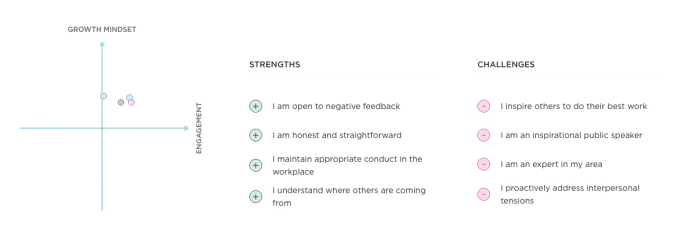
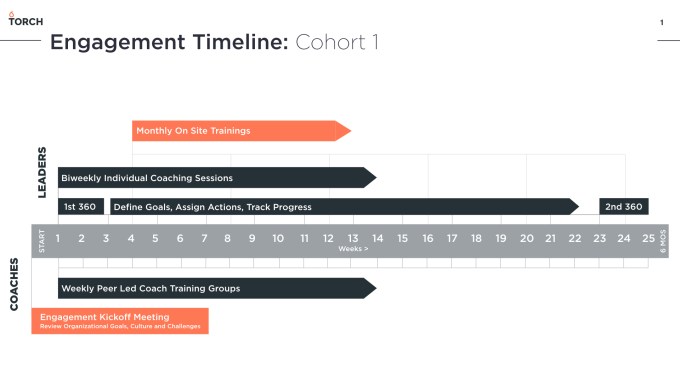
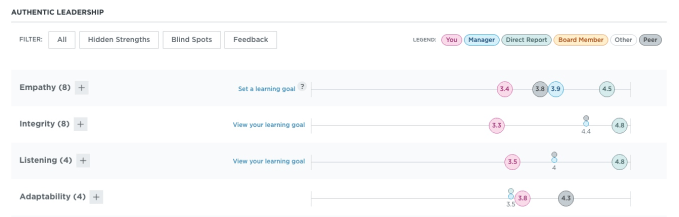
To address those, companies hire Torch to coach one or more of their executives. Torch conducts extensive 360 interviews with the exec, as well as their reports, employees, and peers. It seeks to score them on empathy, visionary thinking, communication, conflict, management and collaboration, Torch then structures goals and improvement timelines that it tracks with follow-up interviews the team and quantifiable metrics that can all be tracked by HR through a software dashboard.
To make progress on these fronts, execs do video chat sessions through Torch’s app with coaches trained in these skills. “These are all working people with by nature very tight schedules. They don’t have time to come in for a live session so we come to them in the form of video” Yarbough tells me. Rates vary from $500 per month to $1500 per month for a senior coach in the US, Europe, APAC, or EMEA with Torch scoring a significant margin. “We’re B2B only. We’re not focused on being the most affordable solution. We’re focused on being the most effective. And we find that there’s less price sensitivity for senior leaders where the cost of their underperformance is incredibly high to the organization.” Torch’s top source of churn is clients’ going out of business, not ceasing to want its services.
Here are two examples of how big-wigs get better with Torch. “Let’s say we have a client who really just wants to be liked all the time, so much so that they have a hard time getting things done. The feedback from the 360 would come back like ‘I find that Cameron is continually telling me what I want to hear but I don’t know what the expectations are of me and I need him to be more direct.'” Yarbrough explains. “The problem is those leaders will eventually fire those people who are failing, but they’ll say they had no idea they weren’t performing because he never told them.” Torch’s coaches can teach them to practice tough-love when necessary and be more transparent. Meanwhile, a boss who storms around the office and “is super direct and unkind” could be instructed on how to “develop more empathic attunement.”
Yarbrough specifically designed Torch’s software to not be too prescriptive and leave room for the relationship between the coach and client to unfold. And for privacy, coaches don’t record notes and HR only sees the performance goals and progress, not the content of the video chats. It wants execs to feel comfortable getting real without the worry their personal or trade secrets could leak. “And if someone is bringing in something about trauma or that’s super sensitive about their personal life, their coach will refer them out to psychotherapists” Yarbrough assures me.
Torch’s direct competition comes from boutique executive coaching firms around the world, while on the tech side BetterUp is trying to make coaching scale to every type of employee. But its biggest foe is the stubborn status quo of stiff upper lipping it.
The startup world has been plagued by too many tragic suicides, deep depression, and paralyzing burnout. It’s easy for founders to judge their own worth not by self-confidence or even the absolute value of their accomplishments, but by their status relative to yesterday. That means one blown deal, employee quitting, or product delay can make an executive feel awful. But if they turn to their peers or investors, it could hurt their partnership and fundraising prospects. To keep putting in the work, they need an emotional outlet.
“We ultimately have to create this great software that super-powers human beings. People are not robots yet. They will be someday, but not yet” Yarbrough concludes with a laugh. IQ alone doesn’t make people succeed. Torch can help them develop the EQ, or emotional intelligence quotient, they need to become a boss that’s looked up to.
Scribd is moving into the original content business with the release of “Mueller’s War,” a book by journalist Garrett Graff looking at the prosecutor’s time as a marine in the Vietnam War.
CEO Trip Adler revealed earlier this year that the subscription e-book and audiobook service would be moving in this direction. Today, Scribd is actually releasing its first title and revealing more details about its plans.
Adler told me the initial lineup of Scribd Originals mixes fiction and nonfiction, with a focused on “the space between a magazine article and a book” — namely, pieces up to 50,000 words in length, that are too long to run in a magazine but aren’t long enough to be published as a standalone book.
The hope is for Scribd to build a closer relationship with authors while offering something that’s “unique for our readers,” Adler said.
“We pay an advance similar for a traditional book,” he added. ”There’s a period of exclusivity, [but] in some cases we will also be distributing books over time to other digital platforms … We’re still staying open-minded about those kinds of things.”
The plan is to release one original title (in both e-book and audiobook form) each month, and to that end, the company has brought on former Byliner editor in chief Mark Bryant as an editor. Upcoming originals include work from authors Roxane Gay, Mark Seal, Hilton Als, Peter Heller and Paul Theroux.
And while Amazon’s moves into publishing have been one of the sources of tension between the e-commerce giant and traditional publishers, Adler said Scribd has run its plans by some of its publishing partners: “We really expect them to embrace this. This is just a great way for their authors to keep in touch with their audience between books.”
He even suggested that in some cases, a successful Scribd Original could be turned into a full-length book that’s released by a traditional publisher.
Remember Fleksy? The customizable Android keyboard app has a new trick up its sleeve: It’s adding a store where users can find and add lightweight third party apps to enhance their typing experience.
Right now it’s launched a taster, preloading a selection of ‘mini apps’ into the keyboard — some from very familiar brand names, some a little less so — so users can start to see how it works.
The first in-keyboard apps are Yelp (local services search); Skyscanner (flight search); Giphy (animated Gif search); GifNote (music Gifs; launching for U.S. users only for rights reasons); Vlipsy (reaction video clips); and Emogi (stickers) — with “many more” branded apps slated as coming in the next few months.
They’re not saying exactly what other brands are coming but there are plenty of familiar logos to be spotted in their press materials — from Spotify to Uber to JustEat to Tripadvisor to PayPal and more…
The full keyboard store itself — which will let users find and add and/or delete apps — will be launching at the end of this month.
The latest version of the Fleksy app can be downloaded for free via the Play Store.
Mini apps made for messaging
The core idea for these mini apps (aka Fleksyapps) is to offer lightweight additions designed to serve the messaging use case.
Say, for example, you’re chatting about where to eat and a friend suggests sushi. The Yelp Fleksyapp might pop up a contextual suggestion for a nearby Japanese restaurant that can be shared directly into the conversation — thereby saving time by doing away with the need for someone to cut out of the chat, switch apps, find some relevant info and cut and paste it back into the chat.
Fleksyapps are intended to be helpful shortcuts that keep the conversation flowing. They also of course put brands back into the conversation.
“We couldn’t be more excited to bring the power of the world’s popular songs with GIFs, videos and photos to the new Fleksyapps platform,” says Gifnote co-founder, John vanSuchtelen, in a supporting statement.
Fleksy’s mini apps appear above the Qwerty keyboard — in much the same space as a next-word prediction. The user can scroll through the app stack (each a tiny branded circle until tapped on to expand) and choose one to interact with. It’s similar to the micro apps lodged in Apple’s iMessage but on Android where iMessage isn’t… The team also plans for Fleksy to support a much wider range of branded apps — hence the Fleksyapps store.
In-keyboard apps is not a new concept for the dev team behind Fleksy; an earlier keyboard app of theirs (called ThingThing) offered micro apps they built themselves as a tool to extend its utility.
But now they’re hoping to garner backing and buy in from third party brands excited about the exposure and reach they could gain by being where users spend the most device time: The keyboard.
“Think of it a bit like the iMessage equivalent but on Android across any app. Or the WeChat mini program but inside the keyboard, available everywhere — not only in one app,” CEO Olivier Plante tells TechCrunch. “That’s a problem of messaging apps these days. All of them are verticals but the keyboard is horizontal. So that’s the benefit for those brands. And the user will have the ability to move them around, add some, to remove some, to explore, to discover.”
“The brands that want to join our platform they have the option of being preloaded by default. The analogy is that by default on the home screen of a phone you are by default in our keyboard. And moving forward you’ll be able to have a membership — you’re becoming a ‘brand member’ of the Fleksyapps platform, and you can have your brand inside the keyboard,” he adds.
The first clutch of Fleksyapps were developed jointly, with the team working with the brands in question. But Plante says they’re planning to launch a tool in future so brands will be able to put together their own apps — in as little as just a few hours.
“We’re opening this array of functionalities and there’s a lot of verticals possible,” he continues. “In the future months we will embed new capabilities for the platform — new type of apps. You can think about professional apps, or cloud apps. Accessing your files from different types of clouds. You have the weather vertical. You have ecommerce vertical. You have so many verticals.
“What you have on the app store today will be reflected into the Fleksyappstore. But really with the focus of messaging and being useful in messaging. So it’s not the full app that we want to bring in — it’s really the core functionality of this app.”
The Yelp Fleksyapp, for example, only includes the ability to see nearby places and search for and share places. So it’s intentionally stripped down. “The core benefit for the brand is it gives them the ability to extend their reach,” says Plante. “We don’t want to compete with the app, per se, we just want to bring these types of app providers inside the messenger on Android across any app.”
On the user side, the main advantage he touts is “it’s really, really fast — fleshing that out to: “It’s very lightweight, it’s very, very fast and we want to become the fastest access to content across any app.”
Users of Fleksyapps don’t need to have the full app installed because the keyboard plugs directly into the API of each branded service. So they get core functionality in bite-sized form without a requirement to download the full app. (Of course they can if they wish.)
So Plante also notes the approach has benefits vis-a-vis data consumption — which could be an advantage in emerging markets where smartphone users’ choices may be hard-ruled by the costs of data and/or connectivity limits.
“For those types of users it gives them an ability to access content but in a very light way — where the app itself, loading the app, loading all the content inside the app can be megabits. In Fleksy you’re talking about kilobits,” he says.
Privacy-sensitive next app suggestions
While baking a bunch of third party apps into a keyboard might sound like a privacy nightmare, the dev team behind Fleksy have been careful to make sure users remain in control.
To wit: Also on board is an AI keyboard assistant (called Fleksynext) — aka “a neural deep learning engine” — which Plante says can detect the context, intention and sentiment of conversations in order to offer “very useful” app suggestions as the chat flows.
The idea is the AI supports the substance of the chat by offering useful functionality from whatever pick and mix of apps are available. Plante refers to these AI-powered ‘next app’ suggestions as “pops”.
And — crucially, from a privacy point of view — the Fleksynext suggestion engine operates locally, on device.
That means no conversation data is sent out of the keyboard. Indeed, Plante says nothing the user types in the keyboard itself is shared with brands (including suggestions that pop up but get ignored). So there’s no risk — as with some other keyboard apps — of users being continually strip-mined for personal data to profile them as they type.
That said, if the user chooses to interact with a Fleksyapp (or its suggestive pop) they are then interacting with a third party’s API. So the usual tracking caveats apply.
“We interact with the web so there’s tracking everywhere,” admits Plante. “But, per se, there’s not specific sensitive data that is shared suddenly with someone. It is not related with the service itself — with the Fleksy app.”
The key point is that the keyboard user gets to choose which apps they want to use and which they don’t. So they can choose which third parties they want to share their plans and intentions with and which they don’t.
“We’re not interesting in making this an advertising platform where the advertiser decides everything,” emphasizes Plante. “We want this to be really close to the user. So the user decides. My intentions. My sentiment. What I type decides. And that is really our goal. The user is able to power it. He can tap on the suggestion or ignore it. And then if he taps on it it’s a very good quality conversion because the user really wants to access restaurants nearby or explore flights for escaping his daily routine… or transfer money. That could be another use-case for instance.”
They won’t be selling brands a guaranteed number of conversions, either.
That’s clearly very important because — to win over users — Fleksynext suggestions will need to feel telepathically useful, rather than irritating, misfired nag. Though the risk of that seems low given how Fleksy users can customize the keyboard apps to only see stuff that’s useful to them.
“In a sense we’re starting reshape a bit how advertising is seen by putting the user in the center,” suggests Plante. “And giving them a useful means of accessing content. This is the original vision and we’ve been very loyal to that — and we think it can reshape the landscape.”
“When you look into five years from now, the smartphone we have will be really, really powerful — so why process things in the cloud? When you can process things on the phone. That’s what we are betting on: Processing everything on the phone,” he adds.
When the full store launches users will be able to add and delete (any) apps — included preloads. So they will be in the driving seat. (We asked Plante to a confirm the user will be able to delete all apps, including any pre-loadeds and he said yes. So if you take him at his word Fleksy will not be cutting any deals with OEMs or carriers to indelibly preload certain Fleksyapps. Or, to put it another way, crapware baked into the keyboard is most definitely not plan.)
Depending on what other Fleksyapps launch in future a Fleksy keyboard user could choose to add, for example, a search service like DuckDuckGo or France’s Qwant to power a pro-privacy alternative to using Google search in the keyboard. Or they could choose Google.
Again the point is the choice is theirs.
Scaling a keyboard into a platform
The idea of keyboard-as-platform offers at least the possibility of reintroducing the choice and variety of smartphone app stores back before the cynical tricks of attention-harvesting tech giants used their network effects and platform power to throttle the app economy.
The Android keyboard space was also a fertile experiment ground in years past. But it’s now dominated by Google’s Gboard and Microsoft-acquired Swiftkey. Which makes Fleksy the plucky upstart gunning to scale an independent alternative that’s not owned by big tech and is open to any third party that wants to join its mini apps party.
“It will be Bing search for Swiftkey, it will be Google search for Gboard, it will be Google Music, it will be YouTube. But on our side we can have YouTube, we can also have… other services that exist for video. The same way with pictures and the same way for file-sharing and drive. So you have Google Drive but you have Dropbox, you have OneDrive, there’s a lot of services in the cloud. And we want to be the platform that has them all, basically,” says Plante.
The original founding team of the Fleksy keyboard was acqui-hired by Pinterest back in 2016, leaving the keyboard app itself to languish with minimal updates. Then two years ago Barcelona-based keyboard app maker, ThingThing, stepped in to take over development.
Plante confirms it’s since fully acquired the Fleksy keyboard technology itself — providing a solid foundation for the keyboard-as-platform business it’s now hoping to scale with the launch of Fleksyapps.
Talking of scale, he tells us the startup is in the process of raising a multi-million Series A — aiming to close this summer. (ThingThing last took in $800,000 via equity crowdfunding last fall.)
The team’s investor pitch is the keyboard offers perhaps the only viable conduit left on mobile to reset the playing field for brands by offering a route to cut through tech giant walled gardens and get where users are spending most of their time and attention: i.e. typing and sharing stuff with their friends in private one-to-one and group chats.
That means the keyboard-as-platform has the potential to get brands of all stripes back in front of users — by embedding innovative, entertaining and helpful bite-sized utility where it can prove its worth and amass social currency on the dominant messaging platforms people use.
The next step for the rebooted Fleksy team is of course building scale by acquiring users for a keyboard which, as of half a year ago, only had around 1M active users from pure downloads.
Its strategy on this front is to target Android device makers to preload Fleksy as the default keyboard.
ThingThing’s business model is a revenue share on any suggestions the keyboard converts, which it argues represent valuable leads for brands — given the level of contextual intention. It is also intending to charge brands that want to be preloaded on the Fleksy keyboard by default.
Again, though, a revenue share model requires substantial scale to work. Not least because brands will need to see evidence of scale to buy into the Fleksyapps’ vision.
Plante isn’t disclosing active users of the Fleksy keyboard right now. But says he’s confident they’re on track to hit 30M-35M active users this year — on account of around ten deals he says are in the pipeline with device makers to preload Fleksy’s keyboard. (Palm was an early example, as we reported last year.)
The carrot for OEMs to join the Fleksyapps party is they’re cutting them in on the revenue share from user interactions with branded keyboard apps — playing to device makers’ needs to find ways to boost famously tight hardware margins.
“The fact that the keyboard can monetize and provide value to the phone brands — this is really massive for them,” argues Plante. “The phone brands can expect revenue flowing in their bank account because we give the brands distribution and the handset manufacturer will make money and we will make money.”
It’s a smart approach, and one that’s essentially only possible because Google’s own Gboard keyboard doesn’t come preloaded on the majority of Android devices. (Exceptions include its own Pixel brand devices.) So — unusually for a core phone app on Android — there’s a bit of an open door where the keyboard sits, instead of the usual preloaded Google wares. And that’s an opportunity.
Markets wise, ThingThing is targeting OEMs in all global regions with its Fleksy pitch — barring China (which Plante readily admits it too complex for a small startup to sensibly try jumping at).
That antirust decision means mobile makers finally have the chance to unbundle Google apps from devices they sell in the region.
Which translates into growing opportunities for OEMs to rethink their Android strategies. Even as Google remains under pressure not to get in the way by force feeding any more of its wares.
Really, a key component of this shift is that device makers are being told to think, to look around and see what else is out there. For the first time there looks to be a viable chance to profit off of Android without having to preload everything Google wants.
“For us it’s a super good sign,” says Plante of the Commission decision. “Every monopolistic situation is a problem. And the market needs to be fragmented. Because if not we’re just going to lose innovation. And right now Europe — and I see good progress for the US as well — are trying to dismantle the imposed power of those big guys. For the simple evolution of human being and technology and the future of us.”
“I think good things can happen,” he adds. “We’re in talks with handset manufacturers who are coming into Europe and they want to be the most respectful of the market. And with us they have this reassurance that you have a good partner that ensures there’s a revenue stream, there’s a business model behind it, there’s really a strong use-case for users.
“We can finally be where we always wanted to be: A choice, an alternative. But having Google imposing its way since start — and making sure that all the direct competition of Google is just a side, I think governments have now seen the problem. And we’re a winner of course because we’re a keyboard.”
But what about iOS? Plante says the team has plans to bring what they’re building with Fleksy to Apple’s mobile platform too, in time. But for now they’re fully focusing efforts on Android — to push for scale and execute on their vision of staking their claim to be the independent keyboard platform.
Apple has supported third party keyboards on iOS for years. Unfortunately, though, the experience isn’t great — with a flaky toggle to switch away from the default Apple keyboard, combined with heavy system warnings about the risks of using third party keyboards.
Meanwhile the default iOS keyboard ‘just works’ — and users have loads of extra features baked by default into Apple’s native messaging app, iMessage.
Clearly alternative keyboards have found it all but impossible to build any kind of scale in that iOS pincer.
“iOS is coming later because we need to focus on these distribution deals and we need to focus on the brands coming into the platform. And that’s why iOS right now we’re really focusing for later. What we can say is it will come later,” says Plante, adding: “Apple limits a lot keyboards. You can see it with other keyboard companies. It’s the same. The update cycle for iOS keyboard is really, really, really slow.”
Plus, of course, Fleksy being preloaded as a default keyboard on — the team hopes — millions of Android devices is a much more scalable proposition vs just being another downloadable app languishing invisibly on the side lines of another tech giant’s platform.
TechCrunch’s resident transportation expertKirsten Korosecand venture capital axKate Clarkhave been on the case, closely following the market’s reaction and the evolving theses around Lyft’s business… Today at 11:00 am PT, Kirsten and Kate will be helping Extra Crunch members understand how investors are thinking about Lyft and will be offering their views on where the company goes from here.
Tune in to join the Lyft debate as it unfolds, as well as for the opportunity to ask Kirsten and Kate any and all things Lyft, transportation, or venture.
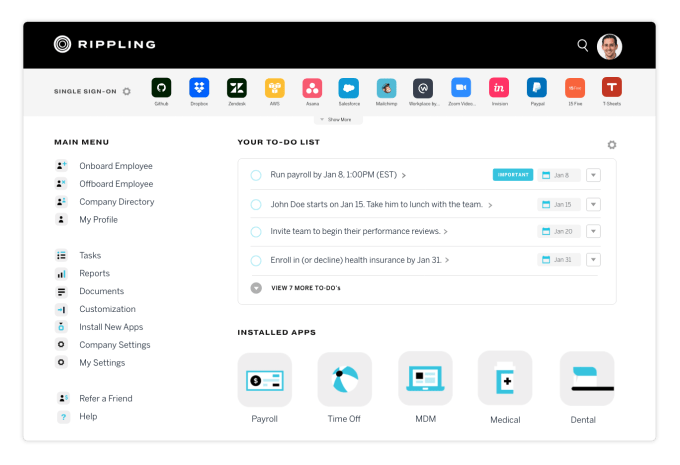
Parker Conrad’s last startup Zenefits drowned in busy work. Now with Rippling, he wants to boil that ocean. Instead of trying to nail one thing then expand, “very counter to conventional wisdom, we took on something that’s a lot broader and more ambitious.” That meant spending 2 years with 40 engineers working in stealth to build integrations with nearly every popular business tool to combine HR, IT, and single-sign on services. The result is that when you hire an employee, Rippling onboards them to all those services in a single click. Goodbye, busy work. Hello, gateway to the enterprise app ecosystem.
The past few years have seen a Cambrian explosion of startups building specialty software for office productivity and collaboration. But that’s left customers struggling to get their teams set up on all these fragmented tools. As such, Rippling had a very good first year on the market with rapidly growing revenue. So when Rippling went out to raise money, Conrad was signing terms sheets in just over a week.
$45 million. “I know that rounds are bigger these days but still, for a Series A that’s pretty substantial” Conrad tells me with a wide grin over coffee at San Francisco’s Four Barrel. “We We want to keep doubling down on the engineering, investing and putting more money into R&D, so we have a real product advantages and technology advantages over other players in our space even though a lot of them have been around a lot longer than we have.” The Information‘s Zoe Bernard had reported Rippling was raising at least $30 million.
The round was led by Kleiner Perkins and its enterprise guru Mamoon Hamid. A source confirms the round was a stunning $270 million valuation. He was also skeptical about Rippling trying to integrate with everyone before launch. But Hamid says “What was a concern a few years ago is now something we like about the company.” After getting pitched so many piecemeal enterprise solutions, it suddenly clicked for Hamid why customers would want “one stop for everything. You need an independent party to be that glue layer.”
Typically, enterprise software is an unglued mess. Apps don’t talk to each other, so when you hire a new employee, you have to manually add them, their role, their team, their manager, their permissions and more to every single tool your team uses. There’s HR systems that control payroll and benefits, IT systems that determine what equipment you’re issued, productivity and collaboration apps like Slack and Dropbox, and department-specific tools like Salesforce or Github. Conrad believes manually updating these with each hire, fire, or promotion is the source of almost all administrative work at a company.
The willingness to slog through office chores rather than strategically nullify them is why Zenefits grew so fast, then suddenly hit a wall. What can be begrudgingly brute forced at 50 employees becomes impossible to manage at 500 employees. That’s why “We don’t want to have anything that’s not software end to end in the product.” If it requires a client to call Rippling’s operations team for help, it could be built better. That maniacal focus actually allowed Conrad to temporarily hold Rippling’s only role responding to user complaints, which he also credits with propelling rapid iteration. The CEO wants to remain in that mindset, so he still lists his job title on LinkedIn as “Customer Support”.
Rippling only truly began hiring more than engineers when it came out of stealth a year ago. Now the startup has established two lucrative business models. First, it earns reseller fees from other enterprise tool makers when people buy them through the Rippling gateway. Any developer with a well-established brand becomes an integrated Rippling partner. It’s not going to try to out-build Zoom or Mailchimp. “As Rippling is successful, what I think it can do is bring a lot of customers to these other businesses.
Meanwhile, Rippling develops its own in-house versions of undifferentiated parts of the HR and IT stacks like PTO management or commuter benefits. Customers aren’t loyal to a brand in these areas yet, so it’s easy for Rippling to swoop in. And it can charge a similar rate, but beat competitors on convenience because its homegrown systems integrate directly with Rippling’s source of truth on employee details.
Now with its business revving up and plenty of cash to fuel the engine, Conrad tells me his biggest concern is hiring the right people. “The really challenging thing in a company is when the headcount grows too quickly. I’m making sure we don’t do things like more than double headcount in a 12 month period” he tells me. While Zenefits was a mad blitz for scale, Conrad has tried to bias Rippling towards action without being so impulsive that the company makes mistakes. “It’s never easy, but we’re not yet at the scale where things become really scary. We have a little bit more time to hit milestones” he explains about trying to run a business at a more liveable pace while being an active dad too.
Luckily, Zenfits taught him how to avoid many of the pitfalls of entrepreneurship. Conrad concludes that he’s happy to have gone from “playing video games on impossible mode vs medium mode.”
Identity management software provider Okta, which went public two years ago in what was one of the first pure-cloud subscription-based company IPOs, wants to fund the next generation of identity, security and privacy startups.
At its big customer conference Oktane, where the company has also announced a new level of identity protection at the server level, chief operating officer Frederic Kerrest (pictured above, right, with chief executive officer Todd McKinnon) will unveil a $50 million investment fund meant to back early-stage startups leveraging artificial intelligence, machine learning and blockchain technology.
“We view this as a natural extension of what we are doing today,” Okta senior vice president Monty Gray told TechCrunch. Gray was hired last year to oversee corporate development, i.e. beef up Okta’s M&A strategy.
Gray and Kerrest tell TechCrunch that Okta Ventures will invest capital in existing Okta partners, as well as other companies in the burgeoning identity management ecosystem. The team managing the fund will look to Okta’s former backers, Sequoia, Andreessen Horowitz and Greylock, for support in the deal sourcing process.
Okta Ventures will write checks sized between $250,000 and $2 million to eight to 10 early-stage businesses per year.
“It’s just a way of making sure we are aligning all our work and support with the right companies who have the right vision and values because there’s a lot of noise around identity, ML and AI,” Kerrest said. “It’s about formalizing the support strategy we’ve had for years and making sure people are clear of the fact we are helping these organizations build because it’s helpful to our customers.”
Okta Ventures’ first bet is Trusted Key, a blockchain-based digital identity platform that previously raised $3 million from Founders Co-Op. Okta’s investment in the startup, founded by former Microsoft, Oracle and Symantec executives, represents its expanding interest in the blockchain.
“Blockchain as a backdrop for identity is cutting edge if not bleeding edge,” Gray said.
Okta, founded in 2009, had raised precisely $231 million from Sequoia, Andreessen Horowitz, Greylock, Khosla Ventures, Floodgate and others prior to its exit. The company’s stock has fared well since its IPO, debuting at $17 per share in 2017 and climbing to more than $85 apiece with a market cap of $9.6 billion as of Tuesday closing.
Two of the issues limiting blockchain adoption in the enterprise has been lack of scalability and privacy. Offchain Labs, a startup that spun out of research at Princeton, wants to help create more scalable smart contracts while shifting part of the process off of the public blockchain to increase privacy. Today, the company announced a $3.7M seed round led by Pantera Capital.
Compound VC, Raphael Ouzan of Blocknation, Jake Seid, managing director at Stone Bridge Ventures and other unnamed investors also participated.
The startup has created a protocol called Arbitrum that helps developers scale smart contracts in a way that’s difficult to do right now, says company co-founder Ed Felten. “We’re working to build a platform for smart contract development that provides what we think developers want, a combination of scalability so that you can scale to more transactions per second, more users, and to contracts that have more code and still have more data in them,” he explained.
In addition to scalability, the company believes that companies want a way to business without sharing everything they are doing, as is required on a public chain. “The second thing we think people want is privacy, meaning control over who gets to see what’s happening in their contract. So you don’t have to publish everything about your contracts, your code and everything it does on a public chain in order to get your work done.”
The last piece related to that is trust. “Our platform offers what we call the ‘Any Trust Guarantee’, which means that when you launch or deploy your contract, you specify a set of validators for it. And the guarantee we give you is that as long as at least one validator is acting honestly, your contract will execute correctly, no matter how evil or inattentive the other validators are,” Felten said.
The company was born out of research at Princeton University and began with what Felten called an academic prototype created in their labs. Felten is a computer science professor at Princeton, and also served as Deputy CTO to the White House under President Obama,
Those credentials and the prototype showed enough to attract investors. Today, the company is hoping to use the money to complete a Beta version of Arbitrum. He wouldn’t commit to a timeline, but said the product is close.
While Felten recognizes he is competing with giants like IBM and SAP in the enterprise blockchain space, he believes that the startup has come up with a solution to a persistent problem for blockchain developers, and they are releasing the protocol as open source to make it even more attractive.
Tel Aviv’s Run.AI, a startup that is building a new virtualization and acceleration platform for deep learning, is coming out of stealth today. As a part of this announcement, the company also announced that it has now raised a total of $13 million. This includes a $3 million seed round from TLV Partners and a $10 million Series A round led by Haim Sadger’s S Capital and TLV Partners.
It’s no secret that building deep learning models take a hefty amount of GPU power or access to specialized AI chips. Run.AI argues that the virtualization layers that worked so well for in the past don’t quite cut it for training today’s AI models.
“We believe that we’re only scratching the surface of the full potential of deep learning,” Run.AI CEO and co-founder Omri Geller told me. “But the computational infrastructure needs of deep learning are a totally different ballgame. […] The rise of deep learning is triggering a new era of compute.”
Traditionally, Geller argues, virtualization was all about being generous and sharing the resources of a single machine for workloads that typically only run for a short time or use a small amount of resources. Deep learning workloads, however, are very different and are essentially selfish in that they want to take over all the available compute resources of a given machine. These training sessions also typically run for hours or days. At its core, what Run.AI offers is a new virtualization layer for distributed machine learning tasks that can across a large number of machines.
“We built a compute abstraction layer that bridges the gap between the new form of workloads and the new hardware that is evolving,” said Geller. “By using this abstraction layer, we can achieve 100x faster compute using distributed computing. We can double the resource utilization of the hardware and we can bring to companies the control over time and cost regarding deep learning.” That’s 100x faster than using a single resource, though that’s a bit aspirational as Geller also tells me that the team is seeing about a 10x speedup in production right now, though he’s confident that the team will get to 100x over time. Either way, though, the promise here is that the service will allow you to optimize the utilization of your deep learning workloads.
That’s only one part of the company’s solution, though. In addition, the company’s tools also analyze the model in order to break it down into smaller models that can then run in parallel across these servers. With that, the service can understand how many resources a workload would need and what machines to best send the given workloads to. In doing this, the system takes into account everything from available compute resources to network bandwidth, as well as the data pipeline and size.
The company also argues that this allows it to train large models that are bigger than the individual GPU memory capacity of a single machine.
There’s a financial aspect to this, too, because users can determine whether they want the service to prioritize cost savings over training speed, for example. The platform supports both private and public cloud deployments. In private clouds, cost savings are obviously less of a factor but the premise of increased utlization of the existing hardware investment will likely be a draw for many of these users.
The company, which was founded by Geller, Dr. Ronen Dar and Prof. Meir Feder, was founded in 2018. While still in stealth, it signed a number of early customers and opened a U.S. office.
Managing HR is an important function for any business. But small businesses often rely on spreadsheets and outdated processes. Cloud system BambooHR aims to fix this problem.
In addition to the company’s solutions, they also promote a culture of freedom and work-life balance. Read more about the unique team environment in this week’s Small Business Spotlight.
What the Business Does
Provides cloud based HR software.
COO Ryan Sanders told Small Business Trends, “Serving more than 13,000 customers and 1,200,000 employees, BambooHR is the leading software provider powering the strategic evolution of HR in small and medium businesses. BambooHR’s cloud-based system is an intuitive, affordable way for growing companies to manage essential employee information in a personalized Human Resources Information System (HRIS). Our software sets HR free to do great work and be more strategic, which helps the entire organization do the same. BambooHR’s clients include innovators like SoundCloud, Foursquare, Freshbooks, Stance, Reddit, Magnolia Homes, and others in more than 100 countries and 8 languages worldwide.”
Business Niche
Providing exceptional customer service.
Sanders says, “We truly love our customers, and we want to do everything we can to set them free to do great work. We track the NPS scores of our customers, and this helps us better understand what they need and ways that we can improve as an organization.”
How the Business Got Started
As a way to help people.
Sanders and co-founder Ben Peterson founded the company in 2008. They wanted to find a business idea that would genuinely help people. They considered the experiences they had with HR throughout their careers. Then they felt there was a gap in the market for a software solution that could help business owners improve their culture and increase efficiency.
Biggest Win
Staying in business for more than a decade.
Sanders adds, “If you look at most startups, especially SAAS startups they don’t tend to last. By focusing on our customers and our product, we’ve been able to overcome the struggles that cause a lot of companies to go out of business.”
Biggest Risk
Holding back from potential growth.
Sanders explains, “We resisted the urge to raise a ton of money and hire dozens of people all at once. We kept our focus on creating the best product we could and creating the best experience for our customers.”
Lesson Learned
Fill important needs early on.
Sanders says, “We could have hired key positions a little sooner in our history.”
How They’d Spend an Extra $100,000
Rewarding the team.
Sanders adds, “We would look at adding a new benefit that would help our employees be set free to do great work.”
Team Perk
Paid paid vacation.
Sanders explains, “Every year each employee gets $2,000 to go anywhere in the world. We live our company values, we believe in working 40 hours a week and then leaving work at work!”
Images: BambooHR; Top Image: (From Left to Right) Anna Lim (Referral/Partner Marketing Manager) Todd Grierson ( Sr. Director of Business Development/Strategic Initiatives) Becky Talpas ( Implementation Manager); Second Image: Tyler King Social Media Manager
You need vehicles for business use. But you might consider buying or leasing one through your company rather than as an individual. Basically, this just means your business is officially named as the owner or lessee of the vehicle.
Overall, the process of buying or leasing a vehicle through your business looks fairly similar to buying or leasing a vehicle as an individual. But you still need to find a dealer. And select a model that works for your specific needs and secure financing. However, look for some variances when buying.
How to Lease a Car Through Your Business
Take a look at what the process looks like.
Work With a Dealer That Offers Commercial Service
Different manufacturers offer different programs and terminologies for this. But basically you need to find a dealership officially authorized to work with commercial customers. Ford calls this type of dealership a Commercial Vehicle Center. Consider Village Ford in Dearborn, Mich. for example.
Village Ford General Manager Bob Wheat said in a phone interview with Small Business Trends, “As a CVC dealer, we have access to different programs than other dealers, we can offer commercial financing and it’s just a much easier process.”
This doesn’t necessarily mean the dealership only works with commercial vehicles. Village Ford offers options for both individuals and businesses. But they employ a dedicated commercial salesperson and a few other team members specifically authorized to work with commercial customers.
Consider Customized Solutions
The type of vehicle or vehicles that you choose can vary widely depending on your specific needs. If you’re just looking for a simple passenger vehicle, then this part of the process may be fairly similar to buying or leasing a car for personal use. You could simple find an in-stock option and then work with the dealer to fine-tune the details.
However, for businesses that need fleet vehicles, heavy duty options or cars with very specific features, you might instead work with a dealer to create a customized solution. To do this, you’ll first need to have a very clear idea of what your needs are. You may also have better luck getting the ideal vehicle if you give yourself some time to shop around and work with a dealer on customization options, rather than desperately searching for something that you can drive off the lot in a single day.
Wheat also emphasized the importance of working with a dealer that really understands the needs of commercial customers. They can help to ensure that your vehicle choice is set up to handle your specific hauling needs, size requirements and budgetary concerns.
Choose Between Buying and Leasing
Businesses have the option of either buying or leasing certain commercial vehicles. When you buy, you often make slightly higher payments. But they go toward paying off the vehicle. So once you’ve paid it off, you own the vehicle outright and it becomes an asset for your business. When you lease, you don’t ever actually own the vehicle. You simply make payments through a period, usually of about three years. Then you turn the car in at the end of that period or have the option to purchase it. The payments are often a bit lower for leases, but there are also mileage and availability considerations to make.
One option isn’t automatically better than the other, according to Wheat. You simply have to evaluate your business’s situation and what your exact vehicle needs are to determine which one is a better fit.
He says, “If you only want a vehicle for about three years and you don’t want to take cash out of your business to put a lot of money down, then you should probably think about leasing. It reserves cash and doesn’t tie up your credit line. You’re basically opting for planned obsolescence in exchange for a new vehicle. But if you’re looking for a vehicle that’s highly specialized for your business and you want to drive it until the wheels fall off, those people should think about buying.”
Bring Your Business’s Financial Documents
You should have a copy of your latest balance sheet and any other financial documents that can help you demonstrate your credit worthiness. You’ll need to establish a relationship with a lending institution. So they’ll want to look at your business’s cash flow, revenue, debts and any other elements that could impact your ability to re-pay your car loan or make lease payments on time.
Be Prepared to Guarantee the Loan Personally
If your business does not have enough credit to qualify for a loan or lease payment plan that fits your needs, you may need to guarantee the loan on a personal level. You would still be allowed to buy or lease the vehicle or vehicles through your business officially. But you would also be personally responsible if you’re not able to make the payments.
Work with your dealership’s finance department to come up with the terms that work best for you. This may not be ideal for some business owners. But especially for new or unestablished businesses, it’s often your only option and may help you start to build some financial history that could help you going forward.
Aqua Security, a startup that helps customers launch containers securely, announced a $62 million Series C investment today led by Insight Partners.
Existing investors Lightspeed Venture Partners, M12 (Microsoft’s venture fund), TLV Partners and Shlomo Kramer also participated. With today’s investment, the startup’s investments since inception now total over $100 million, according to the company.
Early investors took a chance on the company when it was founded in 2015. Containers were barely a thing back then, but the founders had a vision of what was coming down the pike and their bet has paid off in a big way as the company now has first-mover advantage. As more companies turn to Kubernetes and containers, the need for a security product built from the ground up to secure this kind of environment is essential.
While co-founder and CEO Dror Davidoff says the company has 60 Fortune 500 customers, he’s unable to share names, but he can provide some clues like five of the world’s top banks. As companies like that turn to new technology like containers, they aren’t going to go whole hog without a solid security option. Aqua gives them that.
“Our customers are all taking very dramatic steps towards adoption of those new technologies, and they know that existing security tools that they have in place will not solve the problems,” Davidoff told TechCrunch. He said that most customers have started small, but then have expanded as container adoption increases.
You may thank that an ephemeral concept like a container would be less of a security threat, but Davidoff says that the open nature of containerization actually leaves them vulnerable to tampering. “Container lives long enough to be dangerous,” he said. He added, “They are structured in an open way, making it simple to hack, and once in, to do lateral movement. If the container holds sensitive info, it’s easy to have access to that information.”
Aqua scans container images for malware and makes sure only certified images can run, making it difficult for a bad actor to insert an insecure image, but the ephemeral nature of containers also helps if something slips through. DevOp can simply take down the faulty container and put a newly certified clean one quickly.
The company has 150 employees with offices in the Boston area and R&D in Tel Aviv in Israel. With the new influx of cash, the company plans to expand quickly, growing sales and marketing, customer support and expanding the platform into areas to cover emerging areas like serverless computing. Davidoff says the company could double in size in the next 12-18 months and he’s expecting 3x to 4x customer growth.
All of that money should provide fuel to grow the company as containerization spreads and companies look for a security solution to keep containers in production safe.
Creating videos for your business is easier than ever before. Even if the extent of your video recording experience is through your personal Instagram or Facebook, you already have the knowledge and tools needed to make quality, engaging content.
The power of video extends beyond social media. It can completely transform your relationships with your customers and staff. As a time-strapped small business owner, this means videos can extend your reach while humanizing your brand — and, when done right, with little time investment.
The Power of Video
Let’s explore how using videos as part of the normal course of business can give you back hours of your day, allow you to better communicate with your teams, and the key tips for getting started.
Build Deeper Relationships with your Customers
It doesn’t matter if your audience is on a global scale or in your backyard, all businesses have the same issue: your customers are going to be researching and looking for information from you at times when you’re not available.
As a small business, it’s expensive to hire a full customer service department or have a salesperson on call day and night to cater to incoming inquiries. And I don’t know about you, but I’ve never felt a personal connection with most website FAQ pages.
Instead, use videos and imagery as an extension of yourself to build a connection with your customers even with limited resources. With some effort spent in the upfront creating videos and tutorials, you’ll have a library of on-demand content for your customers to reference. With each video you’re getting an extra touchpoint with your audience and connecting in a personal way.
While it doesn’t replace one-on-one conversations with people, there’s real value in using visuals to communicate. A recent study we conducted found that two-thirds of people understand information better when it’s communicated visually — and 48% of people found video the most engaging form of communication. By making it as easy as possible for your target audiences to discover and grasp the information they’re looking for, you’ll be a step closer to gaining them as a customer.
The type of content you create depends on what you offer and your audiences. However, an excellent place to start is with a video that discusses who you are, showcases your product or service, and answers common questions. Videos put a face and a name to your business and the relationship becomes much more personal.
Help your Team Feel Connected
As a business owner, you’re likely juggling several responsibilities at any given time. And with your attention pulled in all directions, it might feel time-consuming or even challenging to convey pertinent information and updates to all your employees. This is especially true with an ever-growing global and remote workforce that is reliant on digital communications.
Remember the study I mentioned earlier? The same findings are relevant in the workplace: people absorb information better and are more likely to be motivated by visuals than when communicated with in plain-text. In other words, your employees don’t want to read wordy emails.
Anything from short messages to longer videos is shown to save time and improve the performance of your employees. Videos can also ensure you’re sharing a consistent message across your organization. Short videos can be recorded and available for staff to watch on-demand or during their next shift – giving time back to you and your employees, who most likely prefer the flexibility.
Most importantly, visuals put a face to the message. Too often we communicate in email, leaving many of us to forget we’re talking with people on the other end. Videos help to create a human, eye-to-eye connection. Seeing a person, hearing their voice, and seeing their body language is essential for feeling connected and motivated, even if viewed on a screen.
To give you an idea of the type of content you can swap for visuals, let’s walk through some practical examples where videos would make your communications quicker and more effective:
Instead of a scheduling an hour-long meeting to walk your team through a new program or system, try creating a screen-share video. Not only will this save time across the board, but you’ll also be creating an archive for future reference.
Let’s say you’ve hired an employee to expand your sales in a new region. All your employees work remotely and are in different time zones, but you want the new employee to feel included on the team. To foster a connection, encourage your team to send videos introducing themselves, explaining their roles and adding in some fun personal highlights.
Regardless of the size of your business, a good onboarding program will set your employees up for success. While large enterprises may have an entire team dedicated to onboarding, this is rarely the case for smaller businesses. That doesn’t mean you can’t provide your workforce with the same training experience. Try packaging up your onboarding into several shorter videos to create a training catalog. Not only will this save you time in the future, but your employees can continue to access this information whenever they need a refresher.
How to Get Started
It is important to remember that the above tips are meant to simplify, and not to complicate. While you’ll want your customer-facing videos to have a bit more polish, you don’t need professional equipment or experience to create engaging content. In fact, you’re probably holding a powerful, all-in-one video creation tool right now: your phone.
From meeting recordings and company announcements to tutorials and FAQs, videos allow you to be in many places at once. To get you started, I’ll leave you with a challenge: open your camera on your phone or computer and record a quick message for your team. Perhaps it’s a motivational message for an upcoming sales initiative, or even a quick hello. Continue doing this for the next week or so and you’ll be amazed at what you can create and how effective your videos will be.
By Matt Pierce, Learning & Video Ambassador, TechSmith. You can also find more video tips and tricks by visiting the TechSmith Blog and TechSmith Academy.