Thursday, 4 April 2019

India’s OYO enters Japan in partnership with SoftBank

Fresh from closing a notable investment from Airbnb, India’s OYO has expanded its footprint into Japan. The move comes through a joint venture with investor SoftBank — which led OYO’s $1 billion round last year through its Vision Fund — which will cover hotel-based accommodation and home rentals.

Financial details around the joint venture were not disclosed. An OYO representative declined to go into details when asked.

OYO started in India, where it initially aggregated budget hotels; it has since expanded into China, Malaysia, Nepal, the U.K., the UAE, Indonesia, the Philippines and — now — Japan. China, in particular, has shown promise, with OYO’s room inventory there reportedly double what it is in India.

The evolution has not just been a geographical one. Its business has moved from a laser focus on the long-tail of budget hotels to a broader “hospitality” play. It now includes managed private homes and, in India, wedding venues, holiday packages and co-working — while its hotel supply is a mixture of franchised and leased. It has also advanced its focus from budget-minded consumers to cover business travelers, too.

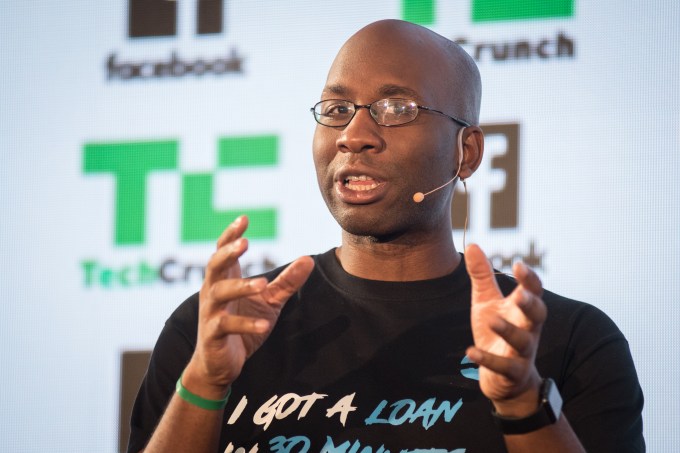
The Japanese JV will be led by Prasun Choudhary, whom OYO describes as a founding member of its team. Like OYO business elsewhere in the world, the company is appealing to small and medium hotel franchises and owners. On the consumer side, its prime segment is domestic and international travelers who seek “budget to mid-segment hospitality,” to use part of a statement from OYO founder and CEO Ritesh Agarwal, who is pictured in the image at the top of this post.

Agarwal is a Thiel fellow who started the company in 2011 when aged just 18. His original business, called Oravel, was an Airbnb clone that pivoted to become OYO. Today, that company is valued at $5 billion after raising more than $1.5 billion from investors.

SoftBank has previously struck joint ventures to bring other Vision Fund companies to Japan. Those include WeWork, Chinese ride-hailing firm Didi Chuxing and India’s Paytm, which launched a payment service in the country.


Africa Roundup: Jumia files for IPO, OneFi acquires Amplify, FlexClub expands in Mexico

Less than a decade ago IPOs, acquisitions and global expansion by African startups were more possibility than reality. March saw all three from the continent’s tech scene.

Pan-African e-commerce company Jumia filed for an IPO on the New York Stock Exchange, per SEC documents and confirmation from chief executive Sacha Poignonnec.

In an updated filing, (since the March 12 original) Jumia indicated it will offer 13,500,000 ADR shares, for an offering price of $13 to $16 per share to trade under the ticker symbol “JMIA.” The IPO could raise up to $216 million for Jumia.

Since our first story (and reflected in the latest SEC docs), Mastercard Europe agreed upfront to buy $50 million in Jumia ordinary shares.

With a smooth filing process, Jumia will become the first African startup to list on a major global exchange. The company is incorporated in Germany, but maintains its headquarters in Nigeria, and operates exclusively in Africa, with 4,000 employees on the continent.

The pending IPO creates another milestone for Jumia. The venture became the first African startup unicorn in 2016, achieving a $1 billion valuation after a funding round that included Goldman Sachs, AXA and MTN.

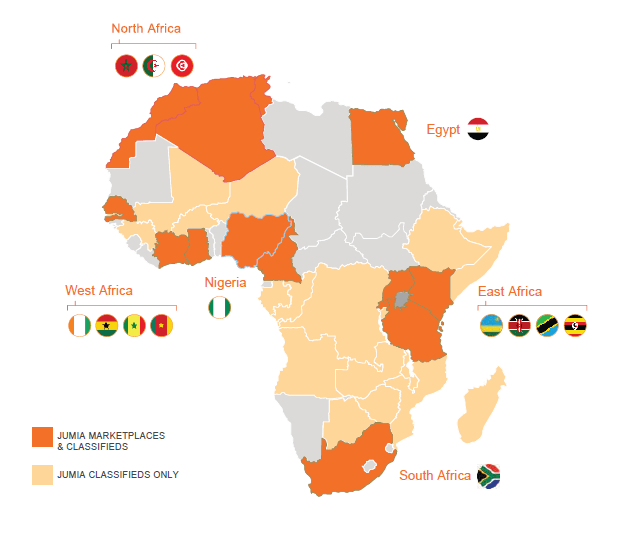
Founded in Lagos in 2012 with Rocket Internet backing, Jumia now operates multiple online verticals in 14 African countries. Goods and services lines include Jumia Food (an online takeout service), Jumia Flights (for travel bookings) and Jumia Deals (for classifieds). Jumia processed more than 13 million packages in 2018, according to company data. The company has started to generate annual revenues over $100 million, but like many burn-rate startups, has done so while racking up big losses.

There’ll be a lot more to cover, analyze and debate pre and post Jumia’s NYSE bell toll — which could happen in coming weeks or months. For example, can Jumia generate a profit; is it really an African startup; will Jumia become an acquisition target for a big outside name or an acquirer of smaller startups in African e-commerce? Stay tuned for continuing TechCrunch coverage.

On the acquisition front, Lagos-based online lending startup OneFi bought Nigerian payment solutions company Amplify for an undisclosed amount.

OneFi is taking over Amplify’s IP, team and client network of more than 1,000 merchants to which Amplify provides payment processing services, OneFi CEO Chijioke Dozie told TechCrunch.

The purchase of Amplify caps off a busy period for OneFi. Over the last seven months the Nigerian venture secured a $5 million lending facility from Lendable, announced a payment partnership with Visa and became one of the first (known) African startups to receive a global credit rating. OneFi is also dropping the name of its signature product, Paylater, and will simply go by OneFi (for now).

Collectively, these moves represent a pivot for OneFi away from operating primarily as a digital lender, toward becoming an online consumer finance platform.

“We’re not a bank but we’re offering more banking services…Customers are now coming to us not just for loans but for cheaper funds transfer, more convenient bill payment, and to know their credit scores,” said Dozie.

OneFi will add payment options for clients on social media apps, including WhatsApp, this quarter — something in which Amplify already holds a specialization and client base. Through its Visa partnership, OneFi will also offer clients virtual Visa wallets on mobile phones and start providing QR code payment options at supermarkets, on public transit and across other POS points in Nigeria.

On the back of the acquisition, OneFi is in the process of raising a round and will look to expand internationally, considering Senegal, Côte d’Ivoire, DRC, Ghana and Egypt and Europe for Diaspora markets.

On African startups expanding globally, FlexClub — a South African venture that matches investors and drivers to cars for ride-hailing services — announced it will expand in Mexico in a partnership with Uber after closing a $1.2 million seed round led by CRE Venture Capital.

The move comes as Africa’s tech-transit space continues to produce unique mobility solutions shaped around local needs.

FlexClub touts itself as a “gig economy investment platform” that is creating new asset classes in emerging markets, according to chief executive and co-founder Tinashe Ruzane.

That asset class, for now, is ride-hail vehicles. FlexClub allows investors to go on the site and purchase a car (ultimately managed and serviced by FlexClub). The startup then connects that car to an Uber driver who uses earnings to pay a weekly rental charge.

Those fees generate monthly fixed-rate interest income for the investor. The driver has the option of buying the car after 12 months, with a descending purchase price over time.

FlexClub’s platform manages the investment, rental income and disbursement of funds across all parties. The startup also handles insurance, maintenance and upkeep of the cars.

Ruzane envisions this as a model to finance multiple asset classes in emerging markets — where lending options are fewer for individuals who may not have credit histories.

“Our goal is to make this completely passive… where investors can invest in different kinds of assets on our platform, login to a dash, and see this is how my five cars in South Africa are doing, my vans in Mexico, my motorbikes in Indonesia — with a diversified portfolio around the world,” he explained.

FlexClub will begin work matching investors to cars and Uber drivers in Mexico in April. The startup sees opportunities to move into other mobility classes, such as Africa’s ride-hail motorcycle taxi and three-wheel tuk-tuk market, CEO Tinashe Ruzane told TechCrunch in this feature.

And finally, francophone Africa will see a boost in funds and support for startups. The Dakar Network Angels group launched last month, making its first investment to cleantech venture Coliba — an Ivorian startup that uses a mobile app to coordinate waste recycling

The deal is part of Dakar Network Angels’ mission of convening experts and capital to bridge the resource gap for startups in French-speaking Africa — or 24 of the continent’s 54 countries.

The organization — which goes by DNA for short — will offer seed fund investments of between $25,000 to $100,000 to early-stage ventures with high growth potential. These rounds will come with the entrepreneurial guidance of DNA’s angel network.

Launched in Senegal, the organization’s founder Marieme Diop — a VC investor at Orange Digital Ventures — named the goal of bridging VC disparities between francophone and non-francophone Africa as the primary driver for DNA. She pointed to funding data by Partech, indicating that 76 percent of investment to African startups goes to three English-speaking countries — Nigeria, Kenya and South Africa.

To gain consideration for DNA investment, startups must gain referral by a member. DNA will take a minority stake (less than 10 percent) in ventures that receive seed funds and provide program mentorship until exits, Diop told TechCrunch.

To become an angel, members must commit to investing a minimum of $10,000 a year (for those coming on as individuals), $20,000 (for corporates) and be on hand to support the portfolio startups, according to DNA’s Corporate Membership Charter.

More Africa Related Stories @TechCrunch

African Tech Around The Net


OpenClassrooms partners with Microsoft on a masters-level AI diploma

French startup OpenClassrooms is announcing a new partnership for a masters-level online program. Students who enroll in this program will access a fully online program about artificial intelligence. Eventually, future graduates will join companies — Microsoft will likely hire some of them.

If you aren’t familiar with OpenClassrooms, the company first started with basic massive open online course content for people willing to learn more about a particular topic. The startup then started offering full-fledged diplomas that require six months, a year or more.

OpenClassrooms is accredited to deliver official degrees in France — and the company plans to do the same in the U.S. and the U.K. It’s not 100 percent just you learning by yourself as you get to talk to a mentor every week to talk about your progress. And it’s been working quite well for the company.

An online path generally costs less than a traditional degree, and you’re more flexible when it comes to hours, days and semesters. The startups is so confident that it guarantees you’ll find a job within six months of graduation.

More recently, OpenClassrooms has been partnering with companies to offer apprenticeship programs. The idea is that you work for a company several days a week and study when you’re not working. It’s a win-win as some companies struggle to find the right candidates, some students want to start working right away and don’t want to pay for their studies. And OpenClassrooms gets paid by companies directly. Uber, Deliveroo, Capgemini, BNP Paribas and dozens of others participate in the apprenticeship program.

Microsoft will help OpenClassrooms design a new degree around data science, machine learning and all things artificial intelligence. The company will provide content and projects. OpenClassrooms will recruit 1,000 candidates in France, the U.K. and the U.S. as part of this program.


7 Ways to Elevate Security in a Workplace

Sponsored Post

Network Security Basics: 7 Ways to Elevate Security in a Workplace

Cyber attacks are a common threat to organizations today. Whether you are a small business or a major corporate entity, you need to have an IT network. The upside to a network is that it helps an organization become more productive, efficient and profitable.

The downside is that a network hosts information and data that is vital for an organization. It has details about the customers, the daily communications of the organization, linked hardware assets and more. So it offers an entry point for intruders and attackers.

If the network of your organization is compromised, it puts your organization’s data and reputation on the line. A breach of network security can lead to financial losses, lawsuits from customers and even legal problems for an organization. This is why it is critically essential to secure the IT network of your organization.

IT security personnel are typically tasked with the security of an organizational network. In this position, you are to create network security policies, take suitable measures and decisions, and train the employees on the desired security behaviors.

Even if you have solid network security in place, you can still improve upon it by adding new security measures. In this guide, we share some excellent desired behaviors and measures you can use to ramp up network security at your organization.

1. Sensitive Data Handling

Sensitive data can include customer information, financial details and other business secrets. Basically, it is anything that can be used by a malicious outsider to hurt your organization. When sensitive data is shared over your organizational network, it is important to ensure that it stays in the hands of authorized persons only.

To ensure this, you can create network security policies related to file sharing and email forwarding. Use these policies to block emails and files containing sensitive data from reaching unauthorized individuals. You can also set up a flag for additional confirmation when such data is shared by the network users.

If your organization uses cloud services, and it very probably does, make sure you include the cloud in your data handling policies.

2. Stronger Passwords and Password Managers

Stronger passwords are vital for a solid network security. And yet network users often create weak passwords that are too small, too simple or too easy to guess. To prevent this, you can create network policies that require the employees to create stronger passwords by default.

For instance, ask for a combination of symbols, alphabets and letters when a network user creates a password. You can also ask the user to choose a password of at least 10 to 15 characters to ensure better security and prevent the chances of a brute force attack by a hacker.

For more sensitive aspects of the network, you may require the users to change passwords frequently.

A common problem with passwords is that they can be hard to remember. This is especially true for longer, more complex passwords.

If the users on your network need help with remembering passwords, encourage them to use a good password manager. Password managers make it easier to keep track of all the passwords while ensuring that no unauthorized persons access them.

3. 2FA Adoption

Two-factor authentication, or 2FA, uses two factors to authenticate a network user. It is a significant improvement over the single-step password-only type of verification. 2FA uses a combination of something the user knows, something the user has and something the user is, to verify the user in two steps. It is particularly effective in countering phishing and session hijacking.

To implement 2FA on your organizational network, you can use an email code, a one-time SMS password, a personal question or any other identifier in addition to the standard password.

Make sure to consult with the stakeholders at your organization before deciding the two factors you use in 2FA implementation. The factors you use for verification must be easily accessible for network users and unique to them.

4. VPN Use

Most hackers target data traffic that flows between an organization’s network and its registered users. This is particularly true today when employees use smartphones, tablets and a variety of other devices to remotely access an organization’s network.

If the data traffic is compromised, a hacker can launch session hijacking or man-in-the-endpoint attack. He can masquerade as the registered user and access the network as well as all assets on the network. This is why it is crucial to secure the data traffic or the communication lines between the network and its users.

This is where VPNs come in. Quality VPNs are able to encrypt all communication taking place between a user and the network. However, in order for a VPN to work perfectly, both the network and the user must be using it at the time of communication.

A VPN almost makes it impossible for an attacker to launch a man-in-the-middle attack. It also counters other phishing attacks quite effectively. However, it is important to use a quality VPN with a sound reputation. A good example is NordVPN. To weigh the pros and cons of NordVPN, check out this review.

5. Safe Browsing

Safe browsing is the cornerstone of a good network security. You can train the employees at your organization on best practices related to safe browsing. Some of these include:

  • Use a well-known and up-to-date browser
  • Use anti-virus software with file scanning before downloading
  • Turn on Pop-Up Blocker
  • Avoid using public Wi-Fi
  • Check emails and email sources thoroughly before clicking any links
  • Verify URL authenticity especially when entering sensitive information
  • Be very careful when sharing credit card info and other personal details

You can alternatively implement some of these measures as network-wide policies. This way, when your users are browsing the web while connected directly to the network, alerts can be used to prompt them on safe browsing habits.

6. Secure USB Usage

USBs are a very handy and portable form of data. In a business workplace, sharing data between colleagues is very convenient with a USB. That being said, a USB can easily bring malware, viruses and other security threats into an organization’s work. So it is essential to have a network security policy relating to the USB use.

For a start, make sure all USBs used within your organizational workplace are secure. Strong encryption keys ensure that any data loss can’t be deciphered and misused. Also, use specialized mechanisms to scan USBs before they can be used to make sure they are clean.

If possible, limit the use of USBs to only the most essential occasions. On these occasions, use strict policies to monitor, regulate and scan the use of the USBs.

7. Anti-Phishing Measures

One of the most common security threats for organizations and employees are phishing attacks. Hackers masquerade as an authoritative or familiar person, tricking employees into clicking on malicious links. Once this happens, hackers then find a way to infiltrate the organization’s network.

Apart from awareness and security training, you can use network and email policies to mitigate the risks of phishing. Encourage employees to use other forms of confirmation from the purported sender before clicking a link in the email. Use white-listed email addresses to separate trusted email addresses and unknown addresses.

The security of an organization’s IT network ultimately rests on the policies and best practices of the employees and IT security personnel. The guide above provides some handy tips in the right direction. But make note that these are only a starting point and you should explore other ways to enhance the security of your own organizational network.

Image: Depositphotos.com

This article, "7 Ways to Elevate Security in a Workplace" was first published on Small Business Trends


How 10 Gmail Tricks Will Change the Way You Approach Your Business

Gmail Tricks You Need to Know to Run Your Business Better

Gmail currently has more than 1.5 billion active users around the world. It is one of the most popular platforms that small businesses use to communicate with customers, partners and team members. But if you’re only using the main features of the platform, you could really be missing out.

Gmail is a highly customizable platform that you can shape and adjust to fit your exact specifications. To do this, you just need to know a few quick Gmail tricks.

Gmail Tricks

Create Canned Responses

Do you often find yourself sending the same types of emails over and over again? Instead of typing out the same response each time, canned responses let you essentially create templates to cut your email time in half. Find the canned responses options within your Gmail settings and then compose your message as usual. When you go to send an email, pull up the canned response that fits your needs and make any necessary adjustments before hitting send.

Unsend Emails

If you’ve ever sent an email only to immediately realize that you hit “reply all,” sent it to the wrong person or made a major typo, you’re in luck. Gmail allows you to unsend messages if you act quickly. Under settings, you can select whether you want between 5 and 30 seconds to hit “unsend.” Once you’ve sent a message in error, the alert that pops up on your screen letting you know that your message has been sent will also include the unsend option.

Check Your Calendar

If you use Google Calendar to keep track of meetings, events and to-dos, it may help you to know that you can view your calendar without actually leaving Gmail. There’s a small calendar icon at the top right corner of the screen. Click that to view any upcoming events and switch back and forth between the calendar and email view easily.

Preview Messages

Busy entrepreneurs don’t always have time to fully read every email. Gmail’s Preview Pane option can help you scan through messages to quickly decide which ones need responses right away. To enable this feature, just go to your advanced settings and click “enable” under the Preview Pane section. Then your main email dashboard should display as a split screen with previews on one side.

Combine Multiple Accounts

Lots of businesses choose to create multiple email accounts for different functions. But if you’re a solo operation or a small team, you might have one person who’s responsible for managing multiple accounts. Go to “accounts and imports” under your email settings and set up each additional email account to forward to your main account. Then add them as a sending address as well. Then you can send and receive emails from multiple accounts without switching back and forth constantly.

Mute Conversations

If you’re part of a lot of group conversations that don’t necessarily relate to you specifically, you may be able to save valuable time by muting conversations. To take advantage of this feature, go to the message that you want to mute. This option is available under the “more” drop-down menu toward the top of the screen.

Share Account Access

For business owners who have virtual assistants or team members and want to outsource certain inbox management tasks, you have the ability to share access to your email account without sharing your full account details. This option is available under the “accounts” section of your settings. You can send the person a message that lets them create their own login details. That way, they can get into your account to send messages or perform certain tasks without having full authority. This may be especially helpful if they leave your team or your policies change. It lets you update your settings and keep your account secure without worrying if they’ll get access first.

Make Phone Calls

You can use Google Hangouts to make voice calls right from your Gmail Dashboard. There’s a small phone icon under your account information right on the main dashboard. Click that and enter in the number you want to call. This can be especially helpful for those who want to avoid making business calls from personal numbers.

Prioritize Messages

Under your Gmail settings, you have the option of creating a priority inbox for your most important messages. You can also create and adjust settings to control which items get placed into your priority inbox. That way, you can avoid sifting through thousands of unimportant emails just to get to the few that need immediate responses.

Use Gmail Add-Ons

In addition to these official settings, Gmail also allows you to use third party add-ons to really customize your email experience. Under your settings tab, click “get add-ons” and then search for the ones you want. You can find options for automatically unsubscribing you from lists, managing your calendar and even helping you find email contacts on social media.

Image: Depositphotos.com

This article, "How 10 Gmail Tricks Will Change the Way You Approach Your Business" was first published on Small Business Trends


Knowing These State Employment Law Trends Will Help Keep You Safe When Hiring

Trends in State Employment Laws Impacting Hiring Practices

According to the NFIB’s February 2019 Small Business Optimism Index, 57% of small businesses are hiring or trying to hire workers. Many have job openings they can’t fill. If you’re in the market for a new employee, be sure you understand the laws governing your actions. Some of these laws are federal, but a growing number of them apply on the state and local levels.

Trends in State Employment Laws

Equal Pay

The federal Equal Pay Act requires that men and women be given equal pay for equal work for the same employer. Despite the fact that this law has been on the books since 1963, wage disparity based on gender continues due to loopholes in the law. (Actual statistics about the wage gap vary considerably from source to source.) Most states have their own laws to bar pay discrimination.

Trend:

Some states, such as California, Maryland, Massachusetts, and New York, have expanded the definitions for determining equal pay. For example, in California, this means pay equity for all who perform “substantially similar work, when viewed as a composite of skill, effort and responsibility.” Find a roundup of state laws from the AAUW.

Prior Wage History

There is no federal law barring an employer from inquiring about a job applicant’s prior wage history. There is a belief that this question leads to lower pay to women over the course of their careers, even if they are performing at the same level as men, due to hiatuses for childcare.

Trend:

Some states and localities are prohibiting employers from asking about prior wage history. Companies in these places must fix salary according to the job position without regard to a job applicant’s prior wage history. Find a list of locations with salary history bans from HRDrive.

Pay Transparency

A study in 2013 found that salary transparency helps make employees more productive. Federal law barring employers from discharging or discriminating against employees or job applicants because of talking about their own pay or the pay of another applies only to federal contractors.

Trend:

More than a dozen states mandate pay transparency and the list is growing. The DOL has a list of these states.

Background Reports

Credit checks and criminal background checks are permissible under federal law with certain restrictions. For example, an employer must obtain permission to do a personal credit check and/or a criminal background check. The EEOC has guidance for employers on the use of arrest and conviction records.

Trend:

A dozen states and numerous cities have barred employers from routinely using certain background checks, allowing them only in specific situations (“ban the box laws”). These laws prohibit employers from asking a job applicant questions about criminal records during the application or screening process, allowing them only after a job offer has been made. Find a list of states and localities with ban the box laws from SHRM. Similar restrictions apply for credit checks.

Final Thought

Consider talking with an employment law attorney to review your hiring practices.

Image: Depositphotos.com

This article, "Knowing These State Employment Law Trends Will Help Keep You Safe When Hiring" was first published on Small Business Trends


Swedish fintech Zaver has raised $1.2M seed for its P2P payments platform

Zaver, a Swedish fintech that has built a payments platform to facilitate peer-to-peer trades and more, has picked up just over $1.2 million in seed funding. Backing the burgeoning startup are VC firms Inventure and Inbox Capital, as well as a number of relatively well-established angel investors.

They include Joen Bonnier (partner at Atomico), Tom Dinkelspiel, Pontus Hagnö, Fabian Hielte (owner of Ernström & C:o and a previous investor in Spotify and iZettle), Bo Mattsson (founder of Cint), and Fredrik Österberg (founder of Evolution Gaming).

Aiming to disrupt the market for p2p payment solutions, Zaver is developing a SaaS and accompanying apps to bring together buyers, sellers and merchants with the promise of “secure payments on your terms”. The fintech startup aims to facilitate trades between peers by enabling the use of flexible payment methods such as direct payments, “buy now, pay later” and instalments.

To support this, Zaver’s platform claims to embed “intelligent fraud detection” algorithms in tandem with the automatic creation of “verified digital agreements” between transacting parties.

“The Zaver app is the first platform independent checkout solution for p2p transactions,” says Amir Marandi, who co-founded Zaver alongside Linus Malmén — both former engineering students at KTH Royal Institute of Technology.

“With Zaver’s intelligent fraud prevention, automated and immediate credit decisions and cryptographically signed digital receipts, peers can do safe payments on their own terms with people they really don’t know that well,” he says. “We try to make p2p trades as safe as possible for all parties involved and offer flexible payment options, without compromising on the user experience”.

In addition, Zaver for Business enables merchants to utilise the platform to increase conversion and reduce transaction costs. “Our mission with this product is to reduce the need of a physical card reader,” adds Marandi.

Zaver’s typical user is described as a young student who wants to sell their iPhone on a classified site in a secure way, or a plumber who wants to buy a used VW Golf today, and pay later. Meanwhile, the typical customer of Zaver for Business is a company with omni-channel sales, selling products/services online and offline.

“Our main competitors are not the kind of business you might expect,” explains Marandi. “It’s not the banks, but rather upcoming startups wanting to innovate the payment industry. The most ‘direct competitor today I would say is the credit card industry”.

To that end, Zaver makes money from the transaction fees it charges merchants (which it says are up to 70 percent cheaper than traditional payment services), and on interest charged when someone chooses to pay via instalments.

Adds Marandi: “Using automated systems for the entire customer journey we are able to offer individualised interest rates at the point of sale. The system automatically chooses an interest rate for you, based on your creditworthiness”.


Maryland Considers Minimum Wage Increase, How Will Small Businesses Fare?

Massive Maryland Minimum Wage Spike Being Considered

The Maryland General Assembly voted Wednesday to approve a state $15 minimum wage, sending the bill to GOP Gov. Larry Hogan’s desk for final approval, The Baltimore Sun reports.

Maryland Minimum Wage

Hogan has opposed raising the current $10.10 minimum wage by a nearly 50 percent increase. The bill passed Maryland’s legislature with enough votes to overcome an executive veto, all but ensuring the bill’s eventual implementation.

The bill would raise the state’s minimum wage to $15 an hour incrementally by Jan. 1, 2025, for employers with 15 or more workers. All other employers will have until July 1, 2026, before seeing the law’s full effect.

Implementing a $15 minimum wage would “harm our state’s economy,” Hogan said, noting that surrounding states with lower minimums might attract businesses out of Maryland and place “tens of thousands” of people out of work, according to The Associated Press.

Some Democrats in the legislature say the law does not go far enough. The bill is a compromise and more progressive members of the assembly wanted to see a higher minimum and a quicker timeline. The bill also has some exemptions such as for tipped and agriculture workers.

“This bill is not perfect,” Democratic state Sen. James Rosapepe told the AP. “But the House and the Senate, working together, have come up with a big step in the right direction — that looks out for small businesses, that moves as fast as we can with the fact that we have to get the votes that we needed.”

The $15 minimum wage gained popular support among Democratic politicians and progressive labor groups. Democratically run states and cities, such as Illinois and New York City, embraced the policy to give low-wage workers a livable wage.

Business groups and economists generally oppose minimum wage increases as a means to help people earning lower incomes or in poverty. The increased minimum makes each open job more competitive and harder to get by low-skilled workers. Employers are less likely train someone while paying such a high wage.

Image: Depositphotos.com

This article, "Maryland Considers Minimum Wage Increase, How Will Small Businesses Fare?" was first published on Small Business Trends



Wednesday, 3 April 2019

Talking the future of media with Northzone’s Pär-Jörgen Pärson

We live in the subscription streaming era of media. Across film, TV, music, and audiobooks, subscription streaming platforms now shape the market. Gaming and podcasting could be next. Where are the startup opportunities in this shift, and in the next shift that will occur?

I sat down with Pär-Jörgen “PJ” Pärson, a partner at European venture firm Northzone, to discuss this at SLUSH this past winter. Pärson – a Swede who now runs Northzone’s office in NYC – led the top early-stage investor in Spotify and led the $35 million Series C in $45/month sports streaming service fuboTV (which has roughly 250,000 subscribers).

In the transcript below, we dive into the core investment thesis that has guided him for 20 years, how he went from running a fish distribution to running a VC firm, his best practices for effective board meetings and VC-entrepreneur relationships, and his assessment of the big social platforms, AR/VR, voice interfaces, blockchain, and the frontier of media. It has been edited for length and clarity.

From Fish to VC

Eric Peckham:

Northzone isn’t your first VC firm — Back in 1998, you created Cell Ventures, which was more of a holding company or studio model. What was your playbook then?


Femtech’s billion-dollar year

There are a lot of people who never thought they’d see the day venture capitalists would funnel millions into femtech businesses, direct-to-consumer tampon retailers no less. But that’s our new reality and Cora is proof.

San Francisco-based Cora, which develops and sells organic tampons, pads and other personal care products, has just closed a $7.5 million Series A led by Harbinger Ventures. Cora is one of many femtech startups to raise funding this week alone, in what is turning out to be a red-hot year for VC investment in the space.

Femtech, defined as any software, diagnostics, products and services that leverage technology to improve women’s health, has attracted at least $241 million in VC funding so far this year, according to PitchBook. That puts the sector on pace to secure nearly $1 billion in investment by year-end, greatly surpassing last year’s record of $650 million. For more historical context, startups in the space brought in only $62 million in 2012, $225 million in 2014 and $231 million in 2016.

“Investors have realized there is a huge pent-up demand in the market for healthier products for women,” Cora co-founder Molly Hayward tells TechCrunch. “The way in which the VC world is structured, there just has not been a lot of representation. It’s really difficult to understand the value of a product you aren’t ever going to use or to understand a problem you aren’t ever going to have, particularly around period care. This isn’t something we were talking about as a society five years ago.”

The four-year-old startup operates a little differently than your run-of-the-mill D2C company. Like TOMS, the popular footwear brand, Cora donates a month’s supply of products for every month’s supply sold. To date, Cora has donated 5 million pads to girls in India and Kenya and 100,000 products to women in the U.S.

“To me, [Cora] was this incredible, holistic opportunity to change the way that women experience their period,” Hayward said.

Investors must be excited about Cora’s growth. Though she didn’t disclose specific numbers, Hayward says the brand has expanded 400 percent year-over-year, a metric they are expecting to sustain with this new bout of funding. Cora’s products are sold on a subscription basis, with prices ranging from $8 per month for six tampons to $16 per month for 24. For those unfamiliar with the costs of such products, $8 for six tampons comes at quite the premium. A box of 50 Playtex tampons, for example, retails for around $9.

In Cora’s case, customers are shelling out extra cash for millennial-inspired branding, a soothing unboxing experience and a general ease of access to its products, as well as Cora’s organic, hypoallergenic and compostable materials, which aren’t characteristic of many similar products on the market.

Cora plans to use the capital to put more of its items in Target stores, where it already sells its tampons and pads, and expand its portfolio of products. As part of the funding, Cora has added three more women to its board of directors: Harbinger founder and managing partner Megan Bent; Lisa Bougie, the former GM of Stitch Fix; and Andrea Freedman, the former chief financial officer of Method. Its board is now 80 percent female.


HyperSciences raises an untraditional $9.6M for its hypersonic drilling vision

We profiled HyperSciences in February, when the team had just successfully completed a launch milestone for a small business grant with NASA. The last time we checked in, the hypersonic drilling company had raised about $5 million as part of an untraditional Reg A offering. By the end of March, HyperSciences rounded out its first major round with $9.6 million from 3,552 individual investors on SeedInvest in the equity crowdfunding platform’s second largest raise to date.

The heart of HyperSciences’ work is its hypersonic propulsion system that can fire a projectile at five times the speed of sound. At its most simplistic, HyperSciences’ hypersonic engine can fire upward to power suborbital space launches (HyperDrone) and point downward to penetrate deep pockets of geothermal energy, for example (HyperDrill).

Rather than going the normal venture capital route, HyperSciences decided to raise from regular people who believed in its vision. The way the company sees it, traditional VC would have likely forced HyperSciences to narrow its mission.

“Reg A lets everyone who cares about our planned hypersonic future vote with their checkbook,” HyperSciences founder and CEO Mark Russell told TechCrunch. “I think that’s important.” Russell comes from a family-run mining business and is no stranger to the challenges of a public company.

“I’ve learned a lot from running ops in the back offices,” Russell said. “Based on our public company experiences, we do like that the SEC Reg A process has a clear path to taking your company to the public markets as the next step in the process.”

With infusions of $125,000 from NASA’s Small Business Innovation Research grant and $1 million from Shell’s Global’s GameChanger program, HyperSciences is happy to bounce between research grants with a boost from the Reg A’s special form of “mini-IPO” in order to maintain its autonomy for the time being.

Russell explained that the Reg A’s intensive SEC process requires a fair level of maturity from a company — and enough capital to jump through all the hoops. “You’re not typically a seller of t-shirts in Reg A crowd financing,” Russell said.

HyperSciences’ next milestone will come in May when the company will demo its drilling tech in a field test for Shell. The company plans to leverage its new funding for additional future field testing, pushing its existing business plan forward and moving toward sustainability.

“Our investors are more like smart ‘crowd VCs.’ They’re generally are pretty savvy and see that we went through a stringent process to get here,” Russell said. “We’ve provided them with enough information to make a great decision.”


What Should You Do If the Company You Work For is breaking the Law?

As an employee you have right and obligation when your company commits fraud. Make sure you follow proper procedure to avoid getting into trouble.

[[ This is a content summary only. Visit my website for full links, other content, and more! ]]


How to Get into the Gun Selling Business

Starting a gun selling business is no different from other types of businesses except for additional rules and regulations you need to comply with.

[[ This is a content summary only. Visit my website for full links, other content, and more! ]]


The uncertain future of shared electric scooters

Cities all over the world have seen an influx of two-wheeled, electric kick scooters on the road over the last couple of years. Scooters from the likes of Bird, Lime, Spin, Uber’s JUMP, Lyft and others are all trying to own the first and the last mile. The first mile is often understood as the distance between a transportation hub and someone’s starting point while the last mile is the distance between a transportation hub and someone’s final destination. These companies want both, and some (Uber, Lyft) also want everything in between.

The rise of electric scooters is often compared to the rise of ride-hailing, but there are some key differences at play. For one, cities are in charge of regulation — not the states. And since these are much smaller vehicles, cities can easily pick them up and throw them in the back of a truck if they become a nuisance. Meanwhile, as part of city regulation, data-sharing is not optional — it’s a requirement in order for companies to receive permission to deploy scooters on city streets.

The startup ecosystem had become accustomed to the ethos of begging for forgiveness, rather than asking for permission. But that’s not the case with electric scooters. These companies have found their entire businesses to be contingent on the continued approval from individual cities all over the world. That inherently creates a number of potential conflicts.

It’s also unclear whether the increase in people riding scooters is indicative of people adopting shared services or simply adopting a new mode of transportation. Some industry insiders wonder if it’s just a matter of time between consumers ditch shared scooters in exchange for their own. 

Between city regulators capping the growth of operators, the vast number of companies going after the first and last miles and the threat of the shift from shared to ownership, it’s all going to come down to the survival of the fittest.

At the mercy of cities

Unlike the ride-sharing market, electric scooter operators are entirely dependent upon cities. These cities, rightfully so, have a number of concerns ranging from safety to sidewalk congestion to equal access to transportation.


On the heels of a $40 million round, TriNetX brings its services for drug trials to Europe

The market for technology and services for clinical drug trials is expected to reach $68.9 billion over the next seven years. The trials, which are necessary to bring new healthcare treatments to market, are by necessity prolonged, complicated affairs.

Several companies are vying for a piece of this multi-billion-dollar pie with the offer of new digital services that can scour anonymized patient records from hospitals and university research to optimize how candidates for trials are selected, and how trials are monitored and managed.

“A clinical trial is, on average, a journey of 12 years and $2 billion to $3 billion,” says Gadi Lachman, the chief executive of TriNetX — one company that’s working on making the clinical trial process more efficient. “In those 12 years more than half the trials get amended… We suggest trade-offs to the researcher that maximizes the amount of patients that they can find.”

Part of the issue is scope. The pharmaceutical business is global, and demands global input, which is why TriNetX, recently raised $40 million to expand its operations in Asia, Europe and Latin America. The first use of proceeds has been the acquisition of the European company Custodix, to integrate their candidate-matching toolkits for research in the U.S. and Europe.

Belgian-based Custodix is active in 12 countries across Europe with a service that complements TriNetX’s stateside offerings.

“The two companies have grown up in two separate geographies but are both committed to strong compliance, governance, and a global vision for clinical research,” said Lachman, in a statement. “We now offer the world’s largest platform for clinical research, providing a more powerful resource for pharma companies and healthcare organizations, and more hope for more patients. The expansion gives us local leadership, regional support, and increased resources in the European market.”

TriNetX installs its software in hospitals around the country (and increasingly around the globe) to hoover up information about patients who could be ideal candidates for clinical trials.

Through the Custodix acquisition, TriNetX now has a launchpad from which to start pitching services to geographies in Asia as well, according to the company.

As a result of the deal, the current Custodix chief executive, Brecht Claerhout, will become the managing director of TriNetX Europe — under the brand InSite, a TriNetX company.

To date, TriNetX has raised $102 million from investors, including Merck Global Health Innovation Fund (MGHIF) along with new investors Mitsui & Co., Ltd., ITOCHU Technology Ventures, ITOCHU Corporation, MPM Capital, F2 Ventures and Deerfield Management.

“Real-world data is important when conducting clinical trials, drug research and discovery today,” said Joe Volpe, VP/managing director of Merck GHIF, in a statement. “TriNetX enables a global industry exchange and liberates data with the potential to rapidly provide answers to hard questions. With TriNetX, what previously took days or weeks to determine may often be done in minutes.”


WeWork acquires Managed By Q

Managed By Q, the office management platform based out of New York, has today been acquired by The We Company, formerly known as WeWork.

Financial terms were not disclosed. The WSJ reports that it was a cash and stock deal. Managed By Q, which has 500 employees, will remain as a wholly owned separate entity and CEO Dan Teran will remain on following the acquisition to join WeWork leadership.

Upon its latest financing in January, Managed By Q was valued at $249 million, according to PitchBook.

Here’s what Teran had to say in a prepared statement:

We are excited for this incredible opportunity to deepen our commitment to realizing our ambitious vision of building an operating system for the built world. WeWork is uniquely positioned to invest in workplace technology and services, and I look forward to partnering with their team to build more robust products for our clients and create a global platform to help companies push the bounds on our collective potential.

Managed By Q was founded in 2014 with a plan to change the way that offices run. The platform allowed office managers and other decision-makers to handle supply stocking, cleaning, IT support and other non-work related tasks in the office by simply using the Managed By Q dashboard. Managed By Q serves the demand through a combination of in-house operators and third-party vendors and service providers.

Notably, Managed By Q took a different tack than most other logistics companies, employing their operators as W2 workers instead of 1099 contractors. Moreover, Managed By Q offered a stock option plan to operators that gives 5 percent of the company back to those employees.

The company has raised a total of $128.25 million since launch from investors such as GV, RRE and Kapor Capital. Managed By Q currently serves the markets of New York, San Francisco, Los Angeles, Chicago, Boston and Silicon Valley, with plans to aggressively expand following the acquisition, according to the WSJ.

Not only has Managed By Q swiftly matured into a big player in the NY tech scene and Future Of Work space, but it has also fostered interesting competition and consolidation within the space. Managed By Q has itself made several acquisitions, including the purchase of NVS (an office space planning and project management service) and Hivy (an internal comms tool to let employees tell office managers what they need).


Hometalk raises $15M to grow its DIY community

Hometalk, a DIY community site with just under 10 million monthly users and over 21 million monthly visits, today announced that it has raised a $15M growth round led by NFX, with participation from WeWork founder and CEO Adam Neumann and Altair Capital.

If you’re not familiar with Hometalk, you can think of the site as kind of DIY-centric Houzz, with a focus on visuals and step-by-step guides for doing projects inside your home. Those user-written guides cover everything from fixing clogged sink drains to repairing drywall, as well as more complex home improvement projects, and can feature text, images and video.

It’s very much a community-driven site and its 17 million registered users have now created over 140,000 tutorials. In total, these have been viewed over 2.5 billion times in the last year, the company says.

Until now, the site’s revenue mostly came from advertising. Going forward, though, the company plans to expand its offerings and introduce new revenue streams. Unsurprisingly, that’s what a lot of the new funding will go towards, too. Those new revenue streams include a marketplace, subscription service and branded content — all of which are logical additions for a site that already focuses on helping people improve their homes and who will likely need the right tools to do so.

“We always believed there is a massive, unmet need in the market for people to create the home they love by unlocking their creativity and giving them tools to empower this,” Hometalk founder and CEO Yaron Ben Shaul said. “The growth we have experienced demonstrates not only the product-market fit for Hometalk, but also the large opportunity we have ahead. We are most proud to have such an active, engaged community that trusts and relies on Hometalk as its go-
to place for creativity.”

The company was founded in 2011 and currently has 60 employees in offices in New York City and Jerusalem.


How France’s new digital minister plans to regulate tech

What happens when you’re working behind the scene with French President Emmanuel Macron and you suddenly become a minister? This is what’s happening to Cédric O this week who was appointed Minister for the Digital Economy on Sunday. I was the first journalist to interview him after his appointment.

While Cédric O has been talking with the French tech ecosystem for years, he usually stays away from cameras and microphones. At the Elysée, he was in charge of France’s stakes in companies and tech in general. I wrote about many of the things he’s been working on.

He invited 50 tech CEOs to meet with Emmanuel Macron and talk about ‘tech for good’. He invited dozens of venture capitalists and limited partners to Paris to convince them to invest more in the French tech ecosystem. He convinced Facebook to let French regulators investigate on moderation processes. And yet, you can’t find his name anywhere.

Now that he’s under the spotlight, the public figure of all things technology, it’s important to understand his views. Tech regulation is going to be a cornerstone of the economy and the fabric of society — and he has strong feelings about it.

Regulating big tech

For some reason, most of our conversation ended up being about regulating tech companies. On this topic, Cédric O has a subtle stance that involves cooperation between European countries, a clear regulatory framework and a new type of regulator. He doesn’t necessarily want to break them up.

“Platforms have to implement regulation in one way of another. And I completely agree with Mark Zuckerberg’s op-ed,” Cédric O told me. “Platforms shouldn't write laws about what's legal or not. However, they are responsible when it comes to implementing regulation and getting results.”

I completely agree with Mark Zuckerberg’s op-ed Cédric O

According to him, Zuckerberg shouldn’t write laws and French regulators shouldn’t focus on content. It should all be about moderating processes.

“It's just like banking regulators. They check that banks have implemented systems that are efficient, and they audit those systems. I think that's how we should think about it.”

And he also says that it isn't (just) about deleting content. Social networks should also make sure that they don't delete content that isn't supposed to be deleted.

In a perfect world, Cédric O thinks there should be a central repository so that social networks can query the status of a specific post.

“For instance, when Marine Le Pen publishes a video of an ISIS slaughter, there should be a repository that isn't necessarily managed by a public administration. Platforms could query that repository and get a status very quickly,” Cédric O said.

There should be a repository that isn't necessarily managed by a public administration. Platforms could query that repository and get a status very quickly Cédric O

You could imagine a neutral repository built by multiple platforms. Of course, that wouldn’t solve all the issues we have seen with the Christchurch terrorist attack. Many people re-uploaded the live stream with slight edits so that it wouldn’t be detected as a duplicate.

When it comes to French regulators, Cédric O says that nothing is set in stone yet. The CSA could gain some new responsibilities, or the ARCEP, or maybe multiple regulators could work together. And it’s unclear where the Hadopi would fit in all of this. Eventually the French government wants to improve regulation at a European level.

In all cases, Cédric O doesn’t want to rush things. Before implementing a new regulatory framework, the government needs to understand how social networks moderate content. French regulators have worked with Facebook to understand how Facebook’s processes work. The final report is coming soon.

Reaching new highs

Over the past few weeks, a handful of French startups have raised mega–rounds of funding, sometimes reaching unicorn status. This shouldn’t come as a surprise if you’ve been following the French tech ecosystem over the years. But Cédric O thinks he needs to improve the image of the tech industry in France because it has a bad reputation.

“The first question I received [at the parliament] was about digital inclusion. They were blaming the French Tech with something I hear a lot: ‘Startups are nice but it's not real life,’” Cédric O said in a speech at La French Tech in Paris.

“There's one thing we need to change and it's going to be my message for the coming days — the french tech ecosystem is important. If we want our children, our grand children to get jobs, we can’t do it without startups.”

Depending on the study, France and the U.K. are battling to be the first European country when it comes to the number of VC deals and the total amount of money raised. France also has some of the best engineering schools in the world. Evidence of this lies in all the French data scientists and AI experts who work in some of the biggest tech companies in Silicon Valley.

But if you look at French public companies, the vast majority of them have been created way before the internet and personal computers.

“[At the Elysée], I was a lot more worried for France's stakes in big companies than startups," Cédric O said. Over the morning, he kept repeating the same number. Nearly 50 percent of net job creations in the U.S. are related to the tech industry.”