Tuesday, 1 October 2019

69% of Small Businesses Would Switch Banks

2019 Small Business Banking Trends

When 69% of small business owners say they would switch to a bank which provides all the features and services they need, there is a problem. Even more distressing is the fact that only 9% of owners say their bank addresses all their small business needs. This means 91% of owners feel banks are not delivering.

This small business banking trends data comes from the BlueVine survey, “The State of Small Business Banking in the U.S.” And it shows small businesses are being underserved by banks. Consequently, this can lead owners to seek alternative funding sources, some of which are questionable at best.

Considering the number of people small businesses employ and the impact they have on the economy, more ought to be done to support their efforts. This is what Eyal Lifshitz, CEO, BlueVine, addressed in the report for the survey.

Lifshitz says the survey shows compelling evidence demonstrating the lack of banking services small business owners receive. This includes rewards, financing and even basic customer service. Lifshitz adds, “There are vast improvements that can be made to serve small business owners who often cover the roles of both CEO and CFO and are seeking an end-to-end banking experience.”

2019 Small Business Banking Trends

According to the report, there’s a widespread willingness to switch to a new bank. This is being driven by some of the previously mentioned reasons. However, it also includes other services banks don’t provide but are important for owners as they run their business.

The first one, which applies to anyone with a bank account, is the high fees banks charge. As it applies to small businesses, 65% say they pay fees, but for 15% of them it is much too high. The average small business customer is paying $451 in fees annually.

Some of the fees are service or maintenance fees, in-network ATM fees, bill-pay fees, incoming wire fees, paper fees and transaction-minimum fees. However, paying these fees is not translating to service or features benefiting owners.

They say deposit checks are not showing up fast enough (7%), not offering overdraft protection/ability (6%), and poor customer service (5%) is a problem. While dealing with service-related issues, they are also contending with limited access to capital.

Capital

Access to capital is a problem for 39% of the respondents in the survey. This group says getting lines of credit, loans and credit cards is difficult from their current bank.

Citing the Biz2Credit Lending Index, the report points out big banks approve only around 26% of loans to small businesses. Almost the same amount or 27% are not able to get adequate financing. And when they can’t get the financing from traditional lenders, they go elsewhere. In 2018 almost a third or 32% of small businesses went to online lenders seeking financing.

In addition to being underserved and not getting access to capital, small businesses say banks are not providing the same reward levels as large companies.

Poor Rewards

In this survey, small businesses say (17%) they are not getting the same rewards as their corporate counterparts. The level of rewards and benefits with leading-edge products and digital solutions is not the same as large organizations.

2019 Small Business Banking Trends

image: BlueVine
The less than expected rewards by small businesses extends to the growth of their checking and savings account. With a national interest rate average of 0.09% (savings) and 0.06% (checking) as of September 16, 2019 (FDIC), there is little growth there.

The good news is small businesses now have access to more sources for capital and financing. The latest initiative from Splitit is an example of what is available. This company makes recurring payments available for B2B buyers and sellers, but this is just one example.

If traditional institutions don’t give you the capital you need you have options. But it is extremely important to point out you have to find a reliable and proven lender.

Image: Depositphotos.com

This article, "69% of Small Businesses Would Switch Banks" was first published on Small Business Trends


Daily Crunch: WeWork delays its IPO

The Daily Crunch is TechCrunch’s roundup of our biggest and most important stories. If you’d like to get this delivered to your inbox every day at around 9am Pacific, you can subscribe here.

1. WeWork withdraws its S-1 filing, will delay its IPO

The move was widely expected, but The We Company (which owns WeWork) made it official yesterday, with new co-CEOs Artie Minson and Sebastian Gunningham declaring that they’ve “decided to postpone our IPO to focus on our core business.”

Since the company’s S-1 became public, it has faced intense scrutiny over the general state of its finances, and more specifically over the power and behavior of Adam Neumann, who stepped down as CEO last week.

2. Europe’s top court says active consent is needed for tracking cookies

It’s a decision that plunges many websites into legal hot water in Europe. The Court says consent must be obtained prior to storing or accessing non-essential cookies, such as tracking cookies for targeted advertising.

3. Twitter launches its anti-abuse filter for Direct Messages

Twitter is rolling out its spam and abuse filter for Direct Messages, a month and a half after the company announced it had started testing the feature. This should be useful for people who want to keep their DMs open without having to see abusive content.

4. Microsoft OneDrive Personal Vault rolls out worldwide, launches expandable storage

Earlier this summer, Microsoft introduced an extra layer of security for its OneDrive product, allowing users to protect their files with two-step verification. Now it’s rolling this feature out worldwide.

5. Pandora puts its personalization powers to work in a revamped app

The company’s new mobile experience includes a dedicated “For You” tab where a continually updated feed of content is presented to users, including music and podcast recommendations.

6. Rapyd raises $100M for its ‘fintech as a service’ API, now valued at nearly a $1B valuation

Currently, Rapyd lets customers use its API to enable checkout, funds collection, fund disbursements, compliance as a service, foreign exchange, card issuing and integration.

7. SmartNews’ head of product on how the news discovery app wants to free readers from filter bubbles

SmartNews’ Jeannie Yang talks about the app’s place in the media ecosystem, creating recommendation algorithms that don’t reinforce biases, the difference between its Japanese and American users and the challenges of presenting political news in a highly polarized environment. (Extra Crunch membership required.)


How Much Is Personal Use of a Company Vehicle Worth?

Personal Use of Company Vehicle Valuation Options

Common practice in many businesses allows owners and employees to drive company cars, trucks, or vans for personal reasons. You’ll notice this particularly with small businesses.

This may include commuting. As a result, businesses need to treat this as personal use. Or owners and employees may have access to a company vehicle after work for any reason.

So the value of personal use becomes a taxable fringe benefit. An employer must determine the value of this benefit. Because they must report this benefit on an employee’s Form W-2. You must follow several rules that can be used to make this determination.

Personal Use of Company Vehicle Valuation Options

Review your company’s policies and practices. And then decide which one works best for your situation.

General Valuation Rule

An employer can decide the value of personal use of a company vehicle. Do this by figuring how much an employee would have to pay a third party to lease the same or similar vehicle. This determination must factor in comparable terms and the geographic location. You may find this valuation rule hard to use because it is so facts specific.

Cents-per-mile Rule

By contrast, you may find this the easiest valuation rule for employers to use. Simply multiply the number of miles driven for personal use by the annual IRS-set standard mileage rate (58¢ per mile in 2019).

But only use this rule if you meet certain conditions:

  • You reasonably expect use of the vehicle regularly in the business throughout the year (This means more than 50% of total annual vehicle mileage).
  • The vehicle meets a mileage test. This means it’s driven at least 10,000 miles per year.
  • The vehicle’s value does not exceed a set amount that can be adjusted annually.  You calculate this from the time the vehicle is first made available to the employee. (In 2019, for example, this set amount would equal $50,400).
  • The employer meets consistency requirements. This means that you usually must begin using the cents-per-mile rule on the first day you make the vehicle available to the employee. This goes for all later years too. (And it applies to a replacement vehicle provided to the employee).

Commuting Rule

Use this simple trick to figure commuting. Just multiply the number of one-way trips for which the vehicle is used by the employee by $1.50. But only use this rule if:

  • You require the employee to commute in the vehicle.
  • Your business possesses a written policy that the vehicle can’t be used for other personal purposes.
  • You don’t designate the employee as a “control employee,” such as an owner or an employee who is highly paid.

Lease Value Rule

The IRS keeps a table of annual lease values (see Table 3-1). Use these to determine the taxable benefit of personal use of a company vehicle. Essentially, use the annual lease value based on the vehicle’s fair market value. Start on the date it’s first made available to the employee. Then reduce it by business driving that’s substantiated by the employer. (Use a record of mileage, the time and place of the travel, and the business purpose of the travel.) Treat any use that isn’t substantiated as personal use.

Final Thoughts

Treat the taxable fringe benefit of personal use of a business vehicle as paid on a pay period, monthly, quarterly, or at least annually. And then these become subject to withholding and FICA/FUTA taxes. You can find details for withholding and payroll taxes for this employee benefit in IRS Publication 15B. Wait before adopting a particular computation method for fixing the value of personal use of a company vehicle. First talk with your CPA or other tax advisor. Make sure you adjust your payroll practices. Ensure you meet employer responsibilities for withholding and payroll taxes.

Image: Depositphotos.com

This article, "How Much Is Personal Use of a Company Vehicle Worth?" was first published on Small Business Trends


Streamlit launches open source machine learning application development framework

Streamlit, a new machine learning startup from industry veterans, who worked at GoogleX and Zoox, launched today with a $6 million seed investment and a flexible new open source tool to make it easier for machine learning engineers to create custom applications to interact with the data in their models.

The seed round was led by Gradient Ventures with participation from Bloomberg Beta. A who’s who of solo investors also participated including Color Genomics co-founder Elad Gil, #Angels founder Jana Messerschmidt, Y Combinator partner Daniel Gross, Docker co-founder Solomon Hykes and Insight Data Science CEO Jake Klamka.

As for the product, Streamlit co-founder Adrien Treuille, says as machine learning engineers he and his co-founders were in a unique position to understand the needs of engineers and build a tool to meet their requirements. Rather than building a one-size-fits-all tool, the key was developing a solution that was flexible enough to serve multiple requirements, depending on the nature of the data the person is working with.

“I think that Streamlit actually has, I would say, a unique position in this market. While most companies are basically trying to systemize some part of the machine learning workflow, we’re giving engineers these sort of Lego blocks to build whatever they want,” Treuille explained.

self driving 1

Customized self-driving car data application built with Streamlit that enables machine learning engineers to interact with the data.

Treuille says that highly trained machine learning engineers that have unique set of skills actually end up spending an inordinate amount of their time building tools to understand the vast amounts of data they have. Streamlit is trying to help them build these tools faster using the kind of programming tools they are used to work with.

He says that with a few lines of code, a machine learning engineer can very quickly begin building tools to understand the data and help them interact with it in whatever way makes sense based on the type of data. That may mean building a set of sliders with different variables to interact with the data, or simply creating tables with subsets of data that make sense to the engineer.

Treuille says that this toolset has the potential to dramatically transform the way machine learning engineers work with the data in their models. “As people who are machine learning engineers and have seen this and know what it’s like to go through these challenges, It was really exciting for us to say, there’s a better way of doing this and not just a little bit better, but something that will turn a project that would have taken four weeks and 15,000 lines of code into something that you can do in an afternoon.”

The toolkit is available on GitHub for download starting today.


Knowable launches its “not a podcast” $100 audio classes

Books on tape were the lifeblood of self-help. But eLearning startups like Khan Academy and Coursera demanded our eyes, not just our ears. Then came podcasts that make knowledge accessible yet rarely focus on you retaining and applying what they teach.

Today, a new startup called Knowable is launching to provide gaze-free audio education at $100 per 8-hour course on topics like How To Start A Startup or How To Sleep Better. The idea is that by layering chapter summaries and eventually interactive activities atop premium, long-form, ad-free lessons, it can become the trusted name in learning anywhere. With always-in Bluetooth earbuds and smart speakers becoming ubiquitous, we can imbibe content in smaller chunks in new environments. Knowable wants to fill that time with self-improvement.

The big question is whether Knowable can differentiate its content from free alternatives and build a moat against copycats through savvy voice-responsive learning exercises so you don’t forget everything.

To evolve beyond the podcast, Knowable has raised a $3.75 million seed round led by Andreessen Horowitz ‘s partner Connie Chan, and joined by Upfront, First Round, and Initialized. “The market is ready for a company like Knowable. Their timing is right and their team possesses the rare combination of product expertise and creative media experience necessary to win. That’s why I’m not just hosting Knowable’s first course, Launch a Startup , we’re also one of the earliest investors in the company” says Initialized’s Alexis Ohanian.

Knowable Courses

There’s certainly a market opportunity. 32% of Americans listen to podcasts monthly, up from 26% in 2018, with 74% of those citing the desire to learn. Half of Americans have listened to an audiobook. The eLearning market is $190 billion today but projected to grow to $300 billion as bloated and expensive higher education succumbs to cheaper and more focused options.

But to score consistent revenue, Knowable must build up its library and execute on plans to offer a subscription service with access to updates on prior lessons. A major challenge will be bundling classes on the right topics that don’t exhaust users so they keep listening and paying.

Building A School From Sound

“My first-generation immigrant parents came here without college degrees. Great teachers let me move up the socioeconomic ladder pretty quickly” says Knowable co-founder Warren Schaeffer. “The genesis of the idea came from our shared interest in education and the value of great teachers.”

Schaeffer and his co-founder Alex Benzer have already been through the struggles of startup life together. After meeting at MuckerLab in LA and splitting from their respective co-founders, in 2007 they created SocialEngine, a community website builder that sold to Room 214. Next they built up a video platform for independent creators called Vidme that raised $9 million but never became sustainable before selling to Giphy in 2018.

The pair had glimpsed how great content could rope in an audience, but felt like the true potential of the podcast hadn’t been explored. Why did they have to be produced on the cheap, distributed on generic platforms, and supported by ads? Knowable emerged as a way to create luxury audio, delivered through a purpose-built app, and paid for with direct sales or subscriptions. Instead of recording unscripted discussions as episodes, they mapped out course curriculum and filled them with structured advice from experts.

Knowable ChaptersI’m a few hours into the Ohanian-hosted How To Launch A Startup. It’s certainly a lot more efficient than trying to learn the basics just through storytelling from podcasts like Reid Hoffman’s Masters Of Scale or NPR’s How I Built This. One chapter breaks down the top ways startups die and the traits you’ll need to persevere. From optimism and resilience operating in unstructured environments to a refusal to make excuses why you can’t succeed, Ohanian cooly recaps the learnings at the end of the chapter. Open the app, and you’ll get a written summary plus suggested blog posts and books for diving deeper. An accompanying 95-page PDF workbook collects all the key learnings for rapid review later.

The topic is huge, though, and Knowable is at its best when it’s distilling knowledge into neatly packaged lists and frameworks. The course’s weakest moments are when it feels most like a podcast, with somewhat meandering conversations with random founders discussing how they dealt with problems. Meanwhile, it currently lacks some basic tools like in-app notetaking and sharing, or as wide a range of playback speeds and rewind options as you’ll get on Audible. “We don’t think of ourselves as a podcast company” Schaeffer says, but that’s still who he’s competing against.

What’s also missing is any true interactivity. The downside of audio learning is that if you’re not paying full attention, it’s easy to zone out. Knowable needs to develop voice- and touch-controlled exercises to help users apply and retain the lessons. However, Schaeffer says that “we’re on a mission to make education more accessible and quizzes might be an impediment to that” which leaves questions about what the learning activities will look like, even though they’re crucial to users coughing up $100 per class.

Snackable Audio Education

Knowable’s bid for virality is the ability to give a friend a code to take the class with you. It’s also hoping big-name experts and quality driven by a team cobbled together from NPR, Washington Post, William Morris Endeavor, Masterclass, and Vice will set it apart. They’ve got a lot of work ahead to grow beyond the six courses currently available.

For the moment, Knowable feels a bit late with its homework. It has the potential and demand to reinvent audio learning but currently sounds too similar to what’s already everywhere. I was hoping for a Bandersnatch for education that made a broadcast experience feel more like a game.

But the opportunity will only continue to grow as we spend more of our lives in earshot of AirPods and Echoes. With a broad enough library and clever editing, one day you might tell Knowable “teach me something about venture capital in 8 minutes” as you walk to the coffee shop. That’s going to have a much better impact on your life than just scrolling through another feed.


Backed by Expa, Aero is a premium air travel startup with $16M in funding

Aero, a new air travel startup backed by Garrett Camp’s startup studio Expa, is officially announcing the appointment of its first CEO: Uma Subramanian, who previously launched Airbus’ helicopter service Voom.Flights.

The startup is also revealing that it’s raised a total of $16 million in funding. In addition to Expa, GGV Capital also invested.

Aero said its goal is to offer the luxury of private jet travel while charging “less than the cost of commercial first class.” To do this, it matches up travelers who are going to the same destination, putting them on direct flights into and out of private airports.

That means the flight itself should be what Aero described as a luxurious, social experience — and you also get to skip the nightmare of airport security. For example, the company ran test flights over the summer in partnership with a European air carrier, transporting passengers directly between Mykonos (Greece) and Ibiza (Spain), and it plans to start selling tickets to Telluride and La Paz (Mexico) next month.

Camp (who, in addition to Expa, co-founded StumbleUpon and Uber) previously invested in private jet startup BlackJet, which eventually shut down.

When asked for who’s been taking these flights so far, a company spokesperson said, “Our customers are experience driven, and skew towards millennial and Gen Z customers who believe that seamless air should be part of their travel experience.”

Aero also said it’s developing a mobile-first booking and ticketing system.

“I am super excited to be leading the Aero team to bring to life our vision of ushering in a new golden age of air travel,” Subramanian said in a statement. “I believe that flying should be a magical experience – not just getting from A to B, but rather an experience to be savored and shared. We want to be the premier air carrier for the experience economy.”


Number of Women-Owned Businesses Up 21% Since 2014

women-owned businesses

If you are already successfully running a women-owned business, pat yourself on the back. You have made it! And if you have a great idea to initiate the one, there is no better time than now. This is because women-owned businesses are soaring.

According to the 2019 State Of Women-Owned Businesses Report, the number of women-owned businesses climbed 21% between 2014 and 2019.

Being a women entrepreneur, you must have felt proud of seeing your fellow women establishing their businesses.

Let’s explore how businesses owned by women have been doing for the last few years.

Growth of Women-Owned Businesses Vs All Firms

Businesses owned by women have seen more growth than that of all businesses combined over the last five years.

As you see from the below graph, the women-owned businesses have increased by 21%, but all businesses combined grew only by 9%.

businesses owned by women
PC – American Express

Businesses owned by women have witnessed more than double the growth rate that of all businesses combined.

When it comes to creating employment and generating revenue, women-led businesses have outperformed all businesses combined.

learn more about these women-owned businesses
PC- American Express

Why do Women Start Their Own Businesses?

Over the past couple of years, the number of net businesses owned by women has increased significantly.

Necessity, flexibility and opportunity are the main factors driving net new numbers.

1. Necessity Entrepreneurs

Women who cannot find good jobs or who are unemployed fall into this category. These women don’t have any other option except starting their own businesses.

Employed women who cannot survive on their salaries and have to start their businesses to supplement their incomes are also necessity entrepreneurs.

2. Flexibility Entrepreneurs

Some women don’t find workplace policies flexible enough and want more control over what they do, where they do, and when they do. And starting their businesses is the only way to have the desired flexibility.

3. Opportunity Entrepreneurs

These entrepreneurs enter the market to exploit the existing possibilities.

As such entrepreneurs choose to start their businesses at a good time, they have a higher chance of survival and growth than necessity entrepreneurs and flexibility entrepreneurs.

Which Industry Has More Women-Owned Business?

According to the report, the participation of businesses owned by women is high in the following three industries:

1. Other Services (including hair and nail salons & pet care business)

This segment has the highest concentration (22%) of women-owned businesses. And the number of women-owned businesses in this category climbed 29% that is more than the growth of all women-owned businesses (21%).

Necessity and flexibility entrepreneurs often started their businesses in this segment.

2. Healthcare and Social Assistance (including child daycare & home health care services)

This segment of women-owned businesses has witnessed a growth rate of 14% that is lower than the growth rate of all women-owned businesses combined. Women entrepreneurs in this category tend to be full-time entrepreneurs.

3. Professional and Technical Services (including PR firms, bookkeepers, and lawyers)

This category of women-owned businesses also has a growth rate of 14% lower than the growth rate of all women-owned businesses combined. This category often attracts sidepreneurs.

PC- American Express

Final Thoughts

Businesses owned by women, representing 42% of all businesses, are an economical growth driver of the US. Though they are already having revenue of $1.9 trillion and employing 9.4 million workers, there is still size disparity between women-owned businesses and others. And making policy to bridge the gap helps everyone, not only women.

To realize the true economic potential of businesses owned by women, many changes are required in business practices and attitude. Women entrepreneurs still have to overcome funding challenges. But the incremental growth of women-owned businesses heralds a brighter picture.

The Study

The report took data from the United States Census Bureau Survey of Business Owners (SBO) into consideration. To know more about the Survey of Business Owners, visit here.

Image: Depositphotos.com

This article, "Number of Women-Owned Businesses Up 21% Since 2014" was first published on Small Business Trends


Rapyd raises $100M for its ‘fintech as a service’ API, now valued at nearly a $1B valuation

The digital payments market is forecast to balloon to $3 trillion by 2023, and today a startup that lets businesses implement not just payments, but also the many other related (and necessary) services that go along with them, by way of a single API, has raised a big round of funding to meet that demand.

Rapyd, a London-based startup that bills itself as a “fintech as a service” provider, has picked up $100 million, money it will use to expand its platform — which today lets customers use its API to enable checkout, funds collection, fund disbursements, compliance as a service, foreign exchange, card issuing and integration — as well as to make acquisitions and expand its team.

This brings the total raised by Rapyd to $160 million. We understand that the valuation in this latest round comes at a significant spike and is now at close to $1 billion.

“Rapid” is indeed the operative word when it comes to Rapyd: the company is not only riding a wave of strong growth, but this is the second funding round it has raised this year, after raising $40 million in February. Arik Shtilman, co-founder and CEO of Rapyd, says the total payments volume on the platform (that is, how much Rapyd is moving) has grown more than five times this year, and that next year it’s forecasting that its revenue run rate will triple compared to 2019.

Rapyd doesn’t disclose current revenue numbers, but it counts companies like Uber, other large marketplaces and digital and brick-and-mortar merchants among its customers, to give you an idea of the kinds of companies and businesses that use its white-label service.

This latest round is being led by Oak HC/FT with participation from Tiger Global, Coatue, General Catalyst, Target Global, Stripe, and Entrée Capital. GC and Stripe led its previous round. Stripe is currently one of the very biggest players in the world of venture-backed fintech startups: in September it announced a $250 million round that values it at over $35 billion. But interestingly, Stripe’s position in Rapyd, at least for now, is not tied to working with the company. Shtilman describes Stripe a “just a financial investor.”

The challenge that Rapyd has identified and is tackling is the fragmentation that exists in the global payments market: each region has its own preferred payment methods (not every consumer globally uses credit or debit cards, and even if they do, accepting them all involves payment deals at the local level), and increasingly there is a lot more regulatory compliance that needs to be followed when making or taking payments.

All of that is not a core competency of most businesses, and that has led to the emergence of fintech companies that knit all that together behind the scenes. Currently, Rapyd’s platform allows these customers to accept cash, bank transfers, e-wallets, and local debit card payments in over 100 countries; make disbursements in more than 170 countries; and multi-currency settlement in 65 currencies, numbers that Shtilman said are continuing to grow as it continues making more interconnection deals with local partners.

Rapyd is not the only company targeting that opportunity: Adyen, PayPal. WorldPay, and increasingly Stripe are among the other big names also providing services in this area. Rapyd’s unique selling point, however, lies in the fact that it offers its services through one Swiss army knife-style API, that continues to grow.

“We are excited to become investors in Rapyd and believe the Company is enabling global internet companies to improve their ability to accept local payments in emerging markets,”.  said Scott Shleifer, Partner, Tiger Global Management, in a statement.

Shtilman likes to compare his company to AWS when it comes to continually expanding services and features. He said that since its last funding round in February, the company has not only expanded the number of countries that it covers — he notes that Asia Pacific and Latin America are currently its fastest-growing regions — but it has added in more marketplace features like escrow account management and more compliance-related capabilities.

“We’ve had a significant boost in the platform and now have very large customers in the process of getting on board,” he added.

Given that so much of the e-commerce world is linked to the sale of physical goods (not just services), that presents an interesting opportunity for Rapyd to move into another big area of the ecosystem: logistics. Indeed, Shtilman noted that the company is currently working on its first partnerships in that area, which will likely first launch in Asia Pacific.

Whichever area Rapyd tackles after that, the main idea will be to continue to apply digitised processes to those that have traditionally been done manually, which not only helps to speed up transactions, but make them less prone to errors and more traceable. “With humans in the middle of transactions, it opens you up to disaster,” Shtilman noted.

“As financial services become increasingly digitized and global, Rapyd’s fintech-as-a-service approach has tremendous growth potential,” said Tricia Kemp, co-founder and managing partner at Oak HC/FT, in a statement. “We’re thrilled to back and partner with the Rapyd team as they tackle one of the biggest challenges in financial services by helping businesses navigate the complexity of local and cross-border digital payments.”


Rhino looks to replace renters’ security deposits with a small monthly fee

Rhino, the insurtech startup incubated by Kairos and co-founded by Kairos CEO Ankur Jain, has today announced the close of a $21 million Series A round led by Kairos and Lakestar.

Rhino was founded in 2017 with the goal of putting the billions of dollars that are locked up in cash security deposits to renters, all while protecting landlords and their property. As it stands now, landlords usually take one month’s rent to cover any damage that might be done to the apartment during the lease. This is piled on top of first and sometimes last month’s rent, and even at times a broker’s fee of one month’s rent, which adds up to an incredibly steep cost of moving.

Because of certain regulations, this money is held in an individual escrow account and can’t really generate interest, which results in billions of dollars zapped out of the economy and instead sitting dead in some account.

Rhino is looking to give renters the option to pay a small monthly fee (as low as $3) to cover an insurance policy for the landlord. Rhino is itself a managing general agent, allowing the company to both sell and create policy plans for landlords through partnerships with carriers.

Thus far the startup has saved renters upwards of $60 million in 2019, with users in more than 300,000 rental units across the country.

“The greatest challenge is working against legacy and industry norms,” said Rhino CEO and cofounder Paraag Sarva. “That start has begun, but there is a huge amount of inertia behind the status quo and that is far and away what we are most challenged by day in and day out.”

To help speed up the process, Rhino is working alongside policymakers to enact change on a federal level.

Alongside the funding announcement, the company is announcing its new policy proposal that was created in collaboration with federal, state and local government officials. The policy essentially allows for renters to be given a choice when it comes to cash deposits, including allowing residents to cover security deposits in installments or use insurtech products like Rhino to cover deposits.

Rhino says it will be sharing the policy proposal with 2020 Presidential candidates on both sides of the aisle.

Rhino is one of a handful of companies that has been incubated by Kairos, a startup studio led by Ankur Jain with the goal of solving the biggest problems faced by everyday Americans. The studio focuses on housing and healthcare, with companies such as Rhino, June Homes, Little Spoon, Cera and a couple startups still in stealth.


DataHawk provides e-commerce analytics so you can optimize your listings

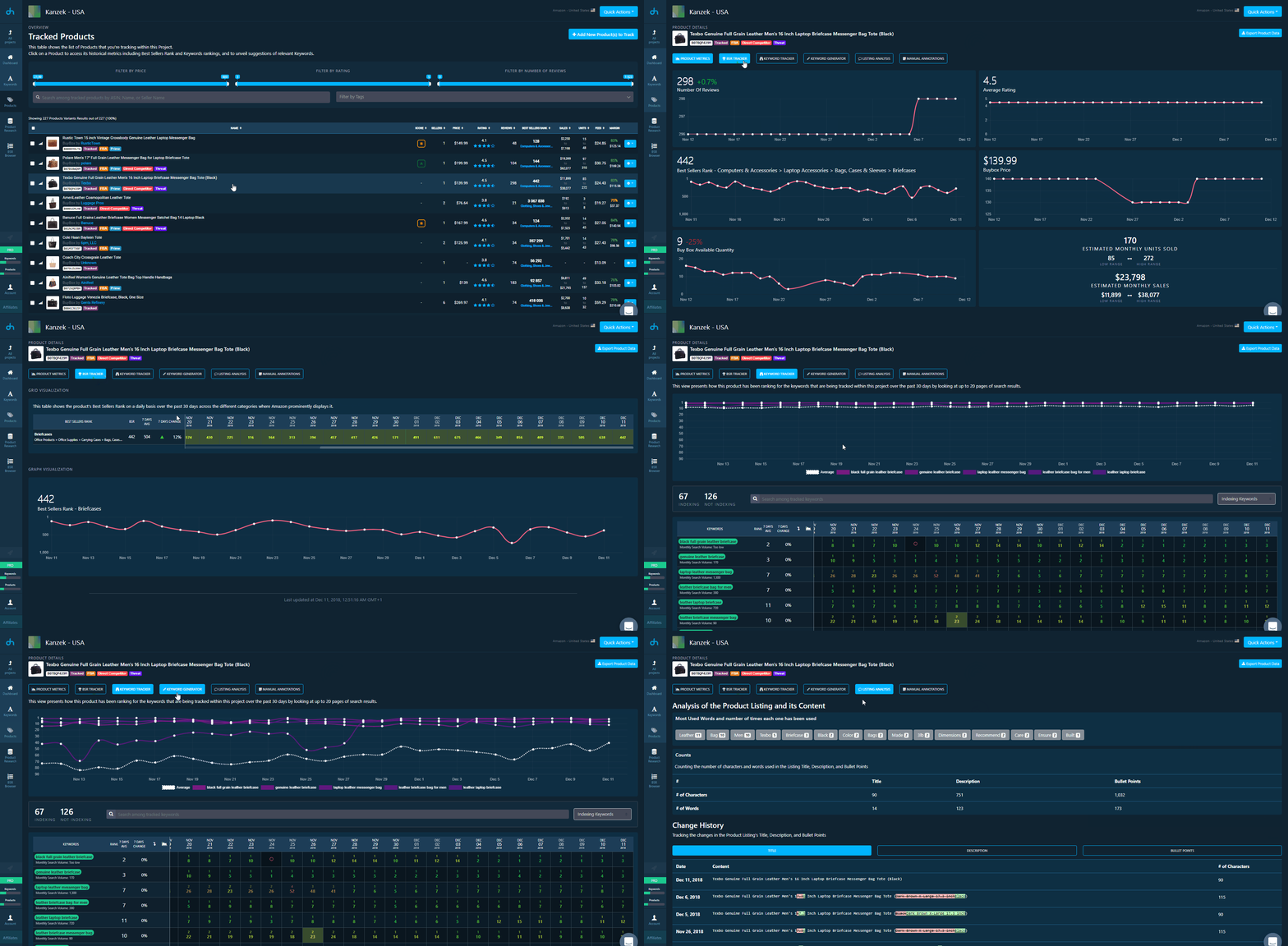
Meet DataHawk, a French startup that wants to build a sort of App Annie for Amazon listings. The company lets you track products and search results so that you can learn more about your competitors and your space.

This sort of products is becoming increasingly relevant as more and more products sold on Amazon are listed directly on Amazon by third-party companies on Amazon’s marketplace.

If you’re selling products on Amazon, chances are that your performance depends on search results. Many customers search for a product and look at the first results. So you want to rank as high as possible on important keywords.

With DataHawk, you can track any keyword and see how the results evolve over time. This way, if your sales drop, now you know why. The platform can help you tweak your listings to rank higher.

You can also track products directly to spot changes in the product title, price, reviews and description. Because DataHawk uses scrapping, you’re not limited to your own products — you can monitor products from your competitors.

You can visualize data from the DataHawk interface or export everything to Excel spreadsheets. You can also receive email alerts.

DataHawk has raised $1.3 million from Axeleo Capital and business angels. The company has 140 clients so far, with 80% of them in the U.S. Clients include PharamaPacks, Pfizer and L’Oréal. It currently tracks 2.6 million products every day.

The company operates as a software-as-a-service with a free plan to try out the service and monthly plans that get more expensive as you track more products and keywords.

datahawk product navigation


Jen Rubio to tell us the secrets behind Away’s success at Disrupt Berlin

If you’ve been to an airport recently, you’ve probably spotted a ton of iconic Away suitcases. The company has built one of the most successful consumer brands in recent years, and it’s just getting started. That’s why I’m excited to announce that Away co-founder and Chief Brand Officer Jen Rubio will join us at TechCrunch Disrupt Berlin.

Away has been around since 2015, long before a ton of direct-to-consumer brands took over Instagram ads. Thanks to this early bet, thoughtful design and amazing branding, Away has managed to sell over 1 million suitcases.

More recently, the company has started to expand to other travel gear, such as backpacks, weekenders and organizers. Away now even has a handful of brick-and-mortar stores in the U.S. and London.

Earlier this year, the startup raised a $100 million round at a $1.4 billion valuation. Back in 2018, Away even said that it was already profitable.

Jen Rubio has been instrumental to Away’s success. She was the head of social media at Warby Parker when she thought about building Away. And I’m sure she has many tips for the next-generation of direct-to-consumer entrepreneurs.

Buy your ticket to Disrupt Berlin to listen to this discussion — and many others. The conference will take place December 11-12.

In addition to panels and fireside chats, like this one, new startups will participate in the Startup Battlefield to compete for the highly coveted Battlefield Cup.


Jen Rubio is the co-founder and Chief Brand Officer of Away, a global lifestyle brand that’s working to transform the entire travel experience. Under her leadership, Away has been named one of Fast Company’s “World’s Most Innovative Companies,” one of TIME’s “50 Most Genius Companies,” one of LinkedIn’s “Top Startups,” and a Forbes “Next Billion Dollar Start-Up.”

Before starting Away, Jen built her career as a branding, creative, and social media expert, redefining how customers and brands connect at companies like Warby Parker and AllSaints. She has been named to Fortune’s 40 Under 40, the Forbes 30 Under 30 list for Marketing and Advertising, Inc.’s 30 under 30 list, and NRF’s People Shaping Retail’s Future list. She lives in New York.


Application extension: pitch in Startup Battlefield at Disrupt Berlin

Great news for time-strapped early-stage startup founders across Europe and beyond! We’re extending our application deadline to the Startup Battlefield at Disrupt Berlin 2019 on 11-12 December. If you’re ready to launch your startup on a global stage and complete for glory, cash, media attention and investor love, it’s time to act.

Apply to Startup Battlefield before the new deadline window expires on October 4 at 11:00 p.m. PT.

Applying to and participating in a Startup Battlefield is free — no fees, no equity, just good old-fashioned value. You have nothing to lose and much to gain. TechCrunch editors will sift through hundreds of applications and select only 15-20 startups — the best of the best — to step onto the Main stage at Disrupt Berlin.

Selected founders all receive intensive (and free) pitch coaching from TechCrunch editors. Their expertise will help you prepare your pitch and perfect your demo. During the Battlefield, you’ll have just six minutes to present your case in front of the judges — a panel of technologists and investors — followed by a Q&A.

If you survive round two, you’ll do it all over again in front of a fresh set of equally smart judges. And while only one outstanding startup will walk away with the coveted Disrupt Cup and the $50,000 prize, all participating teams benefit from massive media and investor exposure. It’s a potentially life-changing opportunity.

All the thrilling action takes place on the Disrupt Main stage in front of thousands of avid startuppers, journalists and investors. Plus, we record and live-stream the entire event around the world.

So far, Startup Battlefield pitch competitions have launched 857 stellar tech companies, which form our Startup Battlefield alumni community. They’ve collectively raised $8.9 billion and produced 112 exits. You’ll join the ranks of companies like Vurb, Dropbox, Mint, Yammer and many more.

The Startup Battlefield takes place at Disrupt Berlin 2019 on 11-12 December. Don’t be so busy that you miss this extended opportunity to shine a bright spotlight on your startup. Apply to Startup Battlefield before 11:00 p.m. PT on October 4. Come and show the world what you can do!

Need passes to Disrupt Berlin? Buy them here, get the super early-bird price and save up to €600.

Is your company interested in sponsoring or exhibiting at Disrupt Berlin 2019? Contact our sponsorship sales team by filling out this form.


Challenger bank Bunq expands to all EU countries

Fintech startup Bunq is launching in 22 additional markets today. It is now going to be available in all European Union markets as well as Norway and Iceland. Overall, users can sign up in 30 countries.

In addition to today’s geographic expansion, the company is enabling Apple Pay and Google Pay support for Travel Card users in the Netherlands, France, Germany, Spain, Italy, Belgium and Ireland.

Bunq wants to create a bank account that works better. Originally from the Netherlands, Bunq is already available in Germany, Italy, Spain, France, Ireland and Belgium.

In those countries, you can open a full-fledged bank accounts. You get your own IBAN and debit card for a monthly subscription fee.

More recently, Bunq also launched a (nearly) free tier called the Bunq Travel Card. The Travel Card is all about saving on banking fees. It isn’t a true bank account, it just complements your existing bank account.

When sign up to the Travel Card, you can top up an electronic wallet and then spend money using your Bunq Mastercard. The main advantage is that Bunq uses the standard Mastercard exchange rate but doesn’t add any markup fee. Most traditional banks charge you 2 or 3 percent for foreign transactions.

While Bunq doesn’t offer a credit line, the Travel Card is technically a credit card. It means that you can use it for hotel security deposits or car rentals just like a normal credit card. But Bunq still checks whether you have enough money on your Bunq account before processing a transaction.

Bunq is launching the Bunq Travel Card in 22 new countries, not the premium bank accounts. You can get a Travel Card for a one-time fee of €9.99 and there’s no monthly subscription fee.

Here’s the full list of new countries launching today: Bulgaria, Croatia, Republic of Cyprus, Czech Republic, Denmark, Estonia, Finland, Greece, Hungary, Latvia, Lithuania, Luxembourg, Malta, Poland, Portugal, Romania, Slovakia, Slovenia, Sweden, the United Kingdom and non-EU countries Norway and Iceland.


Businesses Will Fight California Bill That Would Turn Contractors into Employees

Silicon Valley Giants are Ponying Up $90 Million for Fighting AB 5 in California

  • Silicon Valley giants Uber, Lyft and DoorDash are willing to spend $90 million to lobby against a California bill that would recognize drivers as employees rather than independent contractors.
  • Some companies recognize employees as gig workers to avoid paying payroll taxes, above-minimum wages, overtime and complying with other wage and benefit requirements.
  • Several 2020 Democratic candidates including Bernie Sanders, Elizabeth Warren, Pete Buttigieg and Kamala Harris have endorsed the bill and offered support for better wages for drivers.

Uber, Lyft and DoorDash are prepared to spend a collective $90 million against a bill that would recognize their drivers as employees rather than independent contractors, the Associated Press reported Thursday.

The California bill, AB 5, would change what factors “determine the status of a worker as an employee or independent contractor” and therefore what benefits and earning guarantees certain workers receive from their employers.

“We are working on a solution that provides drivers with strong protections that include an earnings guarantee, a system of worker-directed portable benefits, and first-of-its kind industry-wide sectoral bargaining, without jeopardizing the flexibility drivers tell us they value so much,” Lyft senior director of Communications Adrian Durbin said in a statement.

“We remain focused on reaching a deal, and are confident about bringing this issue to the voters if necessary,” he continued.

Uber spokesperson Nick Smith similarly said in a statement:

Right now, California lawmakers and labor leaders have a historic opportunity to dramatically improve the quality and security of independent work … by acting on the proposal Uber has proudly set forth: a guaranteed minimum earnings standard that would provide stability for drivers while allowing them the flexibility to earn more and work when, where and for whom they choose; access to robust portable benefits like sick leave and injury protection; and … real sectoral bargaining rights for drivers, giving them a voice in the decisions that affect their livelihoods.

These companies recognize their workers as independent contractors “so that they … do not have to pay payroll taxes, the minimum wage or overtime, comply with other wage and hour law requirements such as providing meal periods and rest breaks, or reimburse their workers for business expenses incurred in performing their jobs,” according to the California Department of Industrial relations.

Fighting AB 5

In their proposals for AB 5 exemption, the Silicon Valley giants guaranteed their drivers bonuses, 100% of tips from passengers and a minimum of $21 an hour, but that would only apply to time they spend actively getting riders from one place to another. Waiting for riders or driving to their pickup spot is not included in that time.

In six major ride-share cities including Boston, Chicago, Los Angeles, Seattle and Washington, D.C., an average of “54 to 62[%] of the vehicle miles traveled by Lyfts and Ubers were with a rider in tow. A third of these miles involve drivers slogging around in between passengers … 9 to 10[%] are drivers on their way to a pickup,” according to a study by urban news site CityLab.

Additionally, drivers would still be expected to pay for their gas, maintenance and other expenses, which can add up to $3 to $5 an hour, the San Fransisco Chronicle reported.

“We will meet the gig companies’ absurd political spending with a vigorous worker-led campaign to defeat this measure to ensure working people have the basic job protections and the right to organize a union they deserve under the law,” California Labor Federation spokesman Steve Smith said, according to AP.

2020 Democratic presidential candidates Bernie Sanders, Elizabeth Warren, Pete Buttigieg and Kamala Harris offered support for better wages for drivers.

“We cannot accept a situation in which a tiny handful of Americans become extraordinarily wealthy by paying their workers starvation wages. It’s time to pass AB 5, help drivers unionize, and stop Uber and Lyft from misclassifying employees as contractors,” Sanders wrote on Twitter Thursday.

Warren similarly took to Twitter to offer support for AB 5, writing, “Uber and Lyft executives are preparing to cash in by taking their companies public, so they’re squeezing their drivers and slashing their pay. The drivers are fighting for living wages and better working conditions — and I stand with them.”

Image: Depositphotos.com

This article, "Businesses Will Fight California Bill That Would Turn Contractors into Employees" was first published on Small Business Trends



Bnext raises $25 million for its mobile banking alternative

Fintech startup Bnext has raised a $25 million funding round. The Spanish company is building a banking product and has managed to attract 300,000 active users.

DN Capital, Redalpine and Speedinvest are leading today’s funding round. Existing investors Founders Future and Cometa are also participating. Other investors include Enern, USM and Conexo.

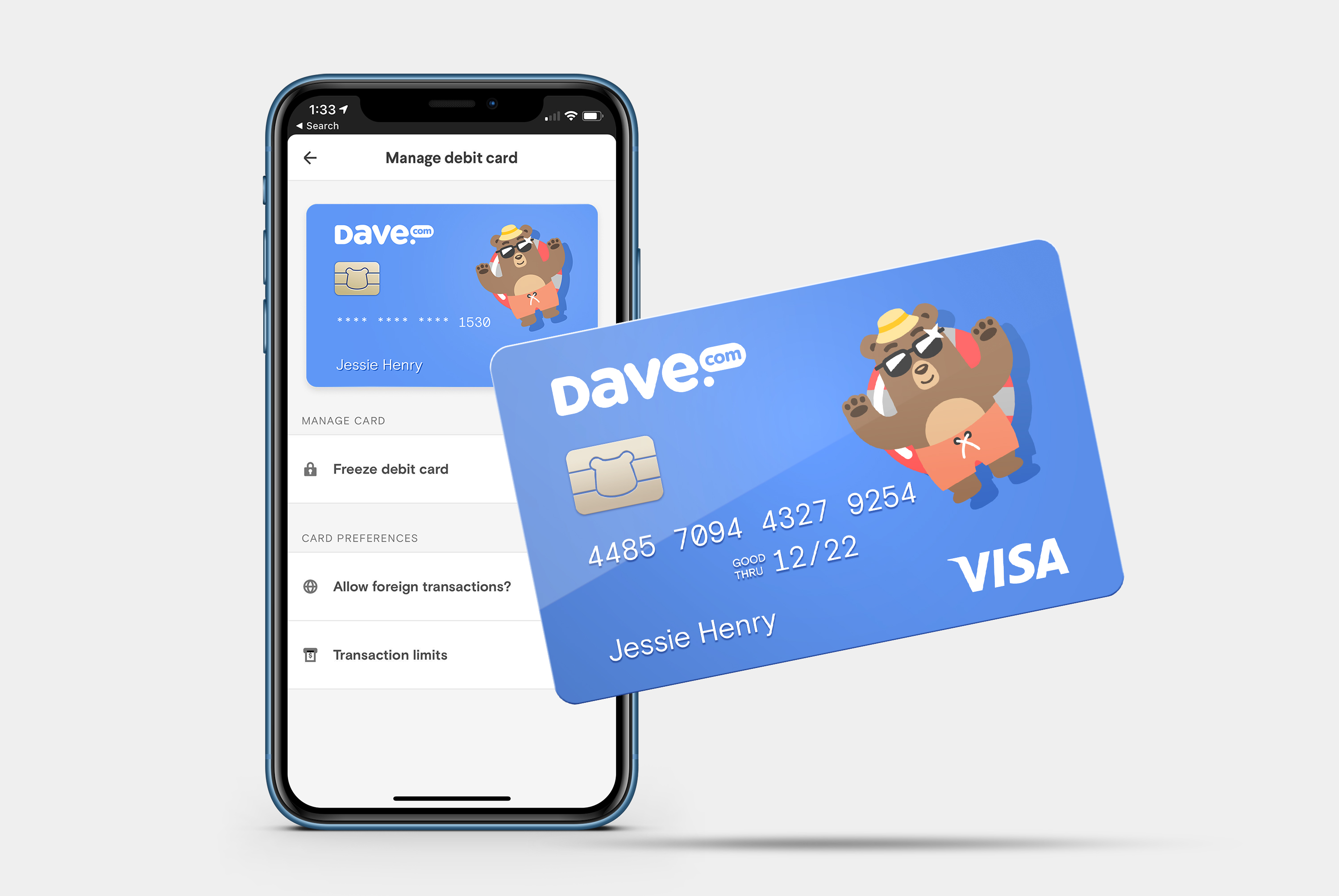
When you open a Bnext account, you get a card and you can upload money to your account. Bnext accounts aren’t technically bank accounts — the company has an e-money license. You can then use your card and spend money anywhere around the world without any foreign transaction fee. You can also freeze and unfreeze your card from the app.

“As of now we'll stick to the e-money license, as our international expansion plans complicate potential passporting of banking licenses. We will first need to understand in which countries makes more sense to get a banking license, and then we'll make a decision,” co-founder and CEO Guillermo Vicandi told me.

You can also connect to your traditional bank accounts from the Bnext app. This way, you can manage your money from a single app.

And Bnext takes this one step further by offering financial products from third-party companies as well. It’s clear that the company wants to build a financial hub, the only finance app that you need.

You can lend money to small and medium businesses and earn interests through October, you can save money using Raisin, you can get a loan, a mortgage, an insurance product, etc. Bnext generates revenue from those partnerships.

While Bnext only operates in Spain for now, the company has managed to attract 300,000 active users. It processes €100 million in transactions every month ($109 million).

Up next, Bnext plans to offer premium plans with more features and individual IBANs. The company also plans to expand to Latin America, starting with Mexico later this year.


Khatabook raises $25M to help small businesses in India record financial transactions digitally and accept online payments

Even as tens of millions of Indians have come online for the first time in recent years, most businesses in the nation remain offline. They continue to rely on long notebooks to keep a log of their financial transactions. A nine-month old startup that is helping them digitize their bookkeeping and accept online payments just raised a significant amount of capital to expand its operations.

Khatabook, a Bangalore-based startup, said on Tuesday it has raised $25 million in a new financing round. The Series A round for the startup was funded by GGV Capital, Partners of DST Global, RTP Ventures, Sequoia India (Khatabook was part of its Surge accelerator program), Tencent, and Y Combinator. A clutch of high-profile angel investors including Gokul Rajaram, James Viraldi, Aditya Agarwal, Sriram Krishnan, Amrish Rau, Anand Chandrasekharan, Deep Nishar, Gokul Rajaram, Jitendra Gupta, Kunal Bahl, and Kunal Shah also participated in the round. The startup has raised $29 million to date.

Khatabook operates an eponymous Android app that allows micro, small and medium-sized businesses to keep a digital log of their financial transactions and accept payments online. The app, which was launched on Google Play Store in December last year, has amassed 5 million merchants from more than 3,000 cities, towns, and villages in India, Ravish Naresh, cofounder and CEO of Khatabook, told TechCrunch in an interview this week.

The app, which supports 11 languages, was used to process transactions worth more than $3 billion in the month of August, said Naresh. Most merchants in developing markets are currently not online. They continue to rely on logging their financial transactions — credit, for instance — on notebooks and pieces of paper. As you can imagine, this methodology is not structured.

khatabook team

Even as Reliance Jio, a telecom operator launched by India’s richest man Mukesh Ambani, upended the Indian market and brought tens of millions of Indians online for the first time in last three years, most businesses in the country are still carrying out their operations without the use of any technology, said Naresh. “Could we build an app that makes it very easy for merchants to digitize their bookkeeping?” he said.

“As soon as we launched the app, we instantly started to go viral,” he said. “These shop keepers and roadside vendors have an internet-enabled smartphone, they are just not using it in their businesses. All they needed was a simple-to-use app.”

For several months now, the startup has been seeing 20% growth each month, he said. In six months, the app has helped businesses recover $5 billion in previously unpaid credits, Naresh claimed. Without any marketing, the app has also gained a significant number of users in Nepal, Pakistan, and Bangladesh, said Naresh.

“At Khatabook, we have taken early but significant steps towards leveraging this trend to digitize India’s shopkeepers. For most of our merchants, we are the first business software they’ve used in their entire life. And we will continue to build more India-first innovations to further enable the growth of what is still a largely untapped sector,” he said.

In a statement, Hans Tung, Managing Partner of GGV Capital, said, “as a global investor, we seek out founders who understand the local market and respond to growth opportunities with speed and agility – we certainly see this with the Khatabook team.”

Naresh, a cofounder of property startup Housing, said Khatabook will use the capital to build new features such as billing and invoicing to serve merchants. In next 12 months, Khatabook aims to add 25 million businesses, he said. The app currently does not charge merchants, but Naresh said the startup will introduce some additional features in the future that will enable monetization of its user base.

A growing number of startups and major giants in India are attempting to help businesses. OkCredit, which raised $67 million last month, serves 5 million merchants. IndiaMART, a 23-year-old B2B firm that went public this year, led a round in a startup called Vyapar last month that is addressing similar problems. New Delhi-based BharatPe raised $50 million in late August to help businesses accept digital payments.

Last month, Google unveiled a version of its payment service for businesses that will allow them to quickly establish some web presence and accept online payments.

“India has more than 60 million small and medium-sized businesses, however only a fraction of them support digital payments. Imagine the transformation that is possible if more of these merchants could access payments online,” said Ambarish Kenghe, director and product manager for Google Pay, at the event.


General Liability Insurance – What You Need to Know!

Every business owner needs to have general liability insurance. Make sure you understand what it is and how much you need it to get the most value out of it.

[[ This is a content summary only. Visit my website for full links, other content, and more! ]]


Monthly enlists experts and celebrities to teach 30-day online classes

You may know Max Deutsch from Month to Master, his yearlong self-improvement program where he tried to master one “expert-level” skill each month, which ultimately saw him challenging world champion Magnus Carlsen to a game of chess (Deustch lost).

Now, Deustch and his co-founder Valentin Perez are launching Monthly, which Deustch told me is designed to “leverage technology to help scale this kind of learning to many more people.”

Specifically, Monthly offers 30-day classes taught by experts and celebrities— the instructors often have hundreds of thousands or millions of YouTube subscribers. For example, Andrew Huang is teaching a class on music production, Daria Callie is teaching a class on realistic portrait painting and Stevie Mackey is teaching a class on singing.

When you enroll in a class, you’ll be assigned a different task every day; you might watch an instructional video one day, and then do something more hands-on the next. While the classes are online, you have to enroll and take the class at set periods of time — currently, Huang’s class is the only one open for enrollment.

Deutsch acknowledged that this can seem “a bit antithetical to the benefit of online learning (that you can do it whenever you want),” but he noted that often, “‘whenever you want’ ends up offering most people too much flexibility and becomes ‘maybe some other time.'”

So by having explicit start and stop days for a class, he said, “the commitment you’re making to yourself is more significant and as a result you’re much more likely to stick with it and follow through on your aspirations.”

You’ll also be placed in peer groups with 20 other students, with whom you share work and give and receive feedback. And at the end of it, Deutsch said you’ll have produced “something tangible that you’ve made that you’re proud of and that you can share with the world” — a voice recording, a film, a painting, etc.

Pricing will vary from $179 to $279, depending on the class. Deutsch didn’t provide specific numbers on how the money is shared with instructors, but he noted that the split varies depending on whether students signed up via Monthly or via an instructor promotion. And either way, he said, “creators are getting a very compelling split.”

As for funding, Monthly has raised an undisclosed amount from Floodgate’s Ann Miura-Ko at Floodgate, Intuit founder Scott Cook (Deutsch worked as a product manager at Intuit), and OVO Fund’s Eric Chen.


Upstart banking company Dave is now worth $1 billion, as Norwest puts in $50 million

Two years after the Los Angeles-based fintech startup Dave launched with a suite of money management tools to save consumers from overdraft fees, the company is now worth $1 billion thanks to a nascent banking practice that had investors lining up.

The company used its overdraft protection service and money management display to shift customers’ focus away from the total balance that their account would show by giving them a sense of how much was actually left in their accounts once debits were included in their statements.

“What was cool about our financial management product was that we were trying to use Dave as a replacement for their current bank,” says Jason Wilk, Dave’s co-founder and chief executive.

Dave now counts over 4 million users for its financial management app and has roughly 800,000 people on the waiting list to use its banking services, Wilk says.

The company has taken a methodical approach to opening its doors as a digital bank, in part because it wants to have the necessary support infrastructure in place to service the demand that Wilk expects to see for its service.

“It’s one thing to help people with budgeting. It’s another to actually manage their money,” says Wilk.

3 1

Dave will use the $50 million raised from Norwest to significantly expand its product and engineering team within the next 12 months, in order to double down on the core business and ensure the success of the banking product.

“We can prove that Dave can be helpful by showing how we can help you manage your current account, and then Dave banking is the marketing lever from there,” says Wilk.

For now, customers need to have the financial management app installed to be able to access the company’s banking service.  

Dave charges $1 per month for access to its financial management tools and that also gives customers the ability to use a cushion of between $50 to $75 to avoid being hit with overdraft fees from their current bank account. Dave asks for a tip every time a customer uses that cushion to cover expenses — something that Wilk says is still cheaper than having to worry about overdraft fees.

And, to add a bit of environmental spin, for every tip that Dave receives, the company plants a tree. “We plant millions and millions of trees,” says Wilk.

The company is FDIC insured through a partner bank, the Memphis-based Evolve Bank and Trust, which acts as a backstop for the company’s financial management activities.

“We already had a relationship with them for some payment processing stuff,” says Wilk. “We liked the team and liked the terms and went with them.”

Terms between financial services firms can vary, and, Wilk says, Evolve Bank was willing to give the company a good deal on splitting the interchange fee, which is a big source of revenue for upstart banks.

It’s possible that Dave could have received a bigger check at a potentially higher valuation, but Wilk says the startup is trying to stay lean.

“The company is growing so quickly, we didn’t want to get too diluted on this round,” he says. “We think the company is quite a bit more valuable than [$1 billion]. You don’t want to raise too much money too quickly if you really think the valuation is going to climb… Since we signed the term sheet the company has already grown another 40%.”

It was only four months ago that Dave was announcing a $110 million credit financing with Victory Park Capital and the launch of its banking product.

Dave’s products and services have a few advantages for customers that are just getting started on the path to financial security. The company monitors everyday monthly payments and reports them to credit agencies to improve customers’ credit ratings. The company also provides up to $100, interest-free, overdraft protection.

“Banks have failed their customers by building products that put their own interests ahead of the humans who use them. People don’t need predatory fees, they need tools that actually solve their challenges around credit building, finding work and getting access to their own money to cover immediate expenses. Dave is the banking product that works with its customers, not against them,” said Wilk, in a June statement announcing the funding and banking product launch.

While Dave is getting some hefty firepower and a generous valuation from Norwest, it’s also operating in a market where its core services that were a point of differentiation are quickly becoming table stakes.

Earlier in September, the new startup banking company Chime announced that it had hit 5 million banking customers and was offering its own overdraft protection service.

The San Francisco-based bank has also raised a lot more capital for a potential piggy bank to raid if it needs to acquire or spend on engineering talent to build out new products and services. Earlier this year, the company announced a $200 million round and said it had hit roughly 3 million customers. Clearly Chime is adding new banking customers at a torrid pace.

And they’re facing global competition as well. N26, the European startup bank with a $3.6 billion valuation and hundreds of millions in financing launched in the U.S. a few months ago as well.

The company sees a global opportunity to create new digital banking services in a world where large amounts of capital and an elite set of consumers move easily between international markets.

“We have an opportunity that we build a bank that has more than 50 million users around the globe. Today, we only have 3.5 million users but we’re accelerating,” said N26 chief executive, Valentin Self, in an interview with TechCrunch. “From a country perspective, we have agreed already that we go to Brazil. There’s no plan after Brazil yet. Now let’s focus on the U.S., then on Brazil, then next year we’ll find out what’s the feedback from these two markets.”