Friday, 29 November 2019

Black Friday Sale: 2-for-1 passes to Disrupt Berlin

Synchronize your watches startup fans, and get ready to score serious savings on passes to Disrupt Berlin 2019. For today only, you can get 2 passes for the price of one. Our Black Friday sale starts now and runs through 11:59pm CET on 29 November. Don’t miss out!

Simply purchase a pass to Disrupt Berlin now (Founder passes start at just €645 + VAT), and you’ll get two passes for the price of one. Split the cost with a colleague, gift the pass to a client or bring a member of your team to Disrupt. No matter how you choose to use that extra pass, you’ll reap extra value. Go BOGO — buy your passes — before the 24-hour clock runs out.

Now you and your buddy can get ready to make the most out of two program – and opportunity-packed days in Berlin. Connection is the name of the game at Disrupt events, and there’s no better place to start promising conversations than Startup Alley. You’ll find hundreds of early-stage startups and sponsors exhibiting an array of products, platforms and services that span the tech spectrum.

Looking for customers, collaborators, incubators, investors? Need manufacturing advice or simply want to talk shop with other founders? Startup Alley has that and more. Be sure to check out the TC Top Picks — our hand-picked cohort of exceptional startups that represent the best in these specific tech categories: AI/Machine Learning, BioTech/HealthTech, Blockchain, FinTech, Mobility, Privacy/Security, Retail/eCommerce, Robotics/IoT/Hardware, SaaS and Social Impact & Education.

There’s plenty to experience outside the Alley, and the Disrupt Berlin agenda can help you make the most of your time. Be in the room when TechCrunch editors interview CEOs from companies such as Away, UIPath and Naspers, as well as leading investors from Atomico, SoftBank and GV.

If you’re a founder (aspiring or otherwise), don’t miss what goes down on the Extra Crunch stage. You’ll hear panelists discuss important startup trends and offer actionable tips and advice on topics like scaling a business, product management, raising money and building a brand.

There’s so much more to experience at Disrupt Berlin: The Hackathon, the always-epic Startup Battlefield pitch competition, workshops and Q&A Sessions. It all happens on 11-12 December, and now you have 24 hours to double up on value. Buy your pass before the clock runs out at 11:59pm CET on 29 November, and you’ll get a second one free. Go BOGO!

Is your company interested in sponsoring or exhibiting at Disrupt Berlin 2019? Contact our sponsorship sales team by filling out this form.


3 Solid Reasons to Maintain Your Air Conditioning System Regularly

Regular maintenance of air conditioning system will reduce breakdowns, increase its lifespan, improve efficiency and provide comfortable environment to everyone.

[[ This is a content summary only. Visit my website for full links, other content, and more! ]]


Do You Have What it takes to be an Entrepreneur in London?

A good entrepreneur is always on the lookout for new opportunities and not be afraid of failure. Only those who are wiling to experiment will be able to eventually succeed as entrepreneur

[[ This is a content summary only. Visit my website for full links, other content, and more! ]]


5 Best Social Media Marketing Tools for Your Business

Social media marketing is a must for any small business owner today. These tools can make your job easier and get the most our of it.

[[ This is a content summary only. Visit my website for full links, other content, and more! ]]


Thursday, 28 November 2019

Will the future of work be ethical? Founder perspectives

In June, TechCrunch Ethicist in Residence Greg M. Epstein attended EmTech Next, a conference organized by the MIT Technology Review. The conference, which took place at MIT’s famous Media Lab, examined how AI and robotics are changing the future of work.

Greg’s essay, Will the Future of Work Be Ethical? reflects on his experiences at the conference, which produced what he calls “a religious crisis, despite the fact that I am not just a confirmed atheist but a professional one as well.” In it, Greg explores themes of inequality, inclusion and what it means to work in technology ethically, within a capitalist system and market economy.

Accompanying the story for Extra Crunch are a series of in-depth interviews Greg conducted around the conference, with scholars, journalists, founders and attendees.

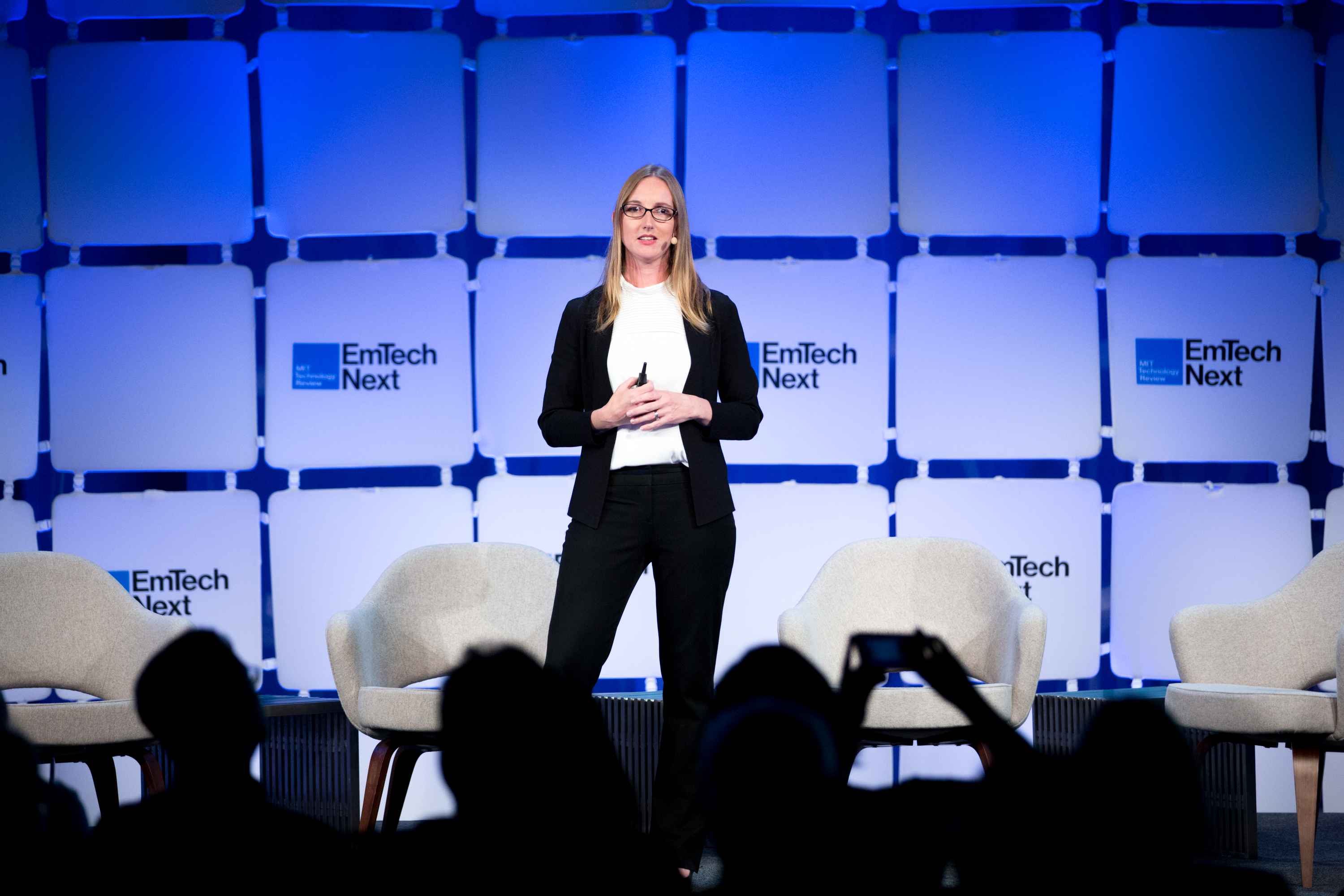
Below, Greg speaks to two founders of innovative startups whose work provoked much discussion at the EmTech Next conference. Moxi, the robot assistant created by Andrea Thomasz of Diligent Robotics and her team, was a constant presence in the Media Lab reception hall immediately outside the auditorium in which all the main talks took place. And Prayag Narula of LeadGenius was featured, alongside leading tech anthropologist Mary Gray, in a panel on “Ghost Work” that sparked intense discussion throughout the conference and beyond.

Andrea Thomaz is the Co-Founder and CEO of Diligent Robotics. Image via MIT Technology Review

Could you give a sketch of your background?

Andrea Thomaz: I was always doing math and science, and did electrical engineering as an Undergrad at UT Austin. Then I came to MIT to do my PhD. It really wasn’t until grad school that I started doing robotics. I went to grad school interested in doing AI and was starting to get interested in this new machine learning that people were starting to talk about. In grad school, at the MIT Media Lab, Cynthia Breazeal was my advisor, and that’s where I fell in love with social robots and making robots that people want to be around and are also useful.

Say more about your journey at the Media Lab?

My statement of purpose for the Media Lab, in 1999, was that I thought that computers that were smarter would be easier to use. I thought AI was the solution to HCI [Human-computer Interaction]. So I came to the Media Lab because I thought that was the mecca of AI plus HCI.

It wasn’t until my second year as a student there that Cynthia finished her PhD with Rod Brooks and started at the Media Lab. And then I was like, “Oh wait a second. That’s what I’m talking about.”

Who is at the Media Lab now that’s doing interesting work for you?

For me, it’s kind of the same people. Patty Maes has kind of reinvented her group since those days and is doing fluid interfaces; I always really appreciate the kind of things they’re working on. And Cynthia, her work is still very seminal in the field.

So now, you’re a CEO and Founder?

CEO and Co-Founder of Diligent Robotics. I had twelve years in academia in between those. I finished my PhD, went and I was a professor at Georgia Tech in computing, teaching AI and robotics and I had a robotics lab there.

Then I got recruited away to UT Austin in electrical and computer engineering. Again, teaching AI and having a robotics lab. Then at the end of 2017, I had a PhD student who was graduating and also interested in commercialization, my Co-Founder and CTO Vivian Chu.

Let’s talk about the purpose of the human/robot interaction. In the case of your company, the robot’s purpose is to work alongside humans in a medical setting, who are doing work that is not necessarily going to be replaced by a robot like Moxi. How does that work exactly?

One of the reasons our first target market [is] hospitals is, that’s an industry where they’re looking for ways to elevate their staff. They want their staff to be performing, “at the top of their license.” You hear hospital administrators talking about this because there’s record numbers of physician burnout, nurse burnout, and turnover.

They really are looking for ways to say, “Okay, how can we help our staff do more of what they were trained to do, and not spend 30% of their day running around fetching things, or doing things that don’t require their license?” That for us is the perfect market [for] collaborative robots.” You’re looking for ways to automate things that the people in the environment don’t need to be doing, so they can do more important stuff. They can do all the clinical care.

In a lot of the hospitals we’re working with, we’re looking at their clinical workflows and identifying places where there’s a lot of human touch, like nurses making an assessment of the patient. But then the nurse finishes making an assessment [and] has to run and fetch things. Wouldn’t it be better if as soon as that nurse’s assessment hit the electronic medical record, that triggered a task for the robot to come and bring things? Then the nurse just gets to stay with the patient.

Those are the kind of things we’re looking for: places you could augment the clinical workflow with some automation and increase the amount of time that nurses or physicians are spending with patients.

So your robots, as you said before, do need human supervision. Will they always?

We are working on autonomy. We do want the robots to be doing things autonomously in the environment. But we like to talk about care as a team effort; we’re adding the robot to the team and there’s parts of it that the robot’s doing and parts of it that the human’s doing. There may be places where the robot needs some input or assistance and because it’s part of the clinical team. That’s how we like to think about it: if the robot is designed to be a teammate, it wouldn’t be very unusual for the robot to need some help or supervision from a teammate.

That seems different than what you could call Ghost Work.

Right. In most service robots being deployed today, there is this remote supervisor that is either logged in and checking in on the robots, or at least the robots have the ability to phone home if there’s some sort of problem.

That’s where some of this Ghost Work comes in. People are monitoring and keeping track of robots in the middle of the night. Certainly that may be part of how we deploy our robots as well. But we also think that it’s perfectly fine for some of that supervision or assistance to come out into the forefront and be part of the face-to-face interaction that the robot has with some of its coworkers.

Since you could potentially envision a scenario in which your robots are monitored from off-site, in a kind of Ghost Work setting, what concerns do you have about the ways in which that work can be kind of anonymized and undercompensated?

Currently we are really interested in our own engineering staff having high-touch customer interaction that we’re really not looking to anonymize. If we had a robot in the field and it was phoning home about some problem that was happening, at our early stage of the company, that is such a valuable interaction that in our company that wouldn’t be anonymous. Maybe the CTO would be the one phoning in and saying, “What happened? I’m so interested.”

I think we’re still at a stage where all of the customer interactions and all of the information we can get from robots in the field are such valuable pieces of information.

But how are you envisioning best-case scenarios for the future? What if your robots really are so helpful that they’re very successful and people want them everywhere? Your CTO is not going to take all those calls. How could you do this in a way that could make your company very successful, but also handle these responsibilities ethically?


Will the future of work be ethical? Future leader perspectives

In June, TechCrunch Ethicist in Residence Greg M. Epstein attended EmTech Next, a conference organized by the MIT Technology Review. The conference, which took place at MIT’s famous Media Lab, examined how AI and robotics are changing the future of work.

Greg’s essay, Will the Future of Work Be Ethical? reflects on his experiences at the conference, which produced what he calls “a religious crisis, despite the fact that I am not just a confirmed atheist but a professional one as well.” In it, Greg explores themes of inequality, inclusion and what it means to work in technology ethically, within a capitalist system and market economy.

Accompanying the story for Extra Crunch are a series of in-depth interviews Greg conducted around the conference, with scholars, journalists, founders and attendees.

Below he speaks to two conference attendees who had crucial insights to share. Meili Gupta is a high school senior at Phillips Exeter Academy, an elite boarding school in New Hampshire; Gupta attended the EmTech Next conference with her mother and has attended with family in previous years as well; her voice and thoughts on privilege and inequality in education and technology are featured prominently in Greg’s essay. Walter Erike is a 31-year-old independent consultant and SAP Implementation Senior Manager. from Philadelphia. Between conference session, he and Greg talked about diversity and inclusion at tech conferences and beyond.

Meili Gupta is a senior at Phillips Exeter Academy. Image via Meili Gupta

Greg Epstein: How did you come to be at EmTech Next?

Meili Gupta: I am a rising high school senior at Phillips Exeter Academy; I’m one of the managing editors for my school’s science magazine called Matter Magazine.

I [also] attended the conference last year. My parents have come to these conferences before, and that gave me an opportunity to come. I am particularly interested in the MIT Technology Review because I’ve grown up reading it.

You are the Managing Editor of Matter, a magazine about STEM at your high school. What subjects that Matter covers are most interesting to you?

This year we published two issues. The first featured a lot of interviews from top {AI} professors like Professor Fei-Fei Li, at Stanford. We did a review for her and an interview with Professor Olga Russakovsky at Princeton. That was an AI special issue and, being at this conference you hear about how AI will transform industries.

The second issue coincided with Phillips Exeter Global Climate Action Day. We focused both on environmentalism clubs at Exeter and environmentalism efforts worldwide. I think Matter, as the only stem magazine on campus has a responsibility in doing that.

AI and climate: in a sense, you’ve already dealt with this new field people are calling the ethics of technology. When you hear that term, what comes to mind?

As a consumer of a lot of technology and as someone of the generation who has grown up with a phone in my hand, I’m aware my data is all over the internet. I’ve had conversations [with friends] about personal privacy and if I look around the classroom, most people have covers for the cameras on their computers. This generation is already aware [of] ethics whenever you’re talking about computing and the use of computers.

About AI specifically, as someone who’s interested in the field and has been privileged to be able to take courses and do research projects about that, I’m hearing a lot about ethics with algorithms, whether that’s fake news or bias or about applying algorithms for social good.

What are your biggest concerns about AI? What do you think needs to be addressed in order for us to feel more comfortable as a society with increased use of AI?

That’s not an easy answer; it’s something our society is going to be grappling with for years. From what I’ve learned at this conference, from what I’ve read and tried to understand, it’s a multidimensional solution. You’re going to need computer programmers to learn the technical skills to make their algorithms less biased. You’re going to need companies to hire those people and say, “This is our goal; we want to create an algorithm that’s fair and can do good.” You’re going to need the general society to ask for that standard. That’s my generation’s job, too. WikiLeaks, a couple of years ago, sparked the conversation about personal privacy and I think there’s going to be more sparks.

Seems like your high school is doing some interesting work in terms of incorporating both STEM and a deeper, more creative than usual focus on ethics and exploring the meaning of life. How would you say that Exeter in particular is trying to combine these issues?

I’ll give a couple of examples of my experience with that in my time at Exeter, and I’m very privileged to go to a school that has these opportunities and offerings for its students.

Don’t worry, that’s in my next question.

Absolutely. With the computer science curriculum, starting in my ninth grade they offered a computer science 590 about [introduction to] artificial intelligence. In the fall another 590 course was about self driving cars, and you saw the intersection between us working in our robotics lab and learning about computer vision algorithms. This past semester, a couple students, and I was involved, helped to set up a 999: an independent course which really dove deep into machine learning algorithms. In the fall, there’s another 590 I’ll be taking called social innovation through software engineering, which is specifically designed for each student to pick a local project and to apply software, coding or AI to a social good project.

I’ve spent 15 years working at Harvard and MIT. I’ve worked around a lot of smart and privileged people and I’ve supported them. I’m going to ask you a question about Exeter and about your experience as a privileged high school student who is getting a great education, but I don’t mean it from a perspective of it’s now me versus you.

Of course you’re not.

I’m trying to figure this out for myself as well. We live in a world where we’re becoming more prepared to talk about issues of fairness and justice. Yet by even just providing these extraordinary educational experiences to people like you and me and my students or whomever, we’re preparing some people for that world better than others. How do you feel about being so well prepared for this sort of world to come that it can actually be… I guess my question is, how do you relate to the idea that even the kinds of educational experiences that we’re talking about are themselves deepening the divide between haves and have nots?

I completely agree that the issue between haves and have nots needs to be talked about more, because inequality between the upper and the lower classes is growing every year. This morning, Mr. Isbell from Georgia Tech talk was really inspiring. For example, at Phillips Exeter, we have a social service club called ESA which houses more than 70 different social service clubs. One I’m involved with, junior computer programming, teaches programming to local middle school students. That’s the type of thing, at an individual level and smaller scale, that people can try to help out those who have not been privileged with opportunities to learn and get ahead with those skills.

What Mr. Isbell was talking about this morning was at a university level and also tying in corporations bridge that divide. I don’t think that the issue itself should necessarily scare us from pushing forward to the frontier to say, the possibility that everybody who does not have a computer science education in five years won’t have a job.

Today we had that debate about role or people’s jobs and robot taxes. That’s a very good debate to have, but it sometimes feeds a little bit into the AI hype and I think it may be a disgrace to society to try to pull back technology, which has been shown to have the power to save lives. It can be two transformations that are happening at the same time. One, that’s trying to bridge an inequality and is going to come in a lot of different and complicated solutions that happen at multiple levels and the second is allowing for a transformation in technology and AI.

What are you hoping to get out of this conference for yourself, as a student, as a journalist, or as somebody who’s going into the industry?

The theme for this conference is the future of the workforce. I’m a student. That means I’m going to be the future of the workforce. I was hoping to learn some insight about what I may want to study in college. After that, what type of jobs do I want to pursue that are going to exist and be in demand and really interesting, that have an impact on other people? Also, as a student, in particular that’s interested in majoring in computer science and artificial intelligence, I was hoping to learn about possible research projects that I could pursue in the fall with this 590 course.

Right now, I’m working on a research project with a Professor at the University of Maryland about eliminating bias in machine learning algorithms. What type of dataset do I want to apply that project to? Where is the need or the attention for correcting bias in the AI algorithms?

As a journalist, I would like to write a review summarizing what I’ve learned so other [Exeter students] can learn a little too.

What would be your biggest critique of the conference? What could be improved?


Will the future of work be ethical? Perspectives from MIT Technology Review

In June, TechCrunch Ethicist in Residence Greg M. Epstein attended EmTech Next, a conference organized by the MIT Technology Review. The conference, which took place at MIT’s famous Media Lab, examined how AI and robotics are changing the future of work.

Greg’s essay, Will the Future of Work Be Ethical? reflects on his experiences at the conference, which produced what he calls “a religious crisis, despite the fact that I am not just a confirmed atheist but a professional one as well.” In it, Greg explores themes of inequality, inclusion and what it means to work in technology ethically, within a capitalist system and market economy.

Accompanying the story for Extra Crunch are a series of in-depth interviews Greg conducted around the conference, with scholars, journalists, founders and attendees.

Below he speaks to two key organizers: Gideon Lichfield, the editor in chief of the MIT Technology Review, and Karen Hao, its artificial intelligence reporter. Lichfield led the creative process of choosing speakers and framing panels and discussions at the EmTech Next conference, and both Lichfield and Hao spoke and moderated key discussions.

Gideon Lichfield is the editor in chief at MIT Technology Review. Image via MIT Technology Review

Greg Epstein: I want to first understand how you see your job — what impact are you really looking to have?

Gideon Lichfield: I frame this as an aspiration. Most of the tech journalism, most of the tech media industry that exists, is born in some way of the era just before the dot-com boom. When there was a lot of optimism about technology. And so I saw its role as being to talk about everything that technology makes possible. Sometimes in a very negative sense. More often in a positive sense. You know, all the wonderful ways in which tech will change our lives. So there was a lot of cheerleading in those days.

In more recent years, there has been a lot of backlash, a lot of fear, a lot of dystopia, a lot of all of the ways in which tech is threatening us. The way I’ve formulated the mission for Tech Review would be to say, technology is a human activity. It’s not good or bad inherently. It’s what we make of it.

The way that we get technology that has fewer toxic effects and more beneficial ones is for the people who build it, use it, and regulate it to make well informed decisions about it, and for them to understand each other better. And I said the role of a tech publication like Tech Review, one that is under a university like MIT, probably uniquely among tech publications, we’re positioned to make that our job. To try to influence those people by informing them better and instigating conversations among them. And that’s part of the reason we do events like this. So that ultimately better decisions get taken and technology has more beneficial effects. So that’s like the high level aspiration. How do we measure that day to day? That’s an ongoing question. But that’s the goal.

Yeah, I mean, I would imagine you measure it qualitatively. In the sense that… What I see when I look at a conference like this is, I see an editorial vision, right? I mean that I’m imagining that you and your staff have a lot of sort of editorial meetings where you set, you know, what are the key themes that we really need to explore. What do we need to inform people about, right?

Yes.

What do you want people to take away from this conference then?

A lot of the people in the audience work at medium and large companies. And they’re thinking about…what effect does automation and AI going to have in their companies? How should it affect their workplace culture? How should it affect their high end decisions? How should it affect their technology investments? And I think the goal for me is, or for us is, that they come away from this conference with a rounded picture of the different factors that can play a role.

There are no clear answers. But they ought to be able to think in an informed and in a nuanced way. If we’re talking about automating some processes, or contracting out more of what we do to a gig work style platform, or different ways we might train people on our workforce or help them adapt to new job opportunities, or if we’re thinking about laying people off versus retraining them. All of the different implications that that has, and all the decisions you can take around that, we want them to think about that in a useful way so that they can take those decisions well.

You’re already speaking, as you said, to a lot of the people who are winning, and who are here getting themselves more educated and therefore more likely to just continue to win. How do you weigh where to push them to fundamentally change the way they do things, versus getting them to incrementally change?

That’s an interesting question. I don’t know that we can push people to fundamentally change. We’re not a labor movement. What we can do is put people from labor movements in front of them and have those people speak to them and say, “Hey, this is the consequences that the decisions you’re taking are having on the people we represent.” Part of the difficulty with this conversation has been that it has been taking place, up till now, mainly among the people who understand the technology and its consequences. Which with was the people building it and then a small group of scholars studying it. Over the last two or three years I’ve gone to conferences like ours and other people’s, where issues of technology ethics are being discussed. Initially it really was only the tech people and the business people who were there. And now you’re starting to see more representation. From labor, from community organizations, from minority groups. But it’s taken a while, I think, for the understanding of those issues to percolate and then people in those organizations to take on the cause and say, yeah, this is something we have to care about.

In some ways this is a tech ethics conference. If you labeled it as such, would that dramatically affect the attendance? Would you get fewer of the actual business people to come to a tech ethics conference rather than a conference that’s about tech but that happened to take on ethical issues?

Yeah, because I think they would say it’s not for them.

Right.

Business people want to know, what are the risks to me? What are the opportunities for me? What are the things I need to think about to stay ahead of the game? The case we can make is [about the] ethical considerations are part of that calculus. You have to think about what are the risks going to be to you of, you know, getting rid of all your workforce and relying on contract workers. What does that do to those workers and how does that play back in terms of a risk to you?

Yes, you’ve got Mary Gray, Charles Isbell, and others here with serious ethical messages.

What about the idea of giving back versus taking less? There was an L.A. Times op ed recently, by Joseph Menn, about how it’s time for tech to give back. It talked about how 20% of Harvard Law grads go into public service after their graduation but if you look at engineering graduates, the percentage is smaller than that. But even going beyond that perspective, Anand Giridharadas, popular author and critic of contemporary capitalism, might say that while we like to talk about “giving back,” what is really important is for big tech to take less. In other words: pay more taxes. Break up their companies so they’re not monopolies. To maybe pay taxes on robots, that sort of thing. What’s your perspective?

I don’t have a view on either of those things. I think the interesting question is really, what can motivate tech companies, what can motivate anybody who’s winning a lot in this economy, to either give back or take less? It’s about what causes people who are benefiting from the current situation to feel they need to also ensure other people are benefiting.

Maybe one way to talk about this is to raise a question I’ve seen you raise: what the hell is tech ethics anyway? I would say there isn’t a tech ethics. Not in the philosophy sense your background is from. There is a movement. There is a set of questions around it, around what should technology companies’ responsibility be? And there’s a movement to try to answer those questions.

A bunch of the technologies that have emerged in the last couple of decades were thought of as being good, as being beneficial. Mainly because they were thought of as being democratizing. And there was this very naïve Western viewpoint that said if we put technology and power in the hands of the people they will necessarily do wise and good things with it. And that will benefit everybody.

And these technologies, including the web, social media, smart phones, you could include digital cameras, you could include consumer genetic testing, all things that put a lot more power in the hands of the people, have turned out to be capable of having toxic effects as well.

That took everybody by surprise. And the reason that has raised a conversation around tech ethics is that it also happens that a lot of those technologies are ones in which the nature of the technology favors the emergence of a dominant player. Because of network effects or because they require lots of data. And so the conversation has been, what is the responsibility of that dominant player to design the technology in such a way that it has fewer of these harmful effects? And that again is partly because the forces that in the past might have constrained those effects, or imposed rules, are not moving fast enough. It’s the tech makers who understand this stuff. Policy makers, and civil society have been slower to catch up to what the effects are. They’re starting to now.

This is what you are seeing now in the election campaign: a lot of the leading candidates have platforms that are about the use of technology and about breaking up big tech. That would have been unthinkable a year or two ago.

So the discussion about tech ethics is essentially saying these companies grew too fast, too quickly. What is their responsibility to slow themselves down before everybody else catches up?

Another piece that interests me is how sometimes the “giving back,” the generosity of big tech companies or tech billionaires, or whatever it is, can end up being a smokescreen. A way to ultimately persuade people not to regulate. Not to take their own power back as a people. Is there a level of tech generosity that is actually harmful in that sense?

I suppose. It depends on the context. If all that’s happening is corporate social responsibility drives that involve dropping money into different places, but there isn’t any consideration of the consequences of the technology itself those companies are building and their other actions, then sure, it’s a problem. But it’s also hard to say giving billions of dollars to a particular cause is bad, unless what is happening is that then the government is shirking its responsibility to fund those causes because it’s coming out of the private sector. I can certainly see the U.S. being particularly susceptible to this dynamic, where government sheds responsibility. But I don’t think we’re necessarily there yet.


Will the future of work be ethical? Academic perspectives

In June, TechCrunch Ethicist in Residence Greg M. Epstein attended EmTech Next, a conference organized by the MIT Technology Review. The conference, which took place at MIT’s famous Media Lab, examined how AI and robotics are changing the future of work.

Greg’s essay, Will the Future of Work Be Ethical? reflects on his experiences at the conference, which produced what he calls “a religious crisis, despite the fact that I am not just a confirmed atheist but a professional one as well.” In it, Greg explores themes of inequality, inclusion and what it means to work in technology ethically, within a capitalist system and market economy.

Accompanying the story for Extra Crunch are a series of in-depth interviews Greg conducted around the conference, with scholars, journalists, founders and attendees.

Below, Greg speaks to two academics who were key EmTech Next speakers. First is David Autor, one of the world’s most prominent economists. Autor’s lecture, Work of the Past, Work of the Future, originally delivered as the prestigious 2019 Richard T. Ely Lecture at the Annual Meeting of the American Economic Association, formed the basis for the opening presentation at the EmTech Next conference.

Susan Winterberg, an academic who studies business and ethics, was a panelist who brought important, even stirring insights about the devastating impact automation can have on communities and how companies can succeed by protecting people against those effects.

David Autor is the Ford Professor of Economics at MIT. Image via MIT Technology Review

Greg Epstein: Who do you see as the audience for your work — is it more labor or management, and how do different audiences engage with it differently?

David Autor: My primary audience, it can be argued, is other scholars. But I am aware of and pleased that my work has reached beyond that narrow group. I’m aware that it is discussed by policymakers and others and I’m sort of driven by trying to understand what is changing, who is affected, what are the opportunities, what are the challenges.

Could you help me to get a sense to the best of your knowledge of some of the key ways your ideas about the “Work of the Past, [and the] Work of the Future” of work” have been discussed by corporations or sort of those in management and business ownership roles and also by labor organizations or unions, etc.?

I met twice with President Obama. I have spoken with many people in senior governmental policy positions. I’ve spoken to a lot of private sector audiences as well, including private sector research corporations like McKinsey and so on.

I have spoken with labor people. Labor folks were initially quite hostile to my work. I got a huge amount of pushback and have throughout my career, for example, from EPI, the Economic Policy Institute, which is sort of a union shop in DC. The guy who was their chief economist for a long time, Larry Mishel, started attacking my first papers before they were even published, and it’s never stopped.

But I mean increasingly, and I find that super irritating.

In the last couple of years, I think there’s been a lot more receptivity to this discussion from many sides. I’m increasingly of the view that organized labor needs to have a more constructive role, that it’s become too marginalized. There might have been a time in the U.S. when it was too powerful, but now it’s too powerless.

I think organized labor accepted that the world’s changed in ways that are not just because of mean bosses and politicians, but there are underlying economic forces that impact the work people do. So they find the work illuminating.

What is your relationship with some of the more socialistic folks on the Democratic side?

I’m not into that. I believe in the value of the market system. I believe that it has a lot of rough edges, but I don’t think there’s a better system available that I know of. I’m very sympathetic towards market economies like Sweden and Norway and so on. I think the U.S. should move more in that direction. But those are all just variants of market economies. And actually, I think even what’s most often called socialism in the U.S. is actually, just really asking for a different variant of the market system.

That’s why I’m curious: if somebody from the camp of Alexandria Ocasio-Cortez or Bernie Sanders or even Elizabeth Warren were to call your office and say, all right, we want your perspective on how right are we getting it, or where would you advise us to course correct in our economic message? What would you say?

I met with Elizabeth Warren. I think some of what she has to say is great and some of it is dumb. I’m strongly in favor of more or better antitrust regulation, more consumer protections, more transparency, of the government doing more of certain things and getting the private sector out of it.

I think her idea, on the other hand, of paying off everyone’s student loans is a terrible idea, just a huge transfer to the affluent. So you know, she’s on the spectrum. She’s not calling for the overthrow of the state. She’s just calling for another variant of a market economy.

I take very strong issue, for example, with Bernie Sanders and his condemnation of charter schools, which I think shows how totally out of touch he is, that he doesn’t realize how much good charter schools have done for poor minority inner-city kids. He’s probably never met one. And so his white liberal teacher’s union view of, you know, charter schools are harming the public school system is just utterly, utterly misguided.

Are you familiar with a guy named Nick Hanauer? Do you consider yourself to be in his camp in some way?

I don’t know if I’m in his camp. I think he’s really concerned the level of inequality is unsustainable, and I’m concerned about that too. But again, other market economies don’t have the same level of inequality as the United States. But you could have a lot less inequality and then you’d be Germany or you could have still less and then you’d be Sweden. Right? But you’d still be a market economy.

So just to be clear. I mean, I consider myself a progressive. And before I came to MIT, before I even went to grad school I spent several years working in nonprofits doing skills education for the poor. A lot of my work has been driven by that.

What kind of skills education were you doing?

I did computer skills training for the poor at a black Methodist church in San Francisco for three years, and then I did related work as a volunteer in South Africa.


Zebra Fuel, the startup that brought fuel directly to your vehicle, is ‘no longer’ delivering fuel in London

Zebra Fuel, the London-based startup that delivered fuel directly to your vehicle — backed by Robin and Saul Klein’s LocalGlobe, Brent Hoberman’s Firstminute Capital and Zoopla founder Alex Chesterman — has told customers it is “no longer” delivering fuel in London. However, it is unclear at this stage if the company has ceased operations entirely.

In an email informing customers on Tuesday, Zebra Fuel gave no further details, except to express “sincere apologies for any inconvenience this causes you and hope that you have enjoyed using our services”. That sounds onerous, to say the least.

Meanwhile, a tweet posted by an employee at Zebra Fuel, which has since been deleted, seemed to suggest that the company may have closed its doors. “Last night at @Zebra Fuel we did amazing – onto the next opportunity,” the tweet read.

I’ve reached out to Zebra co-founder Reda Bennis and have yet to hear back. I’ve also contacted the PR agency the startup had previously used, and will update this post should I hear back.

Founded in 2016 by Bennis and Romain Saint Guilhem, Zebra Fuel was attempting to bring the convenience of on-demand delivery (or, more accurately, book ahead delivery, since it isn’t really on-demand) to refuelling your car. Via the startup’s smart phone app, Londoners could book a time-slot to have one of Zebra Fuel’s mini-vans and trained personnel come to their location to dispense fuel to their vehicle.

The idea, Bennis told me when Zebra Fuel announced its seed funding, is to eliminate the need to ever queue at a gas station again, which is not only inconvenient and time-consuming, but often sees a driver make an additional roundtrip journey and have to leave the engine running while in situ waiting for a pump to become available.

By bringing fuel to you and others in your neighbourhood, a proposition like Zebra at scale could help cut emissions and reduce congestion. Or so the pitch perfect pitch went.

Despite bring fuel to you, Zebra claimed to be price competitive with inner city gas stations — offering fuel at prices on a par with or cheaper than central London — because it sources fuel from the same wholesale suppliers as the leading petrol stations and doesn’t have to soak up the high costs of rent for each premium gas station location.

In turn, the Zebra Fuel mini-vans themselves didn’t need to travel to the wholesale supplier, but were refuelled by the Zebra Fuel “mother ship,” a much larger tanker able to restock multiple Zebra Fuel delivery vehicles.

Here’s the email sent to customers in full:

Dear Zebra Customer,

With great regret, we must inform you that Zebra Fuel will no longer be delivering fuel in London.

We would like to express our sincere apologies for any inconvenience this causes you and hope that you have enjoyed using our services.

Warmest regards,

The Zebra Team


Foodvisor raises $4.5 million to track what you eat using AI

French startup Foodvisor has raised a $4.5 million funding round after generating 2 million app downloads. Agrinnovation is leading the round and various business angels are also participating.

I covered Foodvisor last month, so I’m not going to describe the app once again. In a few words, the startup uses deep learning to enable image recognition to detect what you’re about to eat. It can detect the type of food and it also tries to estimate the weight of each item.

Foodvisor calculates the distance between your plate and your phone using autofocus data from the camera. It then calculates the area of each item in your plate. You can manually correct information before you log it.

With today’s funding round, the startup plans to improve the app and hire 15 more persons. The app recently launched in the U.S. and the company thinks it represents a good market opportunity.

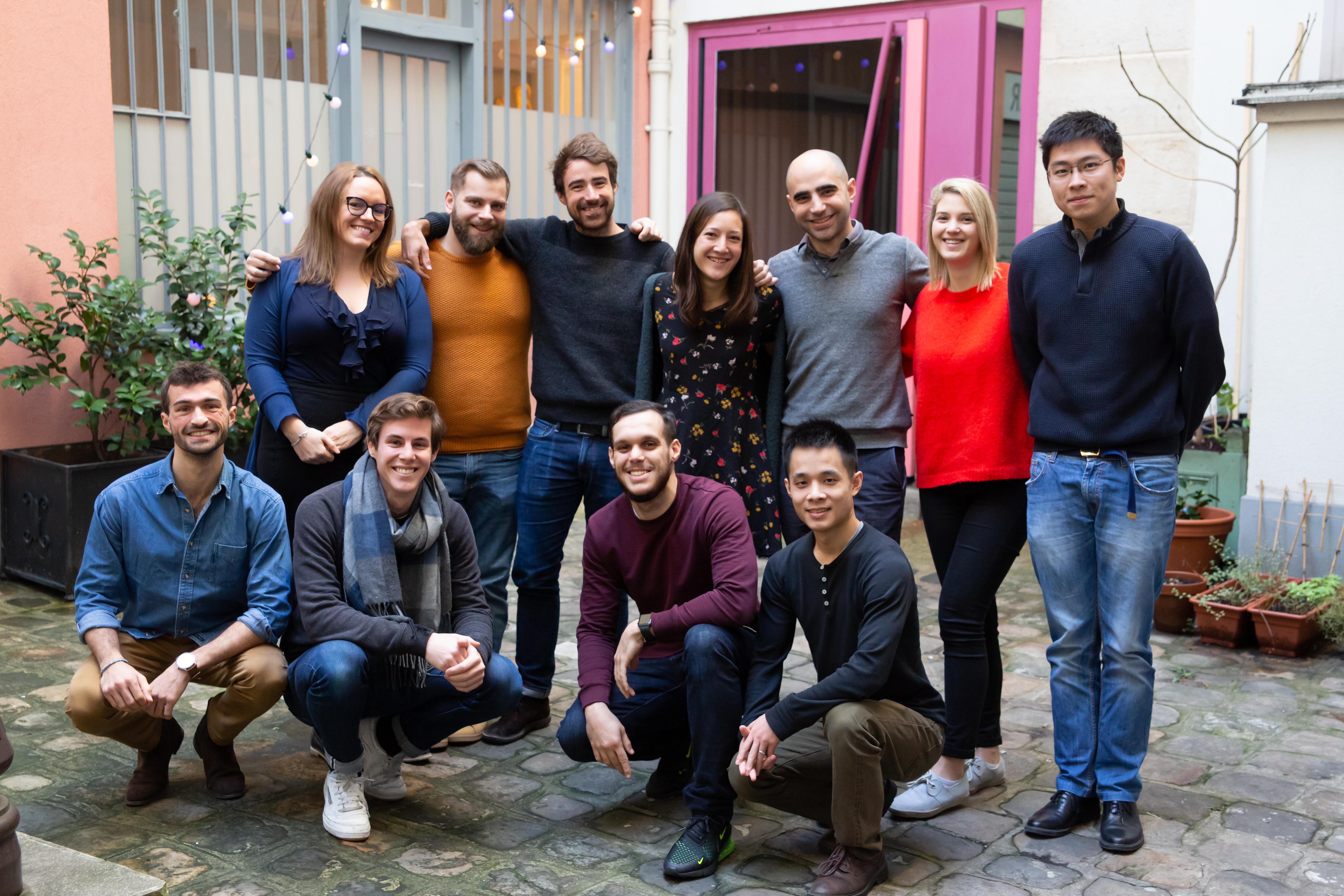
Foodvisor Team


Content Marketing Lessons from the NFL

Content Marketing Lessons from NFL Analyst Brian Baldinger's "Baldy’s Breakdowns"

I am an NFL football fan. And there is an NFL journalist named Brian “Baldy” Baldinger who does these fun, insightful videos. You can spot them on Twitter. He calls them “Baldy’s Breakdowns.” In these videos, Baldinger analyzes pieces of game film from the prior weekend’s games. You can see his videos here: @BaldyNFL

Football is a complicated sport, a “game of inches,” and there are a lot of fast-moving details happening on every play that can make the difference between a loss of yardage or a touchdown. Baldy does a great job of helping you understand the little nuances of the game that you might otherwise miss. I know that his videos have helped me appreciate all the different elements of the game a lot more.

Content Marketing Lessons

Baldy’s Breakdowns also provide a few good lessons for other content marketers and small businesses. Anyone who’s trying to capture attention and spread a message on social media today could learn a few things from Brian Baldinger’s NFL breakdowns.

Make it Short and Sweet

Most of Baldy’s Breakdowns are just a few minutes long — or less! If your business is creating online marketing content, whether it’s a video or blog post, try to keep it direct and on topic. Find a way to distill your company’s essence into a few key sentences, graphics and images. You want to drum up interest and enthusiasm and appeal to the curiosity of your target audience, but don’t overwhelm them right away with too much information.

You can always refer potential customers to your website or customer service extension so they can get the nitty gritty details. Your online marketing content should be a succinct and concise introduction to your company and what it can do for potential clients. This is not the time to be long-winded. You might only have a few seconds to “hook” your audience and draw them in, so make it count. G ahead and sink a lot of time and money into creating a visually stunning fifteen minute epic. But you almost certainly be better off with a shorter and more focused video that “leaves them wanting more.”

Or you could be like Baldy and do a recurring series of shorter installment videos that discuss various products and services that your business offers. Instead of having one long infomercial, you could make numerous videos that were all addressing different facets of your company or showing customers how to (quickly) solve various specific problems.

Have Fun with It!

Baldy is hilarious and he uses this to great effect in his videos. He does a terrific job of humorously praising (or criticizing) various players and showing what went right (or wrong) on any given play. If he was just posting these short videos without injecting some humor into it, they probably wouldn’t have the same appeal; it might seem too technical or boring. But the humor makes it fun.

If you can make your online marketing content both informative and entertaining, you will probably see better results from it. Find a unique and amusing way to engage your target audience and talk about what your business can do. People will view your company much more favorably if your advertising is light and cheerful. It’s widely accepted that you can win people’s affection and keep their interest when you use humor. Curry favor with your target audience by sharing your message in an amusing and memorable fashion.

Speaking of football, the biggest game of the year — the Super Bowl — is as famous for its commercials as it is for the game itself. The marketers use this platform to debut some of the silliest and quirkiest ads of the year. You don’t have to come up with the funniest advertisement ever seen, and some industries or topics require more of a serious tone. But you can definitely feel free to deliver your message with a charming slant.

Get into the Details

Not everyone knows football as well as Baldinger, but he makes it fun and accessible by highlighting the little nuances of the game, especially things that many casual fans will often overlook like good offensive line play. Every Baldy’s Breakdown leaves me feeling like a better-informed football fan who will be more likely to appreciate the little things during my next live game.

What do you know best about your business? Think about some unexpected things that people might be surprised to learn? What are some behind the scenes facts that you can share? Is there something about your industry that you’d like to change? What are some big problems or trends in your industry that you have strong opinions about? Is there a clever, amusing anecdote that illustrates a point you’d like to make to your audience?

Sometimes business owners overlook and undervalue their own expertise. This becomes especially true if they’re in a “boring” or technical field. Chances are, your tenure as a business owner has turned you into an expert at something. And your expertise might be more interesting and even entertaining than you realize. Draw inspiration from your experience. And give some unique insight into what your business does and what it can do for your potential customers.

As you are telling your story, think about what makes your company unique. Maybe it’s the history behind the founder or it could be a highly specific product that you’re featuring as part of your advertising. Whatever aspect of your business that you’ve decided to highlight, explain what makes it so special. Your story is unique and no two businesses are the same. Running a business has almost certainly given you a wealth of knowledge about your industry – just like a football wide receiver on a long pass route, “go deep.” Use this to your advantage when you are developing your content marketing strategy.

Image: Depositphotos.com

This article, "Content Marketing Lessons from the NFL" was first published on Small Business Trends


15 Smart Ways for Service Businesses to Tap Into the Holiday Sales Season

Holiday Season for Service Businesses

The holidays are just around the corner. This time of the year is particularly important for retail businesses that can position their products as holiday gifts. However, service-based businesses can still tap into the holiday sales season. To find out more, we asked a panel of Young Entrepreneur Council members the following:

“What is the best way for service-based businesses to tap into the holiday season, particularly companies that are not retail-focused?”

Holiday Season for Service Businesses

1. Hold a Holiday Event

“Even if your business isn’t retail-focused, you can still hold a holiday event. For instance, a snow removal service can hold a holiday party for their customers. Invite leads and customers to attend, provide food and drinks and maybe even some entertainment. It’s a good way to promote your business and build stronger relationships with your leads and customers.” ~ Thomas GriffinOptinMonster

2. Send an Email Newsletter

“If you have subscribers, you need to take advantage of email to market to customers for the holidays and boost sales. Now is the time that people are mentally ready to spend money and spend it big. Leverage this desire by creating an email marketing strategy that offers deals, fun promotions and exclusive holiday offers.” ~ Stephanie WellsFormidable Forms

3. Create Holiday-Themed Content

“Many retail companies create holiday-themed content to promote their products like “15 Valentine’s Day Gift Ideas for Her.” But service-based businesses can create holiday-themed content as well. For instance, a catering company can create a blog post about Thanksgiving dessert ideas or a cleaning company can provide tips to readers to help them clean up before and after their holiday parties.” ~ David HenzelLTVPlus

4. Analyze Your Data From Last Year

“Your holiday data from last year can help you make informed decisions about the upcoming year. For example, if you notice that your email signups rose during November and December, you should look back at that content and try to find patterns in the data. If you plan properly, you can see better or equal results this holiday season.” ~ John TurnerSeedProd LLC

5. Help People Achieve Their New Year’s Resolutions

“At the start of the year, business owners are often looking to get their systems in order and launch aggressively toward new goals. This is a great time for service-based businesses to offer advice through content marketing. It’s also a perfect opportunity to offer incentives that draw on people’s motivations and resolutions for the new year.” ~ Madeleine NiebauervChief

6. Give Your Staff the Gift of Flexibility

“One of the biggest gifts we give our employees around the holidays is flexibility around their vacation hours. We ask people to give us their plans early so we can plan accordingly and don’t expect people to be in the office around the holidays. This allows them to spend more time with their families, spend less on flights and generally reduce holiday stress, which everyone appreciates.” ~ Tony ScherbaYeti

7. Partner With a Retailer for a Promotion

“People are in the mood to spend so you can help them do it by partnering with the right company to make that happen. You can also host your own discounts on your own service but if you do, people might expect that to appear every year. Giving away Amazon gift cards in exchange for reviews is a great thing to do as well.” ~ Nicole MunozNicole Munoz Consulting, Inc.

8. Run a Giveaway Contest

“Giveaway contests make sense for service-based companies as much as product-based ones. Your marketing activities are not only about pushing sales. It’s helpful to remember that building your brand awareness also leads to future conversions. Create a themed giveaway contest on social media and gift the winner a branded item. Service-based companies can also give away holiday discounts.” ~ Syed BalkhiWPBeginner

9. Theme Your Services Appropriately

“You need to make sure that all your marketing matches not only thematic keywords but also to connect with users. Every SEO ranking needs to have genuine content that serves your target market. If you are a cleaning service, for example, you may offer special offers on last-minute housekeeping to help reduce holiday stress. You then rank for the most relevant keyword and satisfy your customers.” ~ Patrick BarnhillSpecialist ID, Inc.

10. Create Holiday Packages with ‘Bonus Hours’

“Try creating a holiday package and incorporating bonus hours. Offering bonus hours instead of discounts is a great way to sell higher-tier packages. For example, if you sell services that normally involve 20 hours, offer a bonus of five hours for the 30-hour tier. Depending on the nature of your business, come up with things you can bundle together that will be a special treat for your customers.” ~ Blair ThomaseMerchantBroker

11. Send Out Holiday Cards

“We provide custom software development services to our clients, and every Thanksgiving I send out a Macy’s gift card to my clients to thanking them for being our client. It shows them how much we value their business and we are there to support them. It doesn’t come out to be very expensive since the number of clients we have is less compared to an accounting or legal firm.” ~ Piyush JainSIMpalm

12. Jump on Black Friday and Cyber Monday Advertising Trends

“If you run a business that is not retail-focused, the best way for a service-based company to tap into the upcoming holiday season is to take advantage of the advertisement deals businesses look for this time of year with Black Friday and Cyber Monday. Make sure you have promotional content ready to go for your business. That way, when businesses look for deals, your service will be available.” ~ David ChenSharebert

13. Invest in Paid Social Ads

“Consumers increasingly turn to social media platforms to find service providers. Organic social reach is not as effective as it once was, but paid social promotion on Facebook, Instagram and Twitter give brands a direct line to potential customers with rich targeting and segmentation tools. Paid social can increase brand awareness, drive traffic to a service business’s site and generate demand.” ~ Chris MaddenMatchnode

14. Be Gift-Friendly

“Create a package and imagery that makes your service look like a gift. If you can turn your service into something that a customer would gift to another person, you will fit right into the holiday season. Offer a bundle of sessions, or a discounted rate on your service to pull consumers in. You can promote gift cards, punch passes or other bundling options that work for your service offering.” ~ Jared WeitzUnited Capital Source Inc.

15. Take Advantage of the Holiday Slowdown

“Most non-retail businesses experience a bit of a slowdown during the holidays. If your company serves businesses that aren’t retail, you can suggest that they take advantage of the slower holiday period to work on positioning themselves for a strong upcoming year (by working with you!).” ~ Keith ShieldsDesignli

Image: Depositphotos.com

This article, "15 Smart Ways for Service Businesses to Tap Into the Holiday Sales Season" was first published on Small Business Trends


Bunq launches metal card and plants a tree for every €100 spent

Fintech startup Bunq is launching a metal card called the Green Card. While some banks offer a cashback program with premium cards, Bunq is offering a special kind of “cashback”. For every €100 spent, Bunq plants a tree. The company has partnered with Eden Reforestation Projects to finance reforestation around the globe.

Manufacturing a metal card isn’t particularly environmentally friendly. That’s why the Green Card expires after six years instead of four years. It is also made of recyclable material (even though I’m not sure it’s that easy to recycle a metal card with a chip, a magnetic stripe and an NFC antenna after it expires).

Other than that, the Green Card works more or less like the Travel Card. While Bunq offers traditional bank accounts, you can order a Travel Card or a Green Card and keep your existing bank account.

The Green Card is a Mastercard without any foreign exchange fee. The company uses the standard Mastercard exchange rate but doesn’t add any markup fee.

While the Green Card is a credit card, it doesn’t work like normal credit cards. You don’t get a direct debit on your bank account once a month to cover your credit line. Instead, you have to open the Bunq app and top up your Bunq account — topping up your account with another card may incur some fees, more details here. If you don’t have enough money on your account, the transaction gets rejected like a debit card.

The Travel Card costs €9.99 to order the card. There’s no monthly fee after that. The Green Card costs €99 per year. Bunq charges €0.99 per ATM withdrawal but you get 10 free withdrawals with the Green Card.

The company is selling a limited edition today with “Founders Edition” engraved in the top right corner but the first batch is nearly sold out:


10 Commercial Christmas Lighting Ideas for Your Small Business

10 Commercial Christmas Lights Ideas for Your Small Business

Holiday light displays aren’t just for homes. Businesses can use them to create a festive experience for customers. And they can even attract shoppers to your store, keep employees in a festive mood throughout the season, and serve as part of your holiday marketing plan.

There are tons of different commercial Christmas lights ideas. You can use them to accomplish all of these goals. So your first step should be finding some inspiration. And make a plan that’s relevant to your specific business and customers.

Attracting shoppers to your store during the holidays can be challenging. Stand out from your competition by trying these commercial Christmas lights ideas.

Business Ideas for Commercial Christmas Lights

Put Up a Large Tree

Put Up a Large Tree
photo credit: holiday-lights.net

A large tree can serve as a popular meeting place and focal point throughout the holidays. If you already have one on your business’s property, covering it with lights can help you completely transform your outdoor space. If you don’t have one, you can purchase a structure to put up to recreate this look with lights.

Cover Your Exterior

With enough strands of lights, you can pretty much cover the entire outside of your building with magical lights, which can make it really catch people’s eyes as they pass by. This is usually better suited to a storefront that is right next to other buildings, since there’s only one side to cover and this type of display requires a ton of lights. But if you have the time and resources, you can do this on pretty much any building.

Partner with Nearby Businesses

10 Commercial Christmas Lights Ideas for Your Small Business
photo credit: downtownrochestermi.com

If you want to really make an impact with your commercial christmas light displays, you might work with other buildings on your street or in your business district to create a theme or include a consistent look that people will want to visit. This can encourage more foot traffic in downtown areas and help consumers focused businesses like shops and restaurants with their holiday marketing efforts.

Spell Out a Message

You can arrange lights into letters to spell out a special holiday message. You can keep it to a generic holiday greeting or spell out something specific to your business, like your company name, tagline, or a funny holiday pun.

Add Tons of Color

Add Tons of Color
photo credit: @guthriegreen on Instagram

Colorful lights can help you catch people’s attention. You can opt for a traditional color palette, go for a full rainbow, or even include your brand colors. Setting up a large display leading up to your building can be the perfect way to really stand out this holiday.

Dress Up Your Cubicles

For offices that don’t get a lot of consumer traffic during the holidays, you can still decorate with commercial Christmas lights. Instead of leaving your interior plain, cover your cubicle walls much as you would the exterior of your building. Add tons of colorful strands vertically or just include some icicle lights along the top for some extra sparkle.

Create a Path

10 Commercial Christmas Lights Ideas for Your Small Business
photo credit: nppshows.com

If you’re looking for outdoor Christmas lights ideas that will really attract customers to your building’s entrance, consider setting up lights along the pathway up to your front door. You can keep it to simple white lights, add some candy cane lights along the sides, or even create an archway along the path to make it feel really magical.

Set It to Music

Commercial Christmas lights ideas don’t have to just be about the visual element. They can also include music or audio to enhance the experience even more. Some homeowners and businesses choose to have their lights turn on and off to the tune of various Christmas songs. This isn’t going to be feasible for every business, especially those near residential areas or busy downtown districts. But if you can, consider creating a short arrangement that plays for just a few minutes a night. It could end up becoming a destination for people in your area.

Go Maximalist

10 Commercial Christmas Lights Ideas for Your Small Business
photo credit: kansastravel.org

If you want to create a Christmas light display that really gets people’s attention, you may want to really layer your lights and decorations on top of one another so it creates a big spectacle. If you can add a ton of color and find a bunch of unique decor that really catches people’s eye. Outdoor Christmas lights ideas like this could end up in a ton of Instagram pictures or even get some press attention.

Create a Photo Opportunity

All of these intricate commercial Christmas lights ideas could result in some extra promotional opportunities when people share photos on social media. But if you really want to ramp up the attention on that end, create a lights display that people can stand in front of to easily take photos. Integrate favorite characters like Santa and Rudolph that people can interact with if you really want to make it a popular destination.

Image: Depositphotos.com

This article, "10 Commercial Christmas Lighting Ideas for Your Small Business" was first published on Small Business Trends