Monday, 30 December 2019

What is Urban Farming and is it Profitable?

What is Urban Farming and is it Profitable?

Urban farming includes a wide array of food-producing projects and activities. And with the recent resurgence of farming in and around cities, people have been reconnecting to agriculture by growing food themselves and visiting farmer’s markets. This fast-growing phenomenon has the potential to nourish communities and create economic opportunities. Urban farming is popular for several reasons such as sustainability, affordability, health, and convenience.

Today urban agriculture exists in many forms including: community and backyard gardens; rooftop and balcony gardening; growing in vacant lots, parks the list goes on.

What is Urban Farming?

Urban farming is often confused with community gardening, homesteading or subsistence farming. Simply put urban farming focuses more in selling produce, produce grown as sold as opposed to being grown for personal consumption or sharing.

Urban farming can support the well-being of individuals and communities in many ways. From providing fresh produce to communities, creating a sense of community belonging, job creating and promoting health lifestyles.

Being a community enterprise, urban farming helps stimulate the local economy through job creation, income generation, and the growth of small businesses. More importantly, urban farming makes fresh food more affordable. It is fast becoming an important component of a city’s food system.

From the production, to the processing to distribution it brings together a variety of community benefits. The benefits vary according to the type of urban farming. This includes personal consumption, institutional, educational, for-profit, or nonprofit. Successful urban farming projects however require considerable planning and commitment.

Space and pollution can be major challenges for urban farmers but also motivates them to develop new farming strategies aided with technology. However, because they are closer to local restaurants and supermarkets, urban farmers can supply fresh produce faster and easier.

How to Get Started

Do your Research

Educate yourself on the best practices in urban farming. Check your local, state, and federal laws for permits.

Identify the Project and Define its Purpose

You will first need to identify your target customers, what to produce, how and where it will be distributed, and what the existing market is. These will be critical to the success of the business.

Engage the Community

Work with community members and friends to identify what is needed and is desired. Brainstorm and network.

Check out the Competition

Visit existing farms to learn what others are doing. How will your project be the same or differ? Ask other farmers to share lessons they have learned.

Plan how to be Profitable

Identify your customer and determine what you will produce. Will you be selling direct to consumers or to restaurants or to the local farmers market?

Establish the type, scale and method for the project: vertical farming of micro-greens, aquaponics, hydroponics, organic or natural? Before investing in structures start small and develop a market. Then, if you see the demand growing then expand.

What Types of Urban Farming are There?

More and more people are pursuing urban agriculture as a business venture. Focusing on niche markets, higher-margin products, and specialized services. Some urban farming enterprises are successfully negotiating the profit landscape.

Start-up expenses for an urban farm can vary widely depending on location because many of the components (such as land or utilities) are site-specific. Start-up expenses can be broken down into a few categories, location, site preparation and structures.

Structures include both infrastructure necessary for growing (such as high tunnels) and storage (such as a cooler). The type of structure you need will depend on location, types of crops grown, and the length of the growing season.

Vegetable Landscaping

Also called edible landscaping, this includes mixing flowers and vegetables throughout the garden. This allows for flexible opportunities with a small startup capital. Your investments will mostly be investing in tools to grow vegetables either on freshly tilled soil or in containers.

You have wide repertoire of plants to work with from herbs, onions, garlic, to strawberries and even fruit trees.

Products and Services

Besides your urban farm, you can generate another revenue line in your business through providing seedlings and compost. With a growing market for environmentally friendly products and services, many are starting to look at waste in a new way.

Composting today is no longer a method of disposal in rural areas. It is fast becoming a common way to manage waste and produce a usable product- creating a viable business opportunity. Your customers could be landscaping companies as well as fellow urban farmers.

Hydroponic Farming

Hydroponics is the process of growing crops with nutrient-rich water kept in contact with the plant roots without using soil. This process is touted to significantly reduce the risk of wastage and pollution that can harm the produce and cause diseases, making it popular to health-conscious consumers.

A well-designed hydroponic system is characterized by less wastage of water and nutrients than soil-based farms. Both water and nutrients are fed directly to the root structure of the plants and recycled through the hydroponic system. This also eliminates the typical land and water pollution possibilities due to overland flow and runoff.

Mushroom Farming

Mushrooms are relatively easy to cultivate. A profitable mushroom will depend on knowing which mushroom strain to cultivate and how to maximize your production. Growing mushrooms doesn’t require a full-time commitment.

You can still have a full-time job, and produce enough to become a steady supplier to other businesses. Mushroom farmers harvest an average of 25 pounds of produce per square foot every year. Prior to harvest, contact local restaurants and take orders from them for a quick sale.

Beekeeping

Beekeeping can help you produce extra products for you, as well as having other indirect benefits like making your existing crops better pollinated. Having bees around your vegetable plants will dramatically increase your yield.

You will however need to do a thorough research before embarking in apiculture. You will need to consider the size of the bee colony, the health of the work force, weather conditions, the availability of nectar for the bees to collect will affect your bottom line.

Rooftop Tea Gardens

Finding the right amount of space is often a challenge in cities. Rooftop gardens provide a solution for those with an inclination towards trying their hand at urban farming but don’t have a plot of land to use. By starting a rooftop tea garden, you can grow a variety of aromatic and medicinal herbs and greens to sell directly to your customers.

Urban Chicken Farms

Backyard chicken keeping is an easy and popular way to get into urban farming without spending a lot of money or the need for a lot of space for gardening. Chickens require relatively little space for the number of eggs and meat they produce and are easy to care for. Therefore you can initially start by investing in a modest chicken house in your background and gradually grow in capacity.

Organic Farming

Generally speaking, organic farming is a method of raising crops and livestock and has evolved into a niche of its own. A growing number of restaurants and supermarkets market specifically for organic produce.

These businesses rely on organic farmers to supply them with organically grown fruits and vegetables and organically raised, or free-roaming livestock. Organic farming is highly sought because they provide customers with safe, wholesome food from a toxin-free environment.

Flowers Growing

If you know your roses and lilies well and have a green thumb, perhaps you should look into growing flowers. There are ample avenues you can pursue from selling to florists (cut), for nurseries, direct to the public and others. Growing flowers can also dramatically increase the yield of your land.

Cannabis Farming

If you live in a state where cannabis use is legal, you might take advantage of the available space and start your own small cannabis business. If you have a large backyard it can helps keep your investment low, while giving you a flexible space with which to work. You can also grow your business by building a small greenhouse.

Processing

Beyond selling simply farm produce, you can also venture into value-added products. By transforming the raw farm products into food, personal care, craft products and more. Value added products can help boost your income and expand the market season.

Deciding to get involved in creating new products generally calls for a long-term commitment in that it requires additional capital for infrastructure, compliance with food safety and labeling requirements, liability insurance, and marketing.

Takeaway

To start an urban farming business, you don’t necessarily need a background in urban farming. All you need is to educate yourself on the abundant resources on urban farming found online. Today there are many small businesses popping up across America focusing on urban farming. The demand is not only for green thumbs but also for people with sales, marketing and other skills in the value chain.

If you can reach large production capacity look towards a business to business farming model. This is a business method that farmers use when producing agricultural products to supply business clients. Businesses prefer to deal with farmers directly for the low cost and quality by getting produce directly from the source. Examples of business clients are grocery stores and restaurants that re-sell these products in their original or processed form to customers.

The key to profits is creating a niche for your business. While creating your business plan, be sure to include opportunities to get small business grants to help fund your new venture. For this reason, always look towards diversifying your revenue streams and build strong relationships with your customers.

Urban farming is all about making the most of the space you have. You can start off using your own garden to start growing food, and may eventually expand and start growing on other plots in your area.

Having an urban farming business can be particularly satisfying as you get to make your own contribution to making the world a better place as well.

Image: Depositphotos.com

This article, "What is Urban Farming and is it Profitable?" was first published on Small Business Trends


Flip Fit Makes Customer Returns Part of Their Business Model

Flip Fit Makes Customer Returns Part of Their Business Model

A new online clothing platform uses social interactions to narrow down style choices. It also adds preprinted UPS labels to simplify returns.  Flip Fit is geared to Gen-Z and Millennial shoppers.

Small Business Trends contacted Flip Fit founders Jonathan Ellman and Nooruldeen “Noor” Agha to learn more.

“Fashion shopping has always been a social experience,” said Agha. “The decision for today’s shoppers to buy happens once they receive validation from friends and family.”

He goes on to say how the product bridges a gap.

Eliminating the Isolation of Shopping

“E-commerce has made shopping very isolating. We are connecting the social behaviors of shopping, which were previously only possible offline, with a virtual experience.”

Noor and Jonathan met in LA in 2018 with an idea to change the shopping experience. The pair had years of experience with fashion brands. They analyzed the market and customer behavior in offline retailers’ fitting rooms before coming up with the idea for Flip Fit.

How Flip Fit Works

Jonathan Ellman explains how it works.

“Through the Flip Fit social application, users get inspired for the fashion items they want by flipping through photos of what others are trying on.”

Just one of the things that makes the platform different is the ability to share your new looks with friends to help make buying decisions. The platform uses a tool that is similar to Tinder. It allows users in the community to vote yes or no on each item.

It Starts with Ten Boxes

Initially, ten boxes of products are sent to try on.

“After trying on the clothes, they share selfies of themselves with the 1,2,3 people whose opinions they care about so that they might vote for whether they should buy the item or return it in our box,” Ellman writes.

Users get credits to spend on new clothes for bringing their friends onto the platform too.

Tackling Product Returns

Flip Fit even tackles one of the bigger obstacles for this type of business — the product that gets sent back.

“Returns are our default – every box comes back – and we make this process seamless for our users,” Ellman says.  “The UPS label is preprinted and you request the day and time they come to your door.”

How Small Businesses Benefit

In a word, Flip Fit helps clothing retailers decide what sells. Deciding what lines and products to launch for the upcoming season is always difficult. How much inventory they will need is a continual sore spot too.

Add in the ability of consumers to shop online, in-store or using a combination of both and you can see why Ellman says: “The industry is flying in the dark.”

Examining Actionable Data

He describes how his product sheds some light on those efforts.

“With Flip Fit, we will provide our brands actionable data, in real time, allowing them to test out new products on our platform,” he says. “It’s a direct line from the customers fingertips to the brands manufacturers.”

When they see demand spiking for a product, they can tell that brands’ manufacturer to double down on production. What’s more, Flip Fit warehouses the products.

“And we manage the marketing, logistics, payments, customer service and returns for our brands,” Ellman says.

They are already working with over a hundred of the top denim and t-shirt brands across the US, including Boyish, MadeWorn, Junkfood, Mavi and Edwin, AG, JBrand, Retrobrand and Hudson.

Image: pivotperformancewear.com

This article, "Flip Fit Makes Customer Returns Part of Their Business Model" was first published on Small Business Trends


Cloudways Makes Google Cloud and AWS Hosting Understandable

Cloudways: Making Google Cloud and AWS Hosting Understandable by Small Business

Cloudways is a hosting company located in Malta. They are bridging the gap between the big cloud platforms that are still technical and the needs of small businesses. Cloudways is helping SMBs take advantage of what cloud hosting has to offer. For example, it tackles the complexity of configuring and setting up platforms like AWS and Google Cloud.

They want to make it so you don’t need to have a systems administrator on hand to take advantage of what these bigger platforms have to offer.

Cloudways for Small Businesses

Small Business Trends contacted Pere Hospital, the founder for more information. He started out explaining more about what the product does.

“Cloudways is a managed cloud hosting platform that emphasizes simplicity, choice, and freedom,” he writes.  “The Platform is built to facilitate businesses in deploying and scaling their online assets without worrying about the underlying hosting solution.”

One of the things that will attract small businesses are the options.

“There’s a choice of five industry-leading IaaS providers and it’s easy to deploy almost all PHP powered applications. Cloudways provides choices so that the Platform remains a great fit for a very broad set of businesses.”

Meeting Challenges

Here’s why small businesses need a hand setting up and configuring the cloud hosting on platforms like Google Cloud and AWS for small businesses.

First off, they need to understand AWS and Google Cloud are industry leaders that offer a very broad lineup of very powerful tools and services.

“All this power comes at a cost,” Hospital says adding it takes time and effort to harness it into profitable business operations.

Keeping Pace

He says these mid-level players such as SMBs and digital agencies need AWS or Google Cloud to keep pace. Many don’t have the skilled team members to manage and maintain a server positioned on these cloud providers.

“In my opinion, when it comes to IaaS platforms such as AWS and Google Cloud, small businesses face two significant challenges,” Hospital says. “These all come down to the problem of missing/way-out-of-the-budget resources.”

Setting Up the Server

Simply setting up a server is the first hurdle. Cloud servers are different from web servers. Getting these business-ready requires several steps.

“Small businesses need to install the right OS, set up the stack and then deploy the core business-level applications.”

This usually makes setting up a cloud server the domain of a tech expert that many small businesses can’t afford.

Hospital explains the other big obstacle.

“The challenge continues as keeping the cloud server operational (and secure) again demands a skillset (and budget) that is often outside the budget of many small businesses.”

Bringing Cloudways Into Play

That’s where Cloudways comes into play. This product takes over server management and allows small businesses to get the most from AWS and Google Cloud.

Here’s how.

Looking at the Big Features

One of the big advantages here is the flexibility Cloudways offers ecommerce SMBs in how their websites are hosted. There’s a lot to choose from. You can find what’s right for your own unique enterprise. Cloudways makes both server management and application hosting simple with 50 features .

“These features cover all the important aspects of server optimization and security.”

For example, small businesses can migrate their own SSL certificate or get one installed through the Platform. They can start a free trail by clicking a tab.

Studying Cloud Infrastructure

The company’s partnerships with cloud infrastructure providers is another advantage. This allows for choice. Flexibility is another bonus.

“We have web agencies that use our cheapest provider with their most price-sensitive customers but use Amazon or Google for customers that ask for it.”

Clients can change from one provider to another.

Planning for Migration

Got some websites that you’d like to change over to this cloud hosting product? There are a few other benefits from Cloudways you should know about.

There’s an introductory “Welcome Onboard” perk where the first migration is free. And they are fast and responsive too.

“Our cloud engineers complete migration requests within 24 hours and the customer’s website(s) are up and running with no noticeable downtime,” Hospital says.

Why Cloud Hosting Should Matter to Your Small Business

Shared Hosting is one of the models that small businesses favor because it is cheap. Here’s why cloud hosting is better.

Scalability

Scaling the server to meet demand. In the cloud, scaling resources is about adding virtual servers. There are no physical aspects so you can deal with traffic spikes quickly.

Cloudways has a set of sliders to scale up or down.

Examining Performance

Cloud hosting is a fact because there’s no physical architecture. Troubleshooting is simpler and there are automated custom-built solutions available.

Considering Sustainability

Cloud hosting has better sustainability for small businesses.  In the end, it all comes down to one word. Uptime.

“In general, cloud hosting lives up to the popular hosting industry’s claim of “99.99% Uptime,” Hospital says.

Although hosting is their main business, the company has other products that should interest SMBs. They’ve also released Breeze, a free WordPress cache plugin designed to boost performance for WordPress websites.

Image: Cloudways

This article, "Cloudways Makes Google Cloud and AWS Hosting Understandable" was first published on Small Business Trends


Try These 8 Things to Improve your Business in the New Year

Try These 8 Things to Stay Constantly Improving at Work in the New Year

With the changing seasons, holiday decorations, and cheery music flowing from seemingly every storefront, one thing is clear — the end of the year is upon us, and 2020 is not far away.

The end of the year can be a great time to recollect, reflect on the last 12 months, and find areas where you can improve in the new year.

Improvement doesn’t necessarily mean anything is wrong to begin with; but everybody can be constantly improving.

Focusing on ways to improve yourself will lead to improvement at work, helping you achieve more in the coming year.

Here are some ways that you can stay constantly improving once 2020 arrives:

1. Read Books — Fiction and Nonfiction

Reading is a great way to learn new things and relax.

Reading is a calming activity that helps you wind down, meditate, and gain knowledge that you might not have had before.

That’s why reading is probably the easiest way that you can stay improving in the new year.

Of course, it’s important to read things that will benefit you at work; read books to help you gain knowledge about your job, your industry, and best practices to do better work in 2020.

Some of the top entrepreneurs in the world — Warren Buffett and Bill Gates, for example — are insatiable readers.

However, you also want to take time to read for pleasure.

Reading has a number of benefits, including:

  • Alleviating anxiety
  • Reducing stress
  • Lowering the risk of Alzheimer’s

And more.

These benefits will improve your personal life and also increase your productivity and keep you always improving at work.

2. Listen to Podcasts Related to Your Industry

Reading has a close relative for people that are on the go — podcasts.

Podcasts have grown in popularity significantly over the last several years, and now there are thousands of podcasts, about anything you can imagine.

I guarantee there are a multitude of podcasts to choose from in your industry.

Podcasts are a great way to learn about industry news, events, and best practices.

They’re a great way to brush up on your skills and learn new ones.

They’re also a good way to gain new perspectives from other industry professionals or people passionate about the subject.

Check out some podcasts related to your industry and use them to stay improving (on the go) in the new year.

3. Take a Course to Improve Your Skills

What better way to improve than actively learning?

Even if you’ve graduated and gotten a degree, there is nothing wrong with continuing to improve your skills by taking courses.

Local communities often offer courses for adults in a number of different subjects, from cooking classes to high-level computer software.

You could also enroll in classes at a local college, consider getting a graduate certificate, or, if you haven’t already, even consider a professional degree.

Learning is the best way to improve your skills and become a better industry professional, and taking a course is like a fast track to gaining new skills.

4. Practice an Old Passion to Boost Your Creativity

Sometimes, when we’re busy with work, we forget about our personal lives — and our personal selves.

But we all have hobbies and passions, and it’s best not to let them be put on the back burner.

Revisiting an old passion will boost your creativity which will help you at work.

Having something to yourself in your free time to give attention to reduces your stress levels and takes your mind off of work.

And to improve at work, sometimes we need to get our minds off of the job.

Having passions and hobbies that you regularly practice also will help boost your creativity which improves your work, as it gives you a new perspective to view projects and problems as they arise.

5. Get Feedback and Critique

One great method to find ways to improve is by asking for critique and feedback from those that can provide it.

Give those around you the opportunity to provide feedback about your work style, your management style, whatever you might want to improve as the year goes on.

This allows everyone to reflect and consider how they can improve.

Working to be a better business owner, boss, supervisor, or employee is a great way to stay improving in the new year — it just requires a little help from others.

6. Work Towards A Goal

Every year, people make New Year’s Resolutions; and while many people don’t keep up with theirs, it’s not a bad practice to get into.

Especially for business.

If you come up with some personal and professional goals at the beginning of the new year, it will give you a reason to stay improving as the year goes on.

Goals require improvement to be met.

You can’t set a goal at the beginning of the year, do and change nothing, and still meet that goal by the end of it.

Set lofty goals to push yourself; push yourself personally, and push yourself to grow your business.

My goal for the new year is for MobileMonkey to become internationally recognized by marketers as the world’s best integrated Web chat, SMS, and Facebook Messenger chatbot platform for marketing and customer service.

7. Be Open to Change

There’s no possible way to improve yourself at home or at work without being open to change.

Improvement begets change; one cannot improve and stay exactly the same.

In the new year, consider implementing ways that change can be accessible and ongoing at the workplace.

Small and large company meetings that give employees the opportunity to ask questions and make suggestions without fear is a great first step towards implementing a constantly improving work life.

The people around you likely have their own thoughts, feelings, and suggestions about how things currently are.

If you’re seeking to stay improving in the new year, it’s important to reach out to those people and hear their opinions.

8. Get Around the Community

What better way to improve yourself than working to understand and help others?

Exploring your community, both for leisure and to learn and help, is a great way to improve your knowledge and skills in the new year.

It can be tough to work at a business in a community that you don’t know or understand.

Start by simply exploring your community.

Learn the restaurants, the shops, the entertainment; this benefits you personally and it also benefits your business, as you will be able to know local businesses that you can work with in the future for various reasons.

Then, begin finding ways to help the community as well.

Volunteering, donating, etc.: these are all great ways to help your community while building connections and improving yourself along the way.

The more you know your community, the more your community will know you and your business; which is great for business in the long run.

Improve Yourself to Improve Your Work

Improvement comes in stages.

You can’t improve your work without first improving yourself.

While a number of these suggestions are to help you make improvements in your work life, several are to help you make improvements in your personal life, as well.

Learning new things, revisiting your creativity, helping others, and envisioning goals are great ways to set yourself up for success in the new year.

You’ll improve yourself which will lead to improvements at work, allowing you to be the best you — in and out of the office — that you can be.

Image: Depositphotos.com

This article, "Try These 8 Things to Improve your Business in the New Year" was first published on Small Business Trends


Grab and Singtel team up to apply for a digital full bank license in Singapore

Grab and Singtel, one of the largest telecoms in Singapore, announced today that they are applying for a digital full bank license together. If approved, the license will allow them to offer simple credit and investment products, before progressing to a full-functioning bank if they meet the Monetary Authority of Singapore’s (MAS) criteria.

Grab will hold a 60% stake in the consortium, with Singtel holding the other 40%. A joint statement said the companies are “committed to contributing to the financial services sector with a differentiated offering that addresses the unmet and underserved needs of consumer and enterprise segments in Singapore,” including SMEs that need access to credit. Securing working capital is a major pain point across Southeast Asia, with several startup and financial institutions working on new tools to gauge creditworthiness and manage loans.

Grab launched in 2012 as a ride-sharing company, but now bills itself as “Southeast Asia’s leading super app,” with app that provides a wide array of service, including transportation, logistics, food delivery, ticket and hotel booking and financial services, through one portal.

It entered financial services in 2016 with the introduction of GrabPay Wallet, a digital wallet, before launching Grab Financial Group in 2019. Grab Financial Group’s services include online payments, lending and insurance products that it says reaches 100 million users across Southeast Asia.

In a press statement, Grab Financial Group senior managing director Reuben Lai said the consortium’s plan is to “build a truly customer-centric digital bank that will deliver a variety of banking and financial services that are accessible, transparent and affordable.”

MAS announced in June that it will issue up to two digital full bank licenses and three digital wholesale bank licenses, as part of a bid to to liberalize Singapore’s banking sector.


Indian tech startups raised a record $14.5B in 2019

Indian tech startups have never had it so good.

Local tech startups in the nation raised $14.5 billion in 2019, beating their previous best of $10.5 billion last year, according to research firm Tracxn.

Tech startups in India this year participated in 1,185 financing rounds — 459 of those were Series A or later rounds — from 817 investors.

Early stage startups — those participating in angel or pre-Series A financing round — raised $6.9 billion this year, easily surpassing last year’s $3.3 billion figure, according to a report by venture debt firm InnoVen Capital.

According to InnoVen’s report, early stage startups that have typically struggled to attract investors saw a 22% year-over-year increase in the number of financing deals they took part in this year. Cumulatively, at $2.6 million, their valuation also increased by 15% from last year.

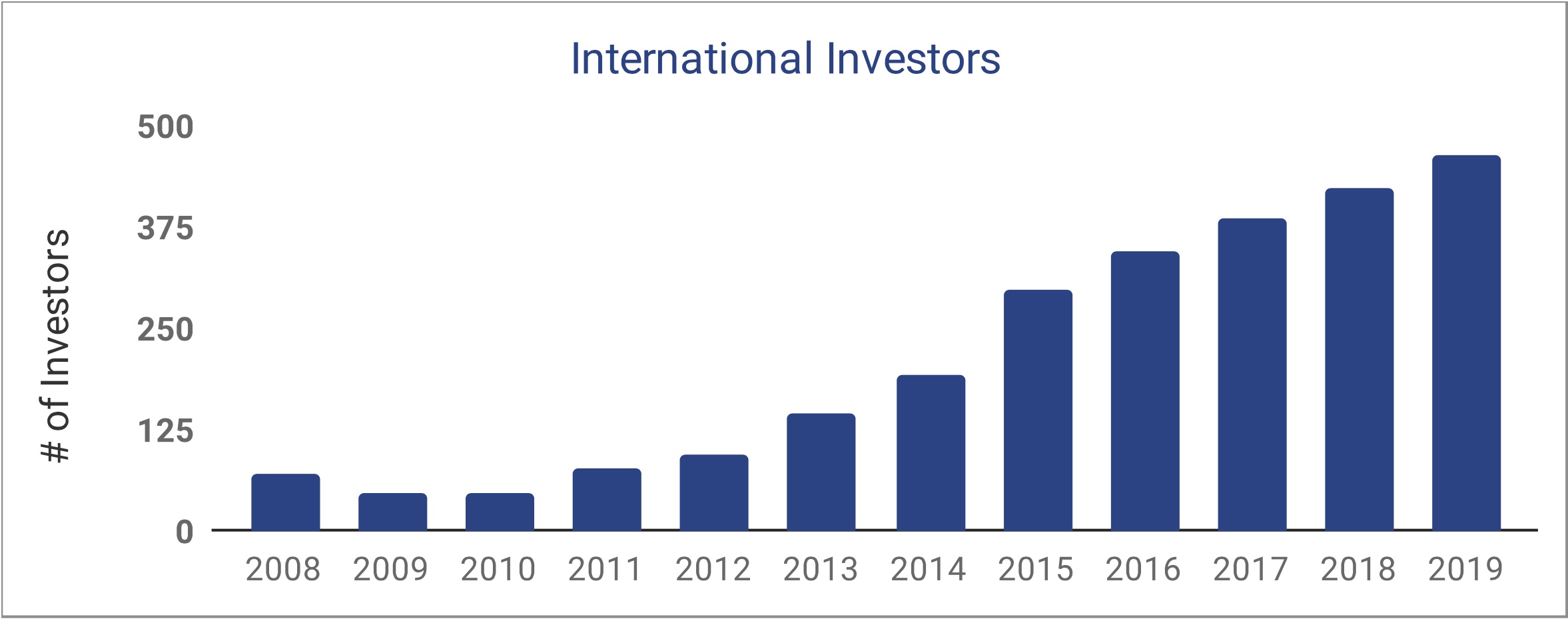
Also in 2019, 128 startups in India got acquired, four got publicly listed, and nine became unicorns. This year, Indian tech startups also attracted a record number of international investors, according to Tracxn.

This year’s fundraise further moves the nation’s burgeoning startup space on a path of steady growth.

Since 2016, when tech startups accumulated just $4.3 billion — down from $7.9 billion the year before — flow of capital has increased significantly in the ecosystem. In 2017, Indian startups raised $10.4 billion, per Tracxn.

“The decade has seen an impressive 25x growth from a tiny $550 million in 2010 to $14.5 billion in 2019 in terms of the total funding raised by the startups,” said Tracxn.

What’s equally promising about Indian startups is the challenges they are beginning to tackle today, said Dev Khare, a partner at VC fund Lightspeed Venture Partners, in a recent interview to TechCrunch.

In 2014 and 2015, startups were largely focused on building e-commerce solutions and replicating ideas that worked in Western markets. But today, they are tackling a wide-range of categories and opportunities and building some solutions that have not been attempted in any other market, he said.

Tracxn’s analysis found that lodging startups raised about $1.7 billion this year — thanks to Oyo alone bagging $1.5 billion, followed by logistics startups such as Elastic Run, Delhivery, and Ecom Express that secured $641 million.

176 horizontal marketplaces, more than 150 education learning apps, over 120 trucking marketplaces, 82 ride-hailing services, 42 insurance platforms, 33 used car listing providers, and 13 startups that are helping businesses and individuals access working capital secured funding this year.

The investors

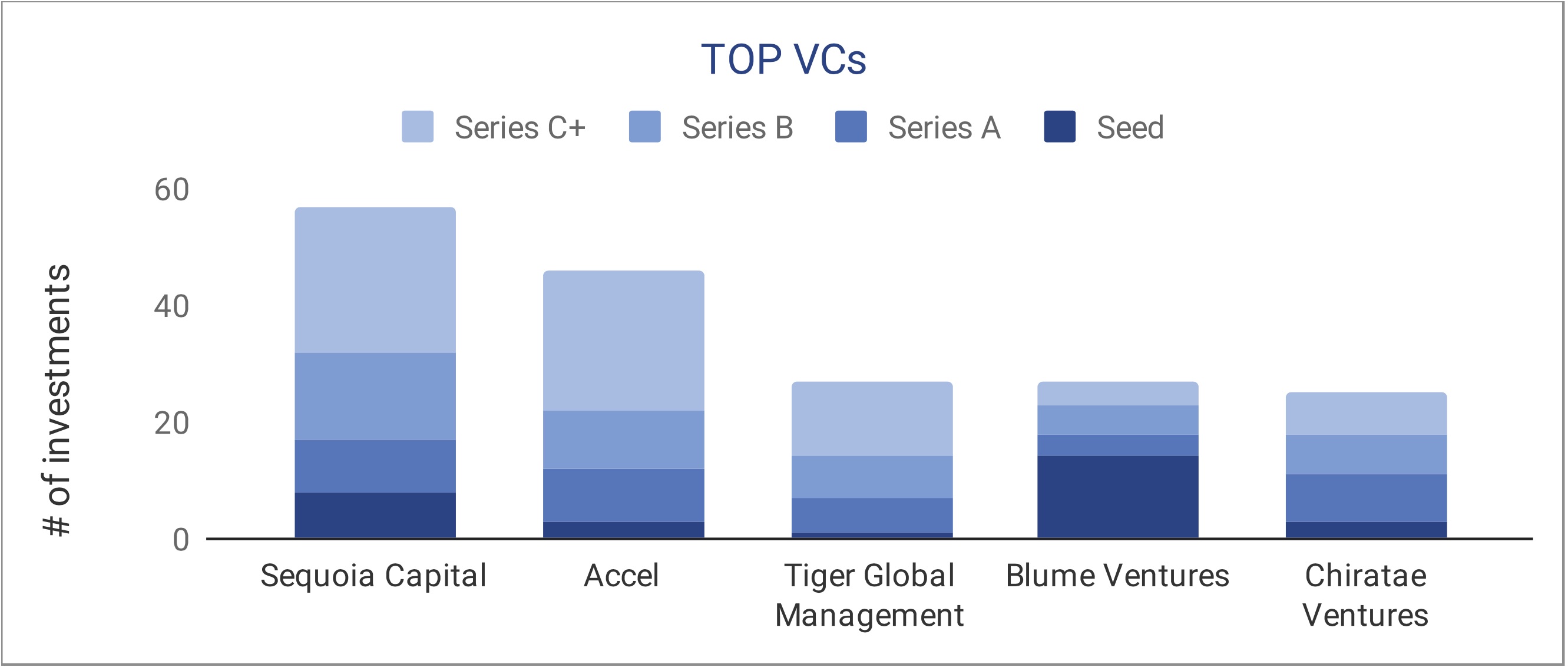
Sequoia Capital, with more than 50 investments — or co-investments — was the most active venture capital fund for Indian tech startups this year. (Rajan Anandan, former executive in charge of Google’s business in India and Southeast Asia, joined Sequoia Capital India as a managing director in April.) Accel, Tiger Global Management, Blume Ventures, and Chiratae Ventures were the other top four VCs.

Steadview Capital, with nine investments in startups including ride-hailing service Ola, education app Unacademy, and fintech startup BharatPe, led the way among private equity funds. General Atlantic, which invested in NoBroker and recently turned profitable edtech startup Byju’s, invested in four startups. FMO, Sabre Partners India, and CDC Group each invested in three startups.

Venture Catalysts, with over 40 investments including in HomeCapital and Blowhorn, was the top accelerator or incubator in India this year. Y Combinator, with over 25 investments, Sequoia Capital’s Surge, Axilor Ventures, and Techstars were also very active this year.

Indian tech startups also attracted a number of direct investments from top corporates and banks this year. Goldman Sachs, which earlier this month invested in fintech startup ZestMoney, overall made eight investments this year. Among others, Facebook made its first investment in an Indian startup — social-commerce firm Meesho and Twitter led a $100 million financing round in local social networking app ShareChat.


Sunday, 29 December 2019

Annual LinkedIn Report Reveals Most In-Demand Jobs

2020 Emerging Jobs Report from LinkedIn

The creation of new jobs is driven by a wide range of factors. As a result, some jobs are more in demand than others. And this depends on the dominant industries in the market.  The 2020 LinkedIn Emerging Jobs Report looks to find out the fastest-growing jobs around the world.

2020 Emerging Jobs Report

For example, Artificial Intelligence (AI) and robotics are the top sectors in many of the countries in the survey. As a result, on the blog for the report, LinkedIn says, “Artificial intelligence and robots are no longer on their way. They’ve arrived. In a big way.”

But not all of the jobs on the list are tech-related. For example, demand for soft skills such as communication, creativity, and collaboration will be essential. As a result of more remote/freelance workers now making up an increasingly larger percentage of the workforce, these skills will be more valuable moving forward.

Even in these sectors technology plays an important role to optimize the job at hand. For example, these jobs might not need AI or robotics right now. As a result, exploring whether they will be part of your operations in the future is one way to stay ahead of your competition.

The data for the report comes from 17 countries across four continents. For example, LinkedIn calculated the share of hiring and compound annual growth rate for these occupations for the past five years. As a result, the report established the roles with the largest growth rate. And these are the emerging jobs for 2020.

The Emerging Jobs for 2020

For example, the top emerging job in eight countries is AI Specialist, and it is also in the top 10 for another three countries. As a result, robotics engineer also ranks as among the top jobs in nine countries. Both of these jobs are being driven by multiple developments in today’s economy.

For example, self-driving cars, smart technologies (for the home, infrastructure, workplace, etc.), space exploration, and green technology all rely on these skills.

Here are the top three emerging jobs in 17 countries:

Australia

  1. AI Specialist
  2. Cyber Security Specialist
  3. Robotics Engineer

Austria

  1. Data Scientist
  2. Digital Marketing Specialist
  3. Full Stack Engineer

Canada

  1. AI Specialist
  2. Site Reliability Engineer
  3. Data Engineer

France

  1. Data Protection Officer
  2. AI Specialist
  3. Commercial Real Estate Agent

Germany

  1. AI Specialist
  2. Site Reliability Engineer
  3. Customer Success Specialist

India

  1. Blockchain Developer
  2. AI Specialist
  3. Javascript Developer

Ireland

  1. AI Specialist
  2. Cyber Security Specialist
  3. Customer Success Specialist

Italy

  1. Data Protection Officer
  2. Salesforce Consultant
  3. Big Data Developer

Netherlands

  1. Data Protection Officer
  2. Growth Hacker
  3. Privacy Officer

New Zealand

  1. Cyber Security Specialist
  2. Data Engineer
  3. Full Stack Engineer

Saudi Arabia

  1. Cyber Security Specialist
  2. Digital Specialist
  3. Legal Researcher

Singapore

  1. AI Specialist
  2. Robotics Engineer
  3. Full Stack Engineer

Sweden

  1. Data Protection Officer
  2. AI Specialist
  3. Javascript Developer

Switzerland

  1. AI Specialist
  2. Customer Success Specialist
  3. Cloud Engineer

United Arab Emirates

  1. Data Scientist
  2. Full Stack Engineer
  3. Customer Success Specialist

United Kingdom

  1. AI Specialist
  2. Data Protection Officer
  3. Robotics Engineer

United States

  1. AI Specialist
  2. Robotics Engineer
  3. Data Scientist

The U.S.

The annual job growth for AI Specialist jobs in the U.S. for the past four years was a whopping 74%. As a result, businesses in the industries needing these skills will need to compete for these employees. For example, these businesses include computer software, internet, information technology and services, higher education, and consumer electronics.

When it comes to the skills employees will need to get these jobs, they include, for example, machine learning, deep learning, TensorFlow, Python, and natural language processing.

Robotics engineer rank next with 40% annual growth, data scientist at 37%, full-stack engineer 35%, and sight reliability engineer rounding the top five with a 34% growth.

You can look at the rest of the data for the U.S. here.

The Importance of Skills Upgrade for Small Business

Record-low unemployment numbers along with emerging technologies and industries create challenges when recruiting qualified talent. As a result, the percentage of small businesses who say they find it difficult or very difficult to get the right employee is more than half (56%).

It may not always be possible. However, upgrading the skills of your workforce is one way to keep them around. As a result, your employees will have the right skillsets. And it will also improve your brand as an employer.

Technology continues to evolve at ever faster rates. As a result, one of the best ways to keep up with the talent you need is to educate or upgrade the skills of your workforce.

Image: Depositphotos.com

This article, "Annual LinkedIn Report Reveals Most In-Demand Jobs" was first published on Small Business Trends


66% of Customers Look for Social Proof Before Making Online Purchases

Trust Signals

A whopping 66% of customers are more likely to purchase a product if it has some form of social proof that it is a quality item, via likes, reviews, mentions, testimonials, public endorsements and more.

When it comes to social proof, 82% of consumers believe positive ratings and reviews are the most trusted form of social proof. 86% of customers say positive star ratings and reviews on a company’s homepage are the trust signals that are most likely to drive them to make a purchase.

These consumer trends were unveiled in Trustpilot’s ‘The Psychology Behind Trust Signals: Why and How Social Proof Influences Consumers’ report.

Trust Signals

Small businesses can take a lot from the Trustpilot report, namely the importance of developing a strong presence online and encouraging customers and followers to leave reviews, product likes, mentions and more.

Trustpilot’s research reiterates how valuable it is for small businesses to publish positive reviews on their website, particularly on the homepage and on product pages.

The report confirms how influential trust signals have become for small businesses and how featuring trust signals – i.e. positive things fellow consumers say about a product or brand – is an essential way to engage with customers, build brand awareness and ultimately sell more products, compete with bigger businesses and increase profit margins.

More from the Author

As the authors of the report note:

“No matter the industry, all marketing efforts seem to work better when they feature trust signals. However, it’s important to note that they can work differently at different stages of the purchasing funnel. Customers look for — and value — different elements of social proof as they work their way closer to a purchase.”

The report collected responses from 1,697 consumers in the United States, Europe and Australia. It asked consumers questions related to their shopping behavior. And how they perceived the importance of social proof signals.

The research found 86% say trust signals featured on the homepage were most likely to drive them to make a purchase. But 85% said the second thing most likely to encourage them to make a purchase are when star ratings and reviews are featured on a product page.

The research also looked at customer preferences in relation to different trust signals throughout the buying journey. It found the 50% of customers preferred trust signals coming from endorsements from public figures. 52% view media mentions as their favorite form of trust signal. While 60% hold customer testimonials in greatest esteem.

50% of participants admit that star ratings and reviews are most effective when customers compared different retailers.

The key takeaway from Trustpilot’s report is this. No small business can afford to ignore the importance of trust signals in different guises. These include star ratings, reviews and public endorsements. There’s also a need to encourage customers to share such social proof. The study also highlights the importance of social proof for small businesses. Place social proof content in strategic places where other customers can read it and be influenced by it.

Image: Depositphotos.com

This article, "66% of Customers Look for Social Proof Before Making Online Purchases" was first published on Small Business Trends


76% of Business Leaders See Similar or More Profits in Their Future

2020 Small Business Expectations

More than three-quarters of business leaders believe their business will be equally or more profitable in 2020. 55% of executives said they think their business will definitely be more profitable in the forthcoming year compared to 2019.

2020 Small Business Expectations

Advisory and accounting firm EisnerAmper LLP compiled this research. They surveyed around 940 business owners. These included C-suiters, family office executives and high net worth individuals at the annual EisnerAmper Business Summit Series. The event took place in New York in November.

Profitable vs. Not Profitable

Around 40% of the Summit attendees hailed from the financial and professional services. And 76% of participants said they feel confident their business will be “just as” or “even more” profitable in 2020 compared to 2019.

Just 9% think they will be less profitable in 2020. But also, more than half of respondents fear an economic slowdown.

For small businesses, the findings of the report present a positive business outlook for the new year. And businesses should remain bullish as they head into 2020. Meanwhile, they need to be proactive in the quest to become more profitable.

However, the report also shows the importance of being mindful of a potential economic slowdown in 2020 and to have strategies in place to prepare for a slower economy. These strategies might include cutting business costs and having a sound financial plan in place.

More from the Company about the Report

In a press statement about the report, EisnerAmper’s CEO Charles Weinstein spoke about the generally optimistic 2020 small business expectations. But he also urged some caution.

“This year’s survey shows that, while business leaders recognize the risk of potential economic headwinds, the mood is overwhelmingly positive, and companies believe they are well-positioned to grow.

“However, given the concerns of a potential slowdown, it is critical that companies plan methodically and comprehensively for an uncertain year. Well-capitalized and thoughtful organizations will want to be nimble and take a strategic approach with respect to both opportunities and challenges,” said Weinstein.

Major Concerns for 2020

The report revealed the second biggest concern for businesses after a potential economic slowdown. That concern involves hiring talent. The report says 12% of participants admit recruiting talent in 2020 is their primary worry.

Concerns over cybersecurity ranked next highest with small business owners. In fact, 10% of the survey’s participants named cybersecurity as a key anxiety.  Meanwhile, 9% of small business owners named taxes and regulations as their main business apprehension for 2020. And 6% said their greatest concern was succession planning.

Small businesses should adopt a more proactive and positive approach in the forthcoming year, the EisnerAmper’s report advises. Meanwhile, the report advises caution when confronting issues that may arise. Plan well for every eventuality.

Image: Depositphotos.com

This article, "76% of Business Leaders See Similar or More Profits in Their Future" was first published on Small Business Trends


2020 will be a big year for online childcare — here are 7 startups to watch

Over the weekend, media and digital brand holding company IAC announced that it had agreed to buy Care.com, which describes itself as “the world’s largest online family care platform,” in a deal valued at about $500 million. Despite being the best-known marketplace in the United States for finding child and senior caregivers, Care.com has spent the past nine months dealing with the fallout from a Wall Street Journal investigative article that detailed potentially dangerous gaps in its vetting process. The company’s issues not only highlight the problems with scaling a marketplace created to find caregivers for the most vulnerable members of society, but also the United States’ childcare crisis.

Childcare in the United States is weighed down with many issues and arguably no one platform can fix it, no matter how large or well-known. Over the past year and a half, however, several startups dedicated to fixing specific challenges have raised funding, including Wonderschool, Kinside and Winnie.

IAC and Care.com’s announcement came at the end of a year when more media attention has been paid to the difficulties American parents face in finding and affording childcare, and how that contributes to gender disparities, falling birthrates and other social issues. The U.S. is the only industrialized nation in the world without mandated paid parental leave and childcare is one of the biggest expenses for families. Several Democratic presidential candidates, including Elizabeth Warren and Bernie Sanders, have made universal childcare part of their platform and business leaders like Alexis Ohanian are using their clout to advocate for better family leave policies.

But the issue has already created deep structural problems. From an economic perspective, a September 2018 study by ReadyNation and Council for a Strong America estimated that annually, the 11 million working parents in the United States lose a total of $37 billion in earnings because they lack adequate childcare. Businesses in turn lose a total of $13 billion a year as a result, while the impact on lower income and sales tax reduces tax revenues by $7 billion. Many parents change their career trajectories after they have children, even if they did not plan to. For example, a study published earlier this year in the Proceedings of the National Academy of Sciences found that 43% of women and 23% of men in STEM change fields, switch to part-time work or leave the workforce.


Saturday, 28 December 2019

Don’t Overlook These Small But Impactful Business Tips

Small business owners can only focus on a finite number of tasks at a time. This means that there are many areas or strategies that tend to get overlooked. If you’re ready to step up your business process, consider these tips from members of the online small business community about some overlooked areas of business.

Examine the Content Performance Aspects That Google Can’t Measure

Businesses tend to overlook any aspect of their content marketing strategy that can’t be shown on Google Analytics. However, there are other ways to tell how your content is performing. In this Search Engine Watch post, Gabrielle Sadeh goes over some of them.

Ensure Business Continuity

Many small businesses are not prepared for a major disaster, whether it’s a weather event or data breach. Having a continuity plan in place can help you bounce back quickly in case there is an issue. Emily Glass shares some best practices for creating one in this Small Biz Viewpoint post.

Pay Attention to Lessons from Year to Year

You’re inevitably going to endure some challenges and hardships through the years while running your business. If you can learn from those situations, and those from other entrepreneurs, you’ll be better poised to grow. In this post on the Strella Social Media blog, Rachel Strella lists some of the most important lessons she’s learned over the past year. And members of the BizSugar community chimed in here.

Train Your Employees Without Breaking the Bank

Employee training is a key component for any business. But some small companies may choose to cut corners because they assume it costs too much for them. In this Smallbiztechnology.com post, Renee Johnson details how you can train your team in a really cost effective way.

Choose the Right Colors for Your Office

What you surround yourself with while you work can ultimately make a major impact on the success of your business. If your office is full of exciting colors you love, you may be more motivated than if it’s painted an ugly or generic shade. You can learn more about this concept and what colors to choose for your office in this Biz Epic post by Ivan Widjaya.

Change Your Life and Business with Meditation

Entrepreneurs tend to be so focused on their businesses that they sometimes forget to take care of themselves. However, prioritizing your own wellness and mindset can help you make major improvements. In this Duct Tape Marketing post and podcast, John Jantsch discusses the power of meditation with a special guest.

Don’t Count Out Email Marketing

Marketers have been touting the death of emails for years. But the strategy is still alive and well. In fact, a recent report found it to be essential for most businesses. So if you’ve started to give up on email, check out this Marketing Land post by Jennifer Cannon to get back on track.

Be Prepared for Political Ads to Drown You Out

Since 2020 is an election year, social media sites are likely to be bombarded by political ads. You might think this has nothing to do with your business, but it could actually make a major impact on your own advertising strategy. Read this Social Media HQ post by Christian Zilles for more information.

Stay Organized and Productive with Calendar Tools

If you just use a standard calendar or planner for your business tasks and appointments, you could be missing out on some really helpful features. In this Moss Media post, Moss Clement details some calendar tools you ca use to make your business more productive. And BizSugar members offered commentary here.

Use Email Templates for Event Invitations

Sometimes, a good old fashioned event can really get people talking about your business. And although social media makes it easy to send out invites, email can also be a decent strategy for reaching out to potential attendees. Use the templates in this GetResponse post by Max Benz to craft your messages.

If you’d like to suggest your favorite small business content to be considered for an upcoming community roundup, please send your news tips to: sbtips@gmail.com.

Image: Depositphotos.com

This article, "Don’t Overlook These Small But Impactful Business Tips" was first published on Small Business Trends