Friday, 30 October 2020

Dear Sophie: Would a Trump win abolish the H-1B visa lottery?

Here’s another edition of “Dear Sophie,” the advice column that answers immigration-related questions about working at technology companies.

“Your questions are vital to the spread of knowledge that allows people all over the world to rise above borders and pursue their dreams,” says Sophie Alcorn, a Silicon Valley immigration attorney. “Whether you’re in people ops, a founder or seeking a job in Silicon Valley, I would love to answer your questions in my next column.”

Extra Crunch members receive access to weekly “Dear Sophie” columns; use promo code ALCORN to purchase a one- or two-year subscription for 50% off.


Dear Sophie:

I heard the randomness of the H-1B lottery is going away. What will this mean for our startup’s ability to get an H-1B visa for one of our co-founders?

— Curious in Cupertino

Dear Curious:

Lots going on in immigration this week (as usual!). First, good news for green card applicants: the November 2020 Visa Bulletin did not change from October, when the dates for filing for Adjustment of Status sped up significantly for individuals born in India and China.

About the H-1B lottery: The Department of Homeland Security (DHS), which oversees U.S. Citizenship and Immigration Services (USCIS), this week proposed a rule that ends the random H-1B lottery; instead, USCIS will determine who can apply for an H-1B visa based on the highest salary. DHS says this change will “incentivize employers to offer higher wages.”

The number of H-1B visas issued each year is capped at 85,000. Currently, when demand for H-1Bs outstrips the annual supply, which has been the case since 2013, USCIS uses an electronic random lottery to determine who can apply for an H-1B. For the first time this year, sponsoring companies electronically registered each H-1B candidate for the lottery in March.


Join Greylock’s Asheem Chandna on November 5 at noon PST/3 pm EST/8 pm GMT to discuss the future of enterprise and cybersecurity investing

The world of enterprise software and cybersecurity has taken multiple body blows since COVID-19 demolished the in-person office, flinging employees across the world and forcing companies to adapt to an all-remote productivity model. The shift has required companies to rethink not only collaboration software, but also the infrastructure that powers it and the best way to protect assets once their security perimeters have been destroyed.

The pandemic has also dramatically increased the usage of digital services, forcing cloud providers to keep up with crushing demands for performance and reliability.

In short — it’s never been a better time to be an enterprise investor (or, possibly, a founder).

So I’m excited to announce our next guest in our Extra Crunch Live interview series: Asheem Chandna from Greylock, one of the top enterprise investors of the past two decades who has worked with multiple important founding teams from whiteboard to IPO. We’re scheduled for Thursday, November 5 at noon PST/3 p.m. EST/8 p.m. GMT (check that daylight savings time math!)

Login details are below the fold for EC members, and if you don’t have an Extra Crunch membership, click through to sign up.

For nearly two decades, Asheem Chandna has invested in enterprise and security startups at Greylock, with massive investment wins in Palo Alto Networks, AppDynamics and Sumo Logic. These days, he continues to invest in cybersecurity with companies like Awake Security and Abnormal Security, data platforms like Rubrik and Delphix, and the stealthy search engine company Neeva. As a leading early-stage investor and mentor in the space, he’s seen a multitude of companies transition from inception to product-market fit to IPO.

We’ll talk about what all the turbulence in enterprise means for the future of startups in the space, how cybersecurity is evolving given the new threat landscape and also discuss a bit about how the public markets and their aggressive multiples for Silicon Valley enterprise startups is changing the strategy of venture capitalists. Plus, we’ll talk about company building, developing founders as leaders and more.

Join us next week with Asheem on Thursday, November 5 at noon PST/3 p.m. EST/8 p.m. GMT. Login details and calendar invite are below.

Event Details


Scott Beechuk of Norwest Venture Partners: Lots of Optimization Left in the Digital Buying Experience

With the pandemic impacting so many aspects of our daily lives – both personally and professionally – I was curious to find out how it is affecting how things in the venture capital space.  And last week I had the opportunity to speak with Scott Beechuk, Partner at Norwest Venture Partners.  Norwest is a leading venture and growth equity investment firm managing more than $9.5 billion in capital, and Scott focuses on early- to late-stage investment opportunities in enterprise SaaS with a focus on companies building business applications taking advantage of human-assisted AI, advanced behavioral analytics, client-agnostic platforms and industry-specific solutions.

Scott shared how his experience as an entrepreneur and later at Salesforce as SVP in product management has helped shape his approach to being a VC, and how COVID-19 has impacted how he operates.  Below is an edited transcript of a portion of our conversation.  To hear the full interview click on the embedded SoundCloud player.

Scott Beechuk: It was one of those things where I’d spent probably more of my career as an entrepreneur. I spent almost seven years at Salesforce, but I love building companies and it’s always been something that I’ve enjoyed. I was a software developer out of undergraduate and thought maybe I could build software myself.  I turned out not to be the best software developer in the world, sitting behind a screen for too many hours at a time, I kind of lose my mind, start popping up out of the cubicle like a gopher and looking around to try to find somebody to talk to. That’s when I realized, I just really love building companies. And so we went on about a 15-year journey as an entrepreneur and built three companies in a row.

We sold our last company and it led me to Salesforce, but I knew someday I wanted to get back into the building company mode. You can either do that as an entrepreneur, which was definitely on the table, but VC, especially with Norwest, which is a great platform, just gives you the opportunity to work with a lot of great companies and a lot of great entrepreneurs. And so it seemed like a logical next step. I love it every day and just love the entrepreneurs that I work with. Sean Whitely, just jumping in there a second ago. He’s one of the co-founders in the portfolio. It’s always great to see smart people, creative people doing innovative things and being part of that.

Small Business Trends: What were your expectations about going into VC and how were they different from what it actually was?

Scott Beechuk: I’d always been on the other side of the table. I was the entrepreneur who was pitching and having the VCs on the other side of the table basically telling me no most of the time, and tell me all the reasons why that company that I was building was never going to be a big category. We were a feature, not a company or I was a 24 year old who just didn’t know what I was doing. That was the feedback, and then that was my experience with VCs. But there were like 5% of the VCs that we worked with that invested in us that were incredibly helpful. They brought more than just the capital to the table. They brought a network, they brought customers, they brought experience.

They helped me avoid the massive potholes that a lot of early entrepreneurs make, that just haven’t been around the block a few times. Just that advice, guidance, and just help at the board level was just so incredibly powerful. I thought maybe one day I could be one of those people who is in that 5%, now I’m three and a half years in at Norwest. I love the companies that I’m working with right now, I think are the best companies that I’ve seen in a really long time.

I feel great about that side of it. I’d like to think that I’m adding value, but that’s my job, to constantly try harder to give back to the companies that I work with. I like to treat myself as an employee of the companies that I invest in. If they can see me as an extension of their team, then I’m doing my job.

Small Business Trends: What were your expectations and how were they different from what it actually was?

Scott Beechuk: I’d always been on the other side of the table. I was the entrepreneur who was pitching and having the VCs on the other side of the table basically telling me no most of the time, and tell me all the reasons why that company that I was building was never going to be a big category. We were a feature, not a company or I was a 24 year old who just didn’t know what I was doing. That was the feedback, and then that was my experience with VCs.

But there were like 5% of the VCs that we worked with that invested in us that were incredibly helpful. They brought more than just the capital to the table. They brought a network, they brought customers, they brought experience. They helped me avoid the massive potholes that a lot of early entrepreneurs make, that just haven’t been around the block a few times. Just that advice, guidance, and just help at the board level was just so incredibly powerful.

I thought maybe one day I could be one of those people who is in that 5%, now I’m three and a half years in at Norwest. I love the companies that I’m working with right now, I think are the best companies that I’ve seen in a really long time. I feel great about that side of it.

I’d like to think that I’m adding value, but that’s my job; to constantly try harder to give back to the companies that I work with. I like to treat myself as an employee of the companies that I invest in. If they can see me as an extension of their team, then I’m doing my job.

Small Business Trends: So talk about how the pandemic has impacted your outlook and your approach to what you do. If you could take us through, if there are any significant changes, has it changed the kind of companies you’re looking for or the kind of criteria that you’re looking for?

Scott Beechuk: I think that’s the billion dollar question; how has the pandemic and just the nature of working remote and the nature of engaging with people when you’re not face-to-face, how’s that going to manifest? Are there tailwinds that we can look for?

Obviously you see the video communication companies, seeing huge tailwinds, that’s kind of the most obvious answer. I start to look for what are the companies that are enabling us to connect and just sort of build relationships at a distance. Sometimes building relationship is actually a little bit… It can lead to transactions as well. I look at online commerce and I look at the way that digital transformation has manifest in all kinds of industries. Retail is a really, really important one because a multi-trillion dollar industry and how the retail companies that were behind and had planned to go through these multi-year transformations to build this ideal scenario online, where they got this incredible presence, mobile and web, and just like every touch point with their customer.

Now they’re snapping their fingers going, okay, we got to make this happen now. And so there are a lot of really interesting enabling companies that are helping retailers get to market faster with a digital solution.

Sometimes that’s as simple as an e-commerce site. Other times, it’s ways to engage with customers in an omnichannel way, they hadn’t prioritized before, because if you’re a retailer or a CPG company of any kind that relied on brick and mortar locations, you might’ve been actually doing pretty well before the pandemic, but now all of a sudden you realize, Oh my gosh, that’s just not what the future holds now, probably a year from now and who knows maybe indefinitely into the future. So they’re scrambling and trying to find ways to solve that problem.

I would say the remote work side of things is really interesting and all the enabling companies and technologies there, but then all of the enabling companies that are allowing, not just retailers, but certainly retailers as a huge category, but anyone who has to transact, there’s a commerce portion to what they do, helping companies accelerate that digital transformation.

Small Business Trends: Are you seeing any other relationship patterns or changes between, different kinds of enterprise applications, particularly around CRM-ish kind of things, and how that’s impacting the decision-making to go after this kind of company or that kind of company?

Scott Beechuk: I think there’s a lot of optimization left around, just the entire buying experience. It’s not just a digital problem. I was just discussing this the other day with somebody, about the fact that there’s so many ways that we can create an Amazon-like experience for any retailer in the world, because Amazon is obviously pioneered the idea of owning the entire supply chain from the beginning of sourcing products, sometimes even creating their own products all the way through the delivery of those products to your home, with Amazon delivery trucks and then even retail locations, through Amazon Go concept.

It’s a great model, but in order to make that happen for all kinds of other retailers, it has to be built in a more easily consumable way, in a more generic way that can really broadly across multiple industries work and plug in quickly.

I think the logistics industry is an interesting one, because historically you haven’t seen too many companies focused on this, how do we enable same day delivery for any retailer? How can we offer that as a service? It’s an interesting problem, when you ask yourself, it’s a lot of mechanics, it’s warehousing, inventory management, it’s logistics of actually transportation of the products. It’s predictive stocking and warehousing of products. It’s geographic models around products demand. Those are a lot of the things that obviously Amazon has been working on.

But when you start thinking about building horizontal companies to serve the needs of thousands and thousands of other retailers, to enable that same thing to happen. It’s a pretty interesting problem set, with not one single company to come out and solve it. There’s going to be a slew of new and interesting companies coming on market. So those are some of the companies that I’ve been focusing on lately.

Small Business Trends: What role does their community play in that? And also, what about the ecosystem surrounding that company? How do those things play into your decision making about whether to go, try to invest or whether to pull away?

Scott Beechuk: I think community is more important than anything right now, in terms of how companies and retailers have had to transform, because it used to be that you could actually… Especially specialized products, this is a category that I’m particularly fond of right now because products… I’ll just use one example like outdoor sporting goods.

The communities that are built around outdoor sporting goods are vast and deep. People get super passionate about things like snowboards and skis and snowmobiles. All of these sporting products that are extremely complex, you could have a community of people that really just talks about ski poles. Now ski poles seemed like a really basic product, but when you dig into it, the materials, how they’re made, where they’re made, where you combine, which kind you should be using, the types grips, you can get the kind of custom… There’s this one company, I forget the name of it. That’s actually making wooden ski poles, and there’s some advantages to those, believe it or not. Taking us back a hundred years.

We know that customer reviews drive intelligence and create better transactions. In other words, I become more informed as a consumer and I can engage with a brand and then make a more informed decision about a product that I want to buy. But, now that things are moving more and more online and more quickly, I think the idea of community becomes incredibly more important. And so what I’m what I’m looking for and what we’re thinking about right now are, how do we bring more communities into not only the buying process, but the research and browsing and just awareness and discovery process, because that’s where communities become extremely valuable.

CHECK OUT MORE:

This article, "Scott Beechuk of Norwest Venture Partners: Lots of Optimization Left in the Digital Buying Experience" was first published on Small Business Trends


Nestlé acquires healthy meal startup Freshly for up to $1.5B

Nestlé USA just announced that it has acquired Freshly for $1.5 billion — $950 million plus potential earnouts of up to $550 million based on future growth.

Founded in 2015, Freshly is a New York City-based startup that offers healthy meals delivered to your home in weekly orders, then prepared in a few minutes via microwave or oven,  So you get the benefit of fresh, healthy meals but — unlike signing up with a meal kit startup — you don’t have to spend a lot of time cooking them yourself.

If anything, this sounds even more appealing now, as so many of us are spending most of our time at home, doing our best to cook for ourselves. According to Nestlé’s press release, Freshly is now shipping more than 1 million meals per week across 48 states, with forecasted sales of $430 million for 2020.

The startup raised a total of $107 million from investors including Highland Capital Partners, White Star Capital, Insight Venture Partners and Nestlé itself, which led the Series C in 2017. Today’s announcement describes the earlier investment as giving the food and beverage giant a 16% stake in Freshly and serving as “a strategic move to evaluate and test the burgeoning market.”

“Consumers are embracing ecommerce and eating at home like never before,” said Nestlé USA Chairman and CEO Steve Presley in a statement. “It’s an evolution brought on by the pandemic but taking hold for the long term. Freshly is an innovative, fast-growing, food-tech startup, and adding them to the portfolio accelerates our ability to capitalize on the new realities in the U.S. food market and further positions Nestlé to win in the future.”

In a note to customers, Freshly co-founder and CEO Michael Wystrach said that as a result of the acquisition, his team has plans to triple the number of menu items offered each week. Beyond that, however, he suggested that things won’t change too dramatically:

I can assure you that your meals, pricing, and subscription will remain just as you know them. Freshly will continue to operate as a standalone business to accomplish our core mission to remove the barriers to healthy eating with convenient, nutritious and delicious meal solutions, backed by the power of Nestlé to open new doors for a fresher, faster food delivery to your door. We will continue to maintain our own strict standards and maintain complete control of our products. Our meals will not be changing, and there are no plans to change ingredients or integrate Nestlé products into Freshly meals, but we are excited about potential opportunities for the future.


New GV partner Terri Burns has a simple investment thesis: Gen Z

In 2015, then-Twitter product manager Terri Burns penned a piece about staying optimistic despite the sexism and racism that exists expansively within tech. “America has broke my heart countless times, but I believe that technology can be a tool to mend some of the woes of the world and produce tools to better humanity,” she wrote.

“It’s hard to continue to believe this when the industry holding this power takes so little interest in the basic rights of women and people of color. I actively choose to remain hopeful under the belief that myself and many of the incredible people also working toward equality and justice in technology and in America will make a difference.”

Burns left Twitter in 2017 to join GV, formerly known as Google Ventures. Her hope has now been met with recognition. GV has promoted Terri Burns to partner, making her the first Black woman to hold that role — and the youngest ever. Making history comes with its own set of pressures and spotlight, but Burns seems focused on simply finding a new place to put her optimism and hope: Gen Z.

Read on for a Q&A with Burns about her investment thesis, role change and plans as partner.

TechCrunch: Before you were in venture, you held product roles at Venmo and Twitter. When did you know that computer science was the right field for you? 

Terri Burns: I grew up in Southern California, in Long Beach. And I think I’ve always just been a really curious kid. For me, I always spent a ton of time just asking questions and I always liked science. But, I actually did not have any interest in computer science until college.

I went to NYU and I remember thinking my freshman year, major-wise, that I’m not entirely sure what it is that I want to do. By chance, I happened to apply to this program called Google BOLD. It was a week-long program for people that are a little bit too young for a full-time internship. There we just talked about all the opportunities at Google that were not engineering.

It’s funny, I grew up in California, but growing in Long Beach, I didn’t know anything about Silicon Valley whatsoever. College was really the first time I had an introduction to Silicon Valley, to technology, to entrepreneurship, to Google. Even though [Google BOLD] was a nontechnical program, I was “I want to know what this coding thing is about.” So my sophomore year, when I went back to campus, I took my first computer science class. And that was the beginning.

What’s the most effective way to get on your radar without knowing you prior? Any anecdotes for how out of network founders grabbed your attention?

Yes! In fact, I met Suraya Shivji, the CEO of HAGS, through Twitter. I knew people who were buzzing about the company on Twitter, and I proactively reached out to her to do a virtual coffee. Social media, networking events and warm intros are pretty good paths. For what it’s worth, I read every cold email I receive as well; I’m just not able to respond to all of them!

What kind of companies will you always take a meeting with?

Mobile consumer and consumer in general is definitely what my background is in, and so I’ll always have a natural inclination
in consumer. I recognize that that’s broad, but I think software consumer companies are ones that I know and I understand. So that’s something I’m always going to lean into. One of the things that I really love about GV is that we are a generalist firm, which has also been a theme for me personally and something that I definitely want to uphold as an investor. Some other things that I’m interested in [are] fintech on the enterprise side and [ … ] enterprise collaboration tools.


Teachers are leaving schools. Will they come to startups next?

It wasn’t the lingering exhaustion that made Christine Huang, a New York public school teacher, leave the profession. Or the low pay. Or the fact that she rarely had time to spend with her kids after the school day due to workload demands.

Instead, Huang left teaching after seven years because of how New York City handled the coronavirus pandemic in schools.

“Honestly, I have no confidence in the city,” she says. Tensions between educators and NYC officials grew over the past few weeks, as school openings were delayed twice and staffing shortages continue. In late September, the union representing NYC’s principals called on the state to take control of the situation, slamming Mayor de Blasio for his inability to offer clear guidance.

Now, schools are open and the number of positive coronavirus cases are surprisingly low. Still, Huang says there’s a lack of grace given to teachers in this time.

Huang wanted the flexibility to work from home to take care of her kids who could no longer get daycare. But her school said that, while kids have the choice on whether or not to come into class, teachers do not. She gave her notice days later.

There are more than 3 million public school teachers in the United States. Over the years, thousands have left the system due to low pay and rigid hours. But the coronavirus is a different kind of stress test. As schools seesaw between open and closed, some teachers are left without direction, feeling undervalued and underutilized. The confusion could usher numbers of other teachers out of the field, and massively change the teacher economy as we know it.

Teacher departures are a loss for public schools, but an opportunity for startups racing to win a share of the changing teacher economy. Companies don’t have the same pressures as entire school districts, and thus are able to give teachers a way to teach on more flexible hours. As for salaries, edtech benefits from going directly to consumers, making money less of a budget challenge and more of a sell to parents’ wallets.

There’s Outschool, which allows teachers to lead small-group classes on subjects such as algebra, beginner reading or even mindfulness for kids; Varsity Tutor, which connects educators to K-12 students in need of extra help; and companies such as Swing and Prisma that focus on pod-based learning taught by teachers.

The startups all have different versions of the same pitch: they can offer teachers more money, and flexibility, than the status quo.

Underpaid and overworked teachers

There’s a large geographic discrepancy in pay among teachers. Salaries are decided on a state-by-state and district-by-district level. According to the National Center for Education Statistics, a teacher who works in Mississippi makes an average of $45,574 annually, while a teacher in New York makes an average of $82,282 annually.

Although cost of living factors impacts teacher salaries like any other profession, data shows that teachers are underpaid as a profession. According to a study from the Economic Policy Institute, teachers earn 19% less than similarly skilled and educated professionals. A 2018 study by the Department of Education shows that full-time public school teachers are earning less on average, in inflation-adjusted dollars, than they earned in 1990.

The variance of salaries among teachers means that there’s room, and a need, for rebalancing. Startups, looking to get a slice of the teacher economy, suddenly can form an entire pitch around these discrepancies. What if a company can help a Mississippi teacher make a wage similar to a New York teacher?

light bulb flickering on and off

Image: Bryce Durbin / TechCrunch

Reach Capital is a venture capital firm whose partners invest in education technology companies. Jennifer Carolan, co-founder of the firm, who also worked in the Chicago Public School system for years, sees coronavirus as an accelerator, not a trigger, for the departure of teachers.

“We have an education system where teachers are underpaid, overworked, and you don’t have the flexibility that has become so important for workers now,” she said. “All these things have caused teachers to seek opportunity outside of the traditional schooling system.”

Carolan, who penned an op-ed about teachers leaving the public school system, says that new pathways for teachers are emerging out of the homeschooling tech sector. One of her investments, Outschool, has helped teachers earn tens of millions this year alone, as the total addressable market for what it means to be “homeschooled” changed overnight.

Gig economy powered by startups

Education technology services have created a teacher gig economy over the past few years. Learning platforms, with unprecedented demand, must attract teachers to their service with one of two deal sweeteners: higher wages or more flexible hours.

Outschool is a platform that sells small-group classes led by teachers on a large expanse of topics, from Taylor Swift Spanish class to engineering lessons through Lego challenges. In the past year, teachers on Outschool have made more than $40 million in aggregate, up from $4 million in total earnings the year prior.

CEO Amir Nathoo estimates that teachers are able to make between $40 to $60 per hour, up from an average of $30 per hour in earnings in traditional public schools. Outschool itself has surged over 2,000% in new bookings, and recently turned its first profit.

Outschool makes more money if teachers join the platform full-time: teachers pocket 70% of the price they set for classes, while Outschool gets the other 30% of income. But, Nathoo views the platform as more of a supplement to traditional education. Instead of scaling revenue by convincing teachers to come on full-time, the CEO is growing by adding more part-time teachers to the platform.

The company has added 10,000 vetted teachers to its platform, up from 1,000 in March.

Outschool competitor Varsity Tutors is taking a different approach entirely, focusing less on hyperscaling its teacher base and more on slow, gradual growth. In August, Varsity Tutors launched a homeschooling offering meant to replace traditional school. It onboarded 120 full-time educators, who came from public schools and charter schools, with competitive salaries. It has no specific plans to hire more full-time teachers.

Brian Galvin, chief academic officer at Varsity Tutors, said that teachers came seeking more flexibility in hours. On the platform, teachers instruct for five to six hours per day, in blocks that they choose, and can build schedules around caregiver obligations or other jobs.

Varsity Tutors’ strategy is one version of pod-based learning, which gained traction a few months ago as an alternative to traditional schooling. Swing Education, a startup that used to help schools hire substitute teachers, pivoted to help connect those same teachers to full-time pod gigs. Prisma is another alternative school that trains former educators, from public and private schools, to become learning coaches.

Pod-based learning, which can in some cases cost thousands a week, was popular among wealthy families and even led to bidding wars for best teacher talent. It also was met with criticism, suggesting the product wasn’t built with most students in mind.

The reality of next job

A tech-savvy future where students can learn through the touch of a button, and where teachers can rack in higher earnings, is edtech’s goal. But that path is not accessible for all.

Some tutoring startups could create a digital divide among students who can pay for software and those who can’t. If teachers leave public schools, low-income students are left behind and high-income students are able to pay their way into supplemental learning.

Still, some don’t think it’s the job of public school teachers, the vast majority of which are female, to work for a broken system. In fact, some say that the whole concept of villainizing public school teachers for leaving the system comes with ingrained sexism that women have to settle for less. In this framework, startups are both a bridge to a better future for teachers and a symptom of failures from the public educational systems.

Huang, now on the job hunt, says that the opportunities that edtech companies are creating aren’t built for traditional teachers, even though they’re billed as such. So far, she has applied to curriculum design jobs at educational content website BrainPop, digital learning platform Newsela, math program company Zearn and Q&A content host Mystery.org.

“What I’m finding is that a lot of edtech companies don’t seem to value our skills as teachers,” she said. “They’re not looking for teachers, they’re looking for coders.”

Edtech has been forced to meet increasing demand for services in a relatively short time. But the scalability could inherently clash with what teachers came to the profession to do. Suddenly, their work becomes optimized for venture-scale returns, not general education. Huang feels the tension in her job interviews, where she feels like recruiters don’t pay attention to creativity, knowledge and human skills needed for managing students. She has created 30 different versions of her resume.

The lack of suitable jobs made Huang decide to go on childcare leave instead of quitting the education system entirely, in case she needs to return to the traditional field. She hopes that is not the case, but isn’t optimistic just yet.

“I haven’t gotten a whole lot of interviews, because people see my resume; they see that I’m a teacher, and they automatically write me off,” she said.

Image Credits: Bryce Durbin (opens in a new window)


E.ventures opens new office in Paris

VC firm e.ventures is expanding its footprint in Europe with a new office in Paris, as well as a new Paris-based partner. Jonathan Userovici, who previously worked for Idinvest Partners, is joining e.ventures as partner and head of the Paris office.

Originally founded in the U.S. 20 years ago, e.ventures has been expanding to new geographies over the past few years. It has offices in San Francisco, Berlin, Beijing, Tokyo, São Paulo and now Paris.

Last year, the firm raised two new funds — the first was a $225 million U.S.-focused fund and the second was a $175 million fund based in Berlin and focused on Europe. The Paris team will deploy some capital in French startups with a sweet spot between €1 million and €10 million.

Over the past two decades, e.ventures has handled around 200 investments. Some of the most successful investments include funding rounds in Farfetch, Groupon, Sonos and Segment.

As for Jonathan Userovici, after five years at Idinvest Partners, he has been involved with some promising French startups. For instance, he is a board member at Swile and Ornikar.

Thanks to e.ventures’ distributed team, the VC firm hopes it can spot good investment opportunities in Europe and help them scale globally. The firm already has connections in the U.S., which should help French entrepreneurs when it comes to signing new deals and international expansion.


In the News: State and Local Governments Distribute Billions in COVID Relief

small business covid grants local government

You hear a lot about PPP loans and the potential next round of relief for small business owners across the country, but you rarely hear about what’s happening at the local level.

This week, a new report examined how much money’s been doled out to small business owners in the U.S. from state and local governments. The Institute for Local Self-Reliance found that about $9.27 billion in small business relief, through grants and loans, has been dispersed in addition to the PPP and other loans.

To read more about this often overlooked work, check out our report on the data: Local and State Governments Have Distributed $9.27 Billion in Small Business COVID Relief

For the rest of the week in headlines that matter most to small business owners, check out our weekly roundup below.

Small Business News Roundup – Oct. 30, 2020

These are the big stories for small business owners that crossed our wire this week.

SBE Council Applauds FCC Actions to Expand High-Speed Internet Access

The Small Business & Entrepreneurship Council (SBE Council) has applauded the orders by the Federal Communications Commission (FCC) to support broadband investment and connectivity; and faster 5G Deployment. FCC Moves to Expand 5G for Rural US Among the decisions made by the FCC include the creation of a 5G Fund for Rural America.

Looka Brand Kit Helps Businesses Get Started with Logo Maker and More

Looka the AI-powered logo maker has announced the launch of its all-in-one Brand Kit to help businesses manage all their marketing collateral. The launch of Looka’s latest offering was in great part driven by a 21% year-over-year increase in logo purchases. And this was happening as the COVID-19-related lockdowns worldwide were taking place.

Vimeo Record is a Video Messaging App for Remote Teams

Even though Zooming is all the rage, 5-minute meetings can end up becoming 45-minute conversations. Vimeo Record aims to deliver messages quickly and efficiently in the most consumable format, video. The goal of Vimeo Record is to improve workplace collaboration, productivity and knowledge sharing with a free video messaging tool.

New Services Being Added to Paychex Flex

Paychex Flex is a comprehensive all-in-one cloud-based HR technology solution with a scalable platform capable of addressing the needs of businesses small and large. The company just announced improvements to the platform with new products designed to support businesses so they can cope with the challenges brought on by the COVID-19 pandemic.

Tele-health Benefit 98point6 Now Available to Small Business

98point6, an on-demand telemedicine provider announced the launch of its new Client Portal allowing businesses access to 24/7 access to board-certified physicians. With the Client Portal app employees can get diagnosis and treatment including consultations with physicians.

New SHRM PaySolution is a Digital Payroll Service for Businesses

SHRM (Society for Human Resource Management) has launched a new digital payroll service designed to help businesses streamline payrolls. The SHRM PaySolution Enabled by Money Network promises to provide organizations with greater financial freedom. The company says its electronic payroll delivery solution empowers employees by providing them with faster access to their income.

Biz2Credit Rebrands Biz2X Platform for Small Business Lenders

Biz2Credit, a provider of online finance to small businesses, has launched a new branding for its Biz2X platform. The new branding is designed to reflect Biz2Credit’s fresh and innovative vision for the business lending industry.

More than Half of Small Businesses Say They’re the Same or Better Than Before COVID

More than half (57%) of small business owners say their financial position is the same as or better than the pre-pandemic period, according to a new survey by Capital One. The survey findings highlight the optimism among small businesses in the wake of an unprecedented economic instability brought about by COVID-19.

14% of Americans Using COVID in Online Passwords, New Survey Reveals

A significant fraction of Americans are using COVID-related passwords online. This was the finding of a study by Security.org, a team of security experts, advisors, and researchers. The researchers asked 750 Americans to share their password strategies and security habits.

Nextiva Becomes Official Communications Partner of the Pac-12 Conference

The Pac-12 Conference was having a communications issue only made worse by the pandemic. And Nextiva had the solution. The problem the Pac-12 had was one shared by small businesses, especially over the last year. Today, Nextiva a partnership with the Pac-12 Conference to be its Official Communications Partner.

War Horses for Veterans Gets Returning Soldiers Acclimated to Civilian Life

War Horses for Veterans provides combat veterans and first responders the tools to reintegrate into their communities and recover from trauma.  The program is based in Stilwell, Kansas. It’s an all-expenses-paid equine bonding/ networking experience. It’s been designed for combat veterans from across the country and first responders in the Kansas City Area.

These 5 Policies are Key to Small Business No Matter Who Wins the Presidency

Small business needs to keep an eye on the election to gauge economic policies going forward. And how the economic impact of COVID-19 will be handled by the president. Small Business Trends contacted Shawn Dill, a small business consultant. He supplied his views on the 5 policies that were key to small businesses no matter who wins the presidency.

Image: Depositphotos.com

This article, "In the News: State and Local Governments Distribute Billions in COVID Relief" was first published on Small Business Trends


Daimler invests in lidar company Luminar in push to bring autonomous trucks to highways

Daimler’s trucks division has invested in lidar developer Luminar as part of a broader partnership to produce autonomous trucks capable of navigating highways without a human driver behind the wheel.

The deal, which comes just days after Daimler and Waymo announced plans to work together to build an autonomous version of the Freightliner Cascadia truck, is the latest action by the German manufacturer to move away from robotaxis and shared mobility and instead focus on how automated vehicle technology can be applied to freight.

The undisclosed investment by Daimler is in addition to the $170 million that Luminar raised as part of its merger with special purpose acquisition company Gores Metropoulos Inc. Luminar will become a publicly traded company through its merger with Gores, which is expected to close in late 2020.

Daimler is taking two tracks on its mission to commercialize autonomous trucks. The company has been working internally to develop a truck capable of Level 4 automation — an industry term that means the system can handle all aspects of driving without human intervention in certain conditions and environments such as highways. That work has accelerated since spring 2019 when Daimler took a majority stake in Torc Robotics, an autonomous trucking startup that had been working with Luminar the past two years. Lidar, the light detection and ranging radar that measures distance using laser light to generate a highly accurate 3D map of the world around the car, is considered a critical piece of hardware to deploy automated vehicle technology safely and at scale.

The plan is to integrate Torc’s self-driving system, along with Luminar’s sensors, into a Freightliner Cascadia truck as well as build out an operations and network center to run automated trucks. Daimler Trucks’ and Torc’s integrated self-driving product will be designed for on-highway hub-to-hub applications, especially for long-distance, monotonous transport between distribution centers, according to Daimler.

Meanwhile, Daimler Trucks is developing a customized Freightliner Cascadia truck chassis with redundant systems to allow Waymo to integrate its self-driving system. In this case, the software development stays in house at Waymo; Daimler is just concentrating on the chassis development.

This dual approach puts Daimler’s ambitions at center stage, which is to have series-production L4 trucks on highways globally. The deal also provides a clearer view of Luminar’s strategy of focusing on what its founder Austin Russell believes are the most likely and shortest paths to commercialized automated vehicles, and in turn, a profitable company.

“Our focus has really been always centered around highway autonomy use cases, which are specifically applicable to passenger vehicles as well as trucks,” Russell said in a recent interview, adding that the aim is to have a product that you can put into series production in a cost-effective capacity.

Luminar has already publicly announced one deal with an automaker to pursue the passenger vehicle use case. Volvo said in May it will start producing vehicles in 2022 that are equipped with lidar and a perception stack developed by Luminar that the automaker will use to deploy an automated driving system for highways. This deal with Daimler locks in the second use case.

“I absolutely do believe that autonomous trucking is an incredibly valuable business model that’s going to be larger than robotaxis and probably closer to being on par with consumer vehicles for the foreseeable future,” Russell said.


Teampay adds $5M to its Series A at higher valuation after growing ARR 320% growth since the round

What do you call the grey area between a Series A and a Series B? In 2020, when the money is taken on opportunistically, you call it a Series A-1 extension, according to Teampay. Even if the new capital was raised at a new, higher valuation.

At least that’s what Teampay CEO Andrew Hoag has done with his company’s new $5 million investment, adding it onto its September, 2019-era Series A. TechCrunch covered that round, and the company’s $4 million seed round in 2018, keeping tabs on the corporate spend-management company as it grows.

Indeed, Teampay has posted big growth since its Series A was announced, pushing its annual recurring revenue (ARR) up by 320% and its total spend managed up by 800%. The first number implies that it has managed to monetize well as its usage, the second number, has spiked.

Teampay, Hoag said in an interview, wants to help companies control their bank accounts. This has gotten harder in 2020, as companies went from having an office with many employees to many employees in home offices. The rising complexity of running companies in the aftermath of COVID-19 and its economic disruptions has been a boon for the startup, with Teampay seeing its sales cycle cut in half, the CEO said, and bigger companies coming to its door, looking for help.

The startup targets the midmarket with its spend software, helping companies control what Hoag views as a business process problem, not merely an ability-to-spend issue. Teampay doesn’t want to reinvent the corporate card, but instead provide a set of tools to help companies manage their outflows, no matter what format they take (ACH, virtual cards, etc.).

So unlike Divvy, say, or Brex, Teampay generates most of its income from software fees instead of interchange revenues, though the company did tell TechCrunch that it has room to derive more revenues from spend over time. On the topic of competition, Teampay has lots in various forms. Brex and Ramp and Divvy and Airbase, not to mention old-guard products like Concur and Expensify, are in the market.

But with a fresh $5 million led by Fin Venture Capital and participated in by prior investors like Crosscut, and Tribe, and the ubiquitous Precursor, Teampay has new ammunition with which to go hunting.

With this raise, Teampay has now raised $21 million in known equity financing to date. I asked Hoag why the new round is not simply called a Series B. He said that the letter-series round demarcations have lost some of their specificity in 2020 (true), undercutting the main thrust of my quibble, and that this round was too small to be called a Series B (also true).

Instead, he said, Teampay pulled forward a bit of its future Series B on the back of big growth, presumably to help the company do more today in anticipation of its later, more traditionally sized next round.

TechCrunch has covered aggressive extension rounds in recent months, putting Teampay in good company with firms that are doing well, leading to their taking on more capital to go even faster. Let’s see how much further it can amp its ARR before its real Series B.


Passion Capital backs UK fertility workplace benefits provider, Fertifa

UK-based Fertifa has bagged a £1 million (~$1.3M) seed to plug into a fertility-focused workplace benefits platform. Passion Capital is investing in the round, along with some unnamed strategic angel investors.

The August 2019-founded startup sells bespoke reproductive health and fertility packages to UK employers to offer as workplace benefits to their staff — drawing on the use of technologies like telehealth to expand access to fertility support and cater to rising demand for reproductive health services.

Challenges conceiving can affect around one in seven couples, per the UK’s National Health Service (NHS).

In recent years fertility startups have been getting more investor attention as VC firms cotton on to growing market. Employers have also responded, with tech industry workplaces among those offering fertility ‘perks’ to staff. Although the access-to-services issue can be more acute in the US — given substantial costs involved in obtaining treatments like IVF.

In the UK the picture is a little different, given that the country’s taxpayer funded NHS does fund some fertility treatments — meaning IVF can be free for couples to access. Although how much support couples get can depend on where in the country they live, with some NHS trusts funding more rounds of IVF than others. There can also be access restrictions based on factors such as a woman’s age and the length of time trying to conceive.

This means UK couples can run out of free fertility support before they’ve been able to conceive — pushing them towards paying for private treatment. Hence Fertifa spotting an opportunity for a workplace benefits model around reproductive health services.

It signed up its first employers this spring and summer, and says it now has a portfolio of corporate clients with an employee pool from a few hundreds to >10,000 — although it isn’t breaking out customer numbers. Rather it says its services are available to around 700,000 UK employees at this point.

“At Fertifa we want to make fertility services more widely accessible to people,” says founder and CEO Tony Chen. “Some levels of fertility services can be provided by the NHS but every single NHS trust is different with eligibility, requirements and resources, and so unfortunately it can too often be reduced to a ‘postcode lottery’.

“We believe that everyone should have easy access to information, resources, education and services relating to fertility — and that working with workplaces is one way to start. With our efforts and partnerships we hope to normalise the conversations about fertility at work, just as other forms of health are openly discussed and provided for.”

Passion Capital partner Eileen Burbidge — who is joining Fertifa’s board (along with Passion’s Malin Posern) — has been public about her own use of IVF and takes a very personal interest in the fertility space.

“The unfortunate fact that over recent years, even though success rates have increased and of course more and more patients are exploring the benefits of IVF, NHS funding has been declining and the number of patients using the NHS for their first cycle has also been decreasing,” she tells TechCrunch.

“This doesn’t take away from the fact that it’s brilliant what we get from the NHS here in the UK, but there’s clearly a lot more which can be done to further increase accessibility and affordability — given less and less funding for the NHS in the face of increasing demand of both the NHS and private routes.”

Fertifa says its model is to provide direct care and support to employees — rather than being a broker or acting as part of a referral system. So it has two in-house clinicians at this stage (out of a team of 10-15 people). Although it also says it “partners” with clinicians and clinics across the UK. So it’s not doing everything in-house.

It offers what it bills as a “full range” of fertility and gynaecology services — from assisted reproductive technology such as IVF, IUI and more; fertility planning such as egg, sperm and embryo freezing to donor-assisted and third-party reproduction such as donor eggs and sperm; as well as surrogacy and adoption.

Its doctors, nurses and “fertility advocates” are there to provide a one-to-one care service to support patients throughout the process.

“We use technology in a number of ways and are ambitious about how it will help us to maintain an advantage over others in the sector and provide the best customer experience,” says Chen, noting it’s developed “a full end-to-end” app for patients to guide them through the various stages of their fertility journey.

“On the employer side we have a full employer portal as well which provides educational resources, support options and access to services for HR/People teams to use and share with their workforces. Additionally, we use telehealth to enable more efficient, convenient (particularly in the age of COVID-19 restrictions) and immediate consultations with clinicians and nurses. Finally, we are refining our machine learning algorithms to help drive more informed decision making for patients and clinicians alike.”

It’s not currently applying AI but says that over time its in-house medical experts will use artificial intelligence to aid decision-making — with the aim of reducing clinic visits, enhancing the patient experience and yielding better clinical pregnancy rates.

Chen points to the UK’s Human Fertilisation and Embryology Authority having already made its data publicly available on more than 100,000 couples and their treatment and outcomes — suggesting such data-sets will underpin the development of new predictive models for fertility.

“With additional insight and data sources could more accurately predict probability of success for a patient — or the best type of treatment for them,” he adds.

While Fertifa’s current focus is UK expansion — targeting workplaces of all sizes and scale — it’s also got its eye on scaling overseas down the line. Although it will of course face more competition at that point, with the likes of Y Combinator backed Carrot already offering global fertility benefits packages for employers.

“Fertility and reproductive health is important to people all over the world,” says Chen. “Globally one in four women experience a miscarriage, every LGBT+ individual requires support to become a parent, and everyone needs to be increasingly empowered to take control of their reproductive health through fertility preservation treatment.”


B8ta remains bullish on IRL shopping with new acquisition

Coronavirus cases in the United States are reaching new peaks. E-commerce is continuing to boom. And B8ta, a San Francisco startup which is betting on the future of physical retailers, is doubling down on its in-person footprint.

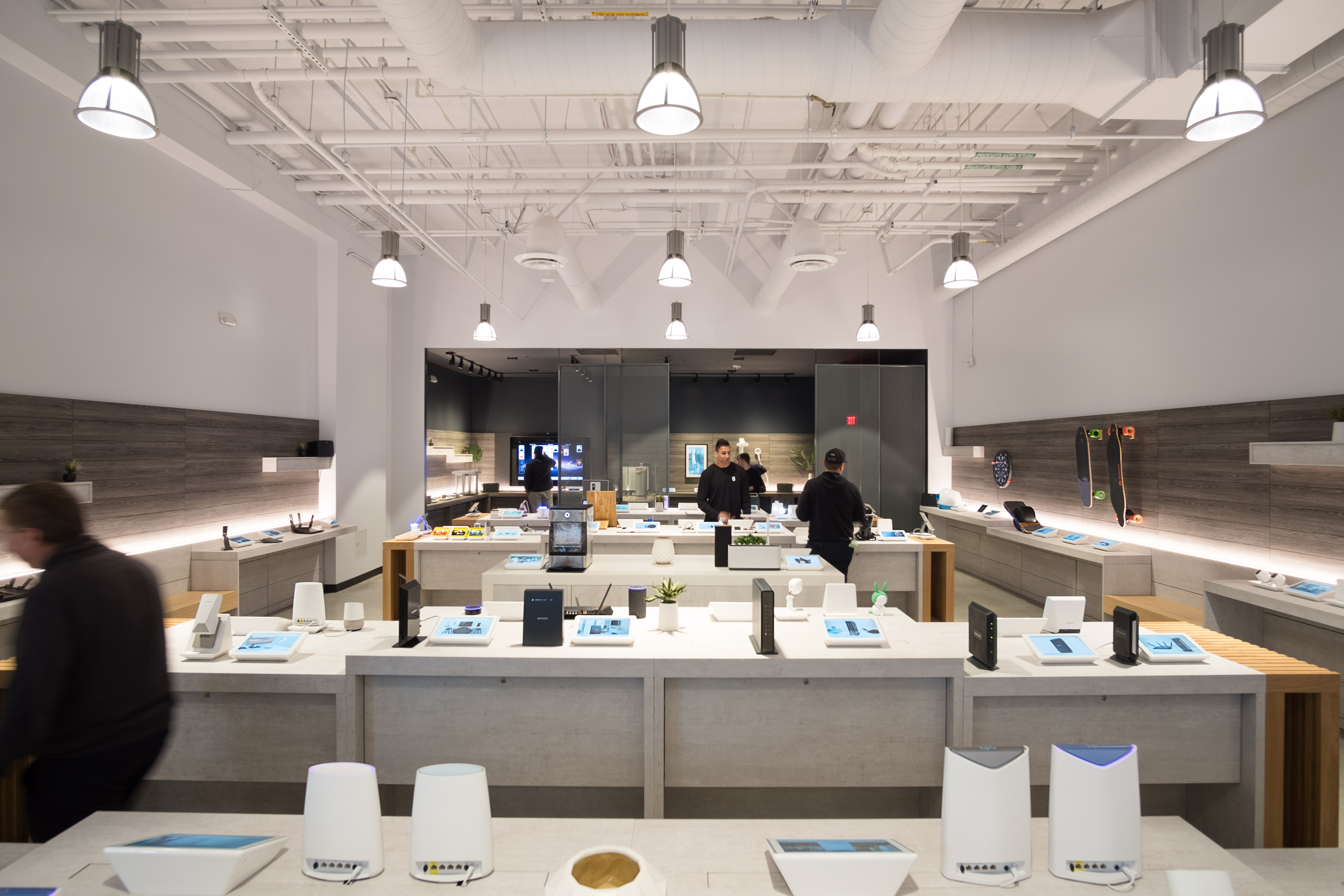
B8ta offers shelf space to unique digital products, such as electric skateboards or a coffee alarm clock, on behalf of brands that want a physical presence. Today, the company acquired a 1-year old company doing the same for direct to consumer businesses, Re:store.

Backed by Sequoia and SPC, Re:store has a three-story physical location in Maiden Lane in San Francisco and hosts products ranging from beauty, to consumer electronics to lifestyle products. It also has a community co-working space.

The Re:Store community hub.

“The pandemic has emphasized the need for brands to be flexible with their product mix and distribution,” says Selene Cruz, CEO of Re:store. “Some products do well in these times, and brands in a retail-as-a-service model can adapt their offering a lot faster than those in a traditional wholesale model that relies on buying cycles.”

It’s the high-touch startups that are expected to struggle during this time, as rising virus rates threaten the global economy. But, as today’s deal shows, both B8ta and Re:store are bullish on in-person shopping long term.

In fact, in March, B8ta CEO and co-founder Vibhu Nordy penned an extensive Twitter thread in favor of keeping his startups’ stores open, noting that closures would require the company to lose millions and send tens of thousands of employees home. B8ta’s entire value proposition is based on high-touch interactions, and a world in which consumers want to try and experience their products before they buy them.

“I feel like we’ve lived through three lifetimes since I wrote that thread back in March,” Nordy said, noting that it’s been an “extremely difficult year” for the company. However, the Re:store acquisition comes off of new momentum he’s seen since B8ta was able to safely reopen its stores in May.

“We launched more brands last quarter than any other in our history,” Nordy said. “The traditional retail model and traditional real estate model has completely collapsed and brands are looking for something better.” To note, Macy’s, which has backed B8ta, narrowly dodged bankruptcy by securing a $4.5 billion lifeline in financing to temper down sales.

Image Credits: b8ta

B8ta’s Re:store acquisition is a response to a rebound among physical retailers, one that favors an experience instead of a catalog of aisles. A focus on creative in-person experiences versus department stores is an acceleration of a pre-pandemic trend. As direct-to-consumer investors told us in late March, companies can’t depend on a few channels for customer acquisition. As the field gets crowded, brands are looking to stand out, and stores like B8ta and Re:store could help them do that.

To balance out some of B8ta’s bullishness, Nordy did note that “on the shopping side, visitation is way down but sales have almost come back to where they were pre-pandemic.” In other words, people are buying B8ta products online without the physical presence, which means that online platforms are still a preference for consumers.


Is the Great 2020 Tech Rally slowing?

Yesterday’s earnings deluge made plain that tech shares are not rocketing higher as 2020 comes to a close. Indeed, in pre-market trading this morning, Microsoft, Apple, Facebook and Amazon are all down.

Alphabet is the only member of the Big Five that is worth more today than yesterday. Strong advertising and cloud results helped the search giant post a return-to-form quarter. But in most other reports there were signs of weakness or underperformance compared to expectations that could undermine the relentlessly bullish attitude tech shares have enjoyed for several months.


The Exchange explores startups, markets and money. Read it every morning on Extra Crunch, or get The Exchange newsletter every Saturday.


The tailwinds that lifted much of tech this year remain. Every CEO I speak to still thinks that the COVID-19 bump to digital services demand has room to run, and that the digital transformation’s acceleration that has been a regular point of optimism for VCs, founders and public company leaders, will continue.

But that doesn’t mean all tech companies will benefit or post outsize results. Those facts don’t imply that pandemic-induced friction won’t add up.

It’s not only the biggest companies that are treading water. We’re seeing valuations pause in tech’s hottest category — SaaS and cloud — despite continued growth in its constituent companies. The combined sentiment-and-share change could dampen enthusiasm for startup shares, perhaps undercutting some of the hype and FOMO that we keep hearing is driving private valuations higher.

Are we seeing a change in tech’s temperature while the weather changes? Let’s take a look.

Good news, bad news

Starting with the biggest tech companies, Alphabet’s results were pretty good. The company’s YouTube and cloud segments outperformed expectations, helping the company best expectations.

From there, things get choppier. Apple beat expectations, but its shares fell after investors were less than impressed with its aggregate results. Microsoft posted good calendar Q3 earnings, including strong Azure performance, but its guidance left investors underwhelmed and its shares also fell. Facebook beat expectations in the quarter, but rising costs seemed to dampen investor sentiment. It lost a little ground after earnings. Amazon’s Q3 was hot, but its Q4 should reduce operating income due to COVID-19 costs. It also lost ground after reporting.

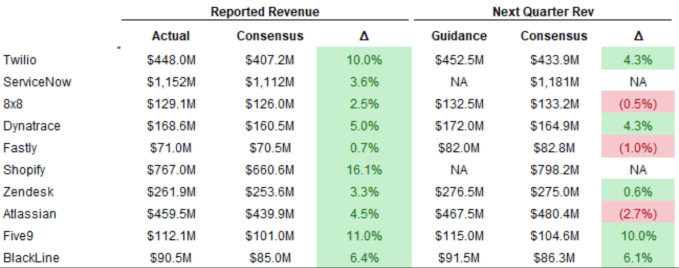
From that malaise we turn to the SaaS and cloud world. Redpoint’s Jamin Ball is doing his usual roundups, one of which we’re borrowing this morning. Here’s his digest of SaaS and cloud earnings thus far:

Takeaways? Every SaaS and cloud company crushed Q3, but Q4 is looking a bit more dicey. Beats look slim, some companies are declining to project and aside from an outlier or two, the numbers look slimmer overall.


Recover Health: Managing Home Health Care from Afar During Covid-19

Sponsored Post

Recover Health: Managing Home Health Care from Afar During Covid-19

Recovering from a serious health event often requires professional assistance. But many patients prefer to recover in the comfort of their own homes.

Luckily, that’s exactly what Recover Health offers. The company takes a mission driven approach to home health care. Read about how the company has built a strong niche and navigated a turbulent year below.

What the Business Does

Provides home health care services for those in recovery.

Recover Health CIO John Fraser told Small Business Trends, “Recover Health offers post-acute health care to clients in their homes. This means we offer services to people who have recently discharged from the ER or Hospital or are trying to prevent a hospitalization while benefiting from the comfort of their own home.”

Business Niche

The Mission.

“What got me excited about Recover Health was their focus on serving as many clients as possible, regardless of their ability to pay or if their insurance company didn’t pay as much as others.”

How the Business Got Started

To turn industry experience into a strong mission.

The company started back in 2009 and has grown from $11M to $70M in revenue while expanding into 31 branches and 6 states. Greg Von Arx and Kara Von Arx set out to take their prior experience in post-acute health care with a focus on their mission and guiding principles.”

Biggest Win

Navigating 2020.

“It started with a change to how our services are reimbursed by the government from a model called PPS to PDGM. This put more focus on quality and outcomes over number of visits. Recover Health utilized 10 years of data combined with tools and products from Zoho to ready our company and create KPIs to more easily manage the business. Recover Health came out on top of competitors, in part due to this preparation and BI tool usage.”

Biggest Risk

Also, the Year 2020.

“COVID-19 exposes our employees and clients to a life-threatening illness with long term effects that are not yet known. At the same time, our services are more important than ever as people choose to stay at home longer versus going to assisted living or skilled nursing facilities.”

Lesson Learned

Make the most of business intelligence tools and documented processes.

“We have a highly talented team that put much of the success on their own shoulders. While I admire the efforts, I also recognize that creating mini versions of our leaders through consistently documented process and oversight through business intelligence tools, we might have been even more ready for faster growth.”

Secret Weapon

Zoho.

“My first introduction to Zoho was Zoho CRM which I found to be just as powerful as Salesforce at a fraction of the cost. We used it both to track leads for our private pay business and as a tool for our sales team to track their in person sales activities with referral sources. Prior to Zoho we had no way to track activities or create smooth transitions when turnover occurred. Now we have entire dashboards of metrics used to track activities and their impact on downstream referral success.

“After Zoho CRM we found Zoho Recruit. While we had an HRIS and Applicant Tracking System (ATS) for when people had applied, we didn’t have anything to track potential candidates or leads that had not yet applied. Our market is extremely competitive and the only way to grow rapidly is to seek out passive candidates and explain why Recover Health is a great place to work. This system allowed us to track all activities on early employee leads. Later we integrated Zoho Campaigns. Today we use Zoho Recruit, Campaigns and partnerships with state licensing boards to reach a mass of more than 326,000 potential employees in 10 states.

“We added no less than 6 different Manage Engine products to our technology team including Service Desk Plus as a ticketing platform. Prior to Service Desk Plus, we had 1-2 people using email as a way to track IT or other corporate shared service requests. Today we have complete metrics and sophisticated queues with more than 40 technicians in the system.

“The biggest value created for Recover Health has been Zoho Analytics. It was the 2nd or 3rd product we got access to but it was not truly leveraged until 2020. We have turned more than 750 reports run by our 31 branches into 7 dashboards for our branches and executive team to stay on top of the business. Instead of 1000+ people spending hours running these reports weekly, they are now automated and broken down by region branch or employee with the click of a button. This has saved us 1000’s of labor hours and has improved client care, margins, turnover and profitability. With COVID, being able to manage a business from afar has also given us the flexibility to support more work from home and less travel between branches.”

Recover Health

How They’d Spend an Extra $100,000

Rewarding and protecting team members.

“If it was entirely up to me, I would give 50% to our direct care staff that are putting their lives on the line to keep people healthy. The other 50% would be used to improve our remote monitoring capabilities to allow us to manage care from afar, reducing the amount of in person time needed without sacrificing quality of care.”

Special Program

Supporting employees through a non-profit.

We also have a non-profit called “Heart of Recover.” It helps provide services and scholarships for employees at Recover Health to further their education/careers. Through career paths we have several people in leadership today who have started as a direct caregiver with no post high school experience and now are Regional Directors with help from the program.”

Images: Recover Health

This article, "Recover Health: Managing Home Health Care from Afar During Covid-19" was first published on Small Business Trends